
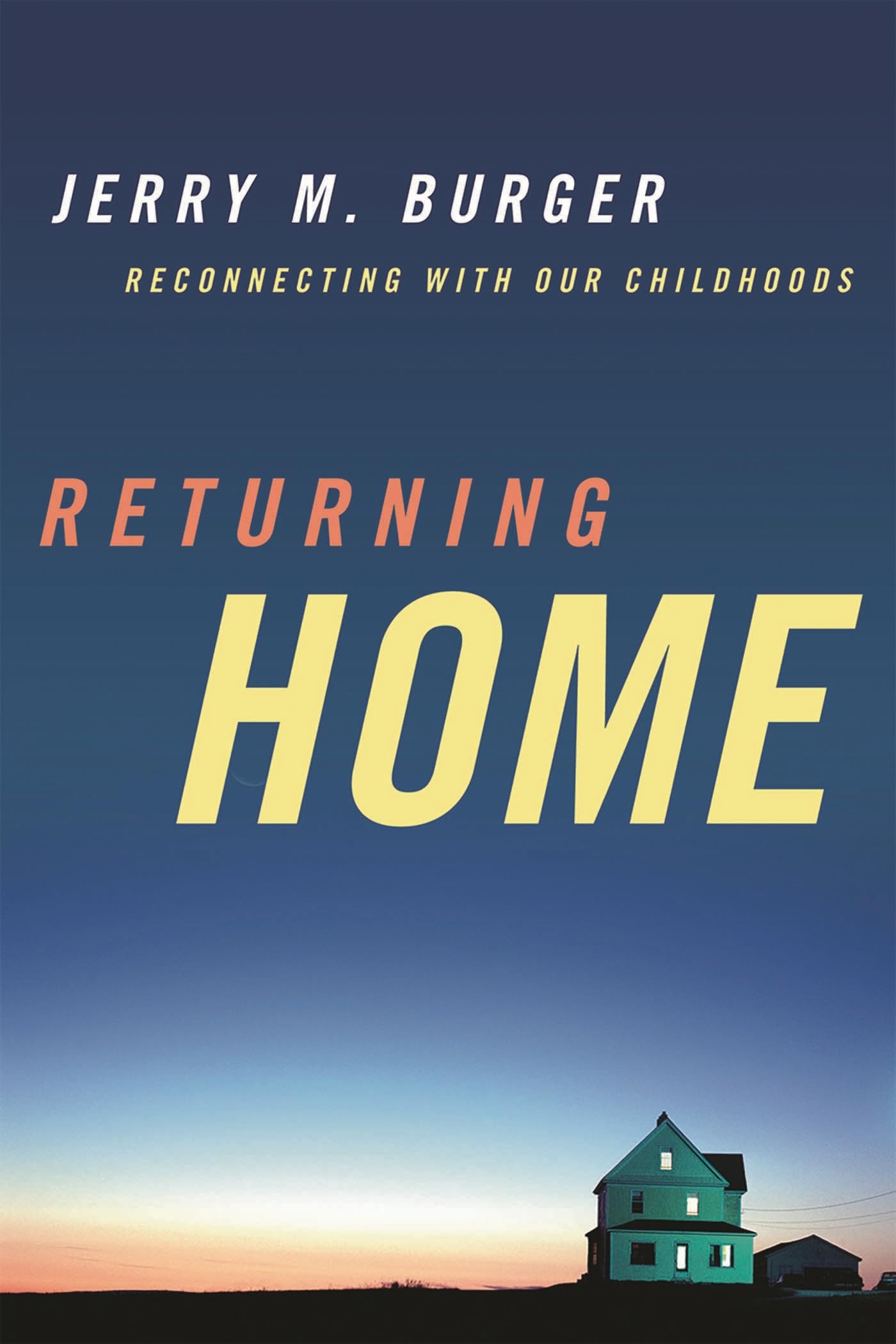
Returning Home: Reconnecting to Our Childhoods by Jerry M. Burger – A Psychological Study of Memory, Nostalgia, and the
Inclusive of all applicable taxes. FREE shipping on all orders.
Available Offers
- 🚚Free Delivery — Free shipping on all orders
- 💵Cash on Delivery — Pay when your order arrives
- ↩️15-Day Easy Returns — Hassle-free return policy
- 🔒Cash on Delivery — Pay safely when your order arrives
Check Delivery
Product Description
Introduction
Have you ever felt a quiet pull to stand once again in the lane where you played as a child, or to touch the walls of the school you once ran through? This deep, often surprising urge is the heart of Jerry M. Burger’s compelling work, Returning Home: Reconnecting to Our Childhoods. In a world that moves at breakneck speed, this book invites you to pause and explore the powerful psychological journey of revisiting the places that shaped your earliest memories. It is not merely a book about travel; it is a profound exploration of identity, memory, and the invisible threads that tie our present selves to our past.
Book Overview
Drawing on decades of research and hundreds of personal accounts, Jerry M. Burger takes readers on an insightful journey into the phenomenon of visiting one’s childhood home. The book reveals that this act, undertaken by millions of adults worldwide, is far more than simple nostalgia. It is a deeply psychological process of self-reclamation. Burger carefully unpacks the motivations behind these trips—from seeking a tangible connection to one’s younger self, to reaffirming core values learned in youth. Through vivid storytelling and scientific analysis, the book shows how walking through old neighborhoods, seeing familiar trees, and standing in former bedrooms can heal, ground, and reorient us. This is a work that bridges the gap between memory and meaning, offering a unique lens through which to understand our own life stories.
Key Highlights
- Original Research: Based on extensive studies and interviews with hundreds of adults who have revisited their childhood homes.
- Psychological Depth: Explains the emotional and cognitive reasons behind the urge to return, linking it to identity formation and life transitions.
- Relatable Narratives: Features real-life stories from diverse individuals, making the concepts accessible and deeply human.
- Practical Insights: Offers readers a framework to understand their own experiences of returning, whether planned or spontaneous.
- Cross-Cultural Appeal: While rooted in American examples, the themes of home, memory, and belonging resonate universally, including with Indian readers who value family and ancestral ties.
Inside the Book
Returning Home is structured to guide you through the entire arc of the homecoming experience. Early chapters define the concept of a “childhood home” and the surprising statistics of how many adults make these journeys. The middle sections dive into the psychology of place attachment, exploring how physical environments become repositories of emotion. You will read about the bittersweet moments of finding a house painted a different colour, or a playground replaced by a parking lot, and how such encounters reshape our self-narrative. Later chapters examine the role of these trips in major life changes—divorce, retirement, loss of a parent—and how reconnecting with one’s roots can provide clarity and resilience. The book concludes with reflections on what it means to carry our childhoods forward into adulthood, offering a gentle guide for anyone considering their own return.
Key Topics
- The psychology of place attachment and memory
- Nostalgia as a tool for psychological well-being
- Identity formation across the lifespan
- The role of physical spaces in shaping core values
- Grief, closure, and reconnection through revisiting the past
- Generational differences in the experience of home
- How childhood landscapes influence adult decision-making
Reader Benefits
By reading this book, you will gain a richer understanding of your own life journey. You will learn to recognise the quiet signals that may be calling you to revisit your past, and you will be equipped with the psychological tools to make that visit meaningful. The book helps you see your childhood home not as a static memory, but as a living part of your identity. It can ease feelings of disconnection or rootlessness, especially for those who have moved cities or countries. For Indian readers, where family homes often hold generations of history, this book provides a thoughtful framework to honour that legacy while forging your own path. Ultimately, it offers a gentle reassurance that the child you once was still lives within you, and that reconnecting with that child can bring profound peace and purpose.
Learning Outcomes
After reading Returning Home, you will be able to:
- Identify the psychological motivations behind your own desire to revisit places from your past.
- Understand how childhood environments continue to influence your adult personality and choices.
- Differentiate between healthy nostalgia and escapism.
- Plan a meaningful visit to a childhood home with a clear sense of purpose.
- Articulate the emotional benefits of reconnecting with your personal history.
- Apply insights from the book to strengthen your sense of identity and belonging.
Who Should Read
This book is for anyone who has ever wondered about the house they grew up in, or felt a pang of longing for a street from their youth. It is ideal for students of psychology, sociology, and human development who wish to explore the intersection of memory and place. Adults navigating major life transitions—such as starting a family, changing careers, or entering retirement—will find the book deeply resonant. It is also a valuable read for therapists, counsellors, and educators who work with issues of identity and life review. Finally, it speaks to every Indian who has ever returned to their ancestral village or childhood neighbourhood, seeking not just a place, but a part of themselves.
About the Author
Jerry M. Burger is a distinguished professor of psychology and a leading researcher in the field of social psychology. He has spent decades studying human behaviour, with a special focus on the psychology of place, memory, and identity. Known for his clear, engaging writing style, Burger has authored numerous academic papers and books that make complex psychological concepts accessible to general readers. His work is widely respected for its blend of rigorous research and heartfelt storytelling. In Returning Home, he brings his expertise to a topic that is both deeply personal and universally relevant, offering readers a rare combination of scientific insight and emotional wisdom.
About the Publisher
Rowman & Littlefield Publishers is a prestigious academic and trade publishing house known for producing works of exceptional quality in the humanities, social sciences, and education. With a history spanning decades, the publisher is committed to bringing thoughtful, well-researched books to a global audience. This hardcover edition reflects their dedication to durable, elegant production standards, ensuring that Returning Home will be a treasured addition to any personal library. Their catalogue includes titles that challenge, inspire, and inform, making them a trusted name among scholars, students, and general readers alike.
Conclusion
Returning Home: Reconnecting to Our Childhoods is more than a book—it is an invitation to honour your own story. In a time when we are often encouraged to look forward and move on, Jerry M. Burger reminds us that looking back can be an act of courage and healing. Whether you are planning a trip to your childhood home or simply wish to understand the quiet power of memory, this book will change the way you see your past. It is a thoughtful, compassionate, and deeply insightful read that belongs on the shelf of every person who has ever called a place home. Let this book be your guide to the most important journey of all: the one that leads you back to yourself.
Quick Summary
Returning Home: Reconnecting to Our Childhoods by Jerry M. Burger is a compelling psychological exploration of why millions of adults feel drawn to revisit the places where they grew up. Drawing on surveys, interviews, and academic research, Burger reveals that these journeys are not merely about meeting old friends or family, but about reconnecting with the physical landscape of childhood—the schools, parks, playgrounds, and homes that shaped their early years. The book explains how such visits fulfil deep emotional needs, help people maintain a coherent sense of self across time, and provide a powerful link between past and present. Written in an accessible yet insightful style, it is ideal for psychology students, anyone curious about memory and nostalgia, and adults who have ever felt the pull to return to their roots. Readers will gain a richer understanding of their own emotions and behaviours. This hardcover edition from Rowman & Littlefield is a valuable addition to any personal or academic library. Order your copy today from Bookshops.in, India's trusted destination for quality books.
Book Highlights
Book Specifications
| ISBN-13 | 9781442206809 |
| ISBN-10 | 1442206802 |
| Publisher | Rowman & Littlefield Pub Inc |
| Language | English |
| Dimensions | 15.24 x 0.94 x 22.86 cm |
| Weight | 363 g |
| Category | Psychology › Developmental Psychology |
| Genre | Non-fiction |
| Original Language | English |
Frequently Asked Questions
What is Returning Home: Reconnecting to Our Childhoods about?
Who is Jerry M. Burger?
Why do adults visit childhood homes?
Is this book based on scientific research?
Who should read this book?
Does the book include Indian examples?
How is this book different from other nostalgia books?
Is this book suitable for a general audience?
What will I learn from this book?
Can this book help me understand my own feelings about my childhood home?
Is the book hardcover or paperback?
Where can I buy this book in India?
Does the book discuss the psychology of place attachment?
Is this a self-help book?
Readers Also Search For
Customers Also Bought
Psychology
Koinonia: From Hate, Through Dialogue, to Culture in the Large Group by Patrick B. Demare
Psychology
Mindfulness-Based Interventions for Trauma and Its Consequences (Concise Guides on Trauma Care, 4)

Psychology
Handbook for Teaching Statistics and Research Methods by Mark E. Ware

Psychology
Psychoanalysis and the Nuclear Threat: Clinical and Theoretical Studies
Psychology
Humor and Psyche: Psychoanalytic Perspectives by James W. Barron

Relationships
The Experience and Expression of Uncertainty in Close Relationships by Jennifer A. Theiss
Related Products
View AllPsychology
Mindfulness-Based Interventions for Trauma and Its Consequences (Concise Guides on Trauma Care, 4)
Psychology
Handbook for Teaching Statistics and Research Methods by Mark E. Ware
Psychology
Psychoanalysis and the Nuclear Threat: Clinical and Theoretical Studies
Psychology
Humor and Psyche: Psychoanalytic Perspectives by James W. Barron

Psychology
Proceedings of the First International Conference on Genetic Algorithms and Their Applications
Psychology