
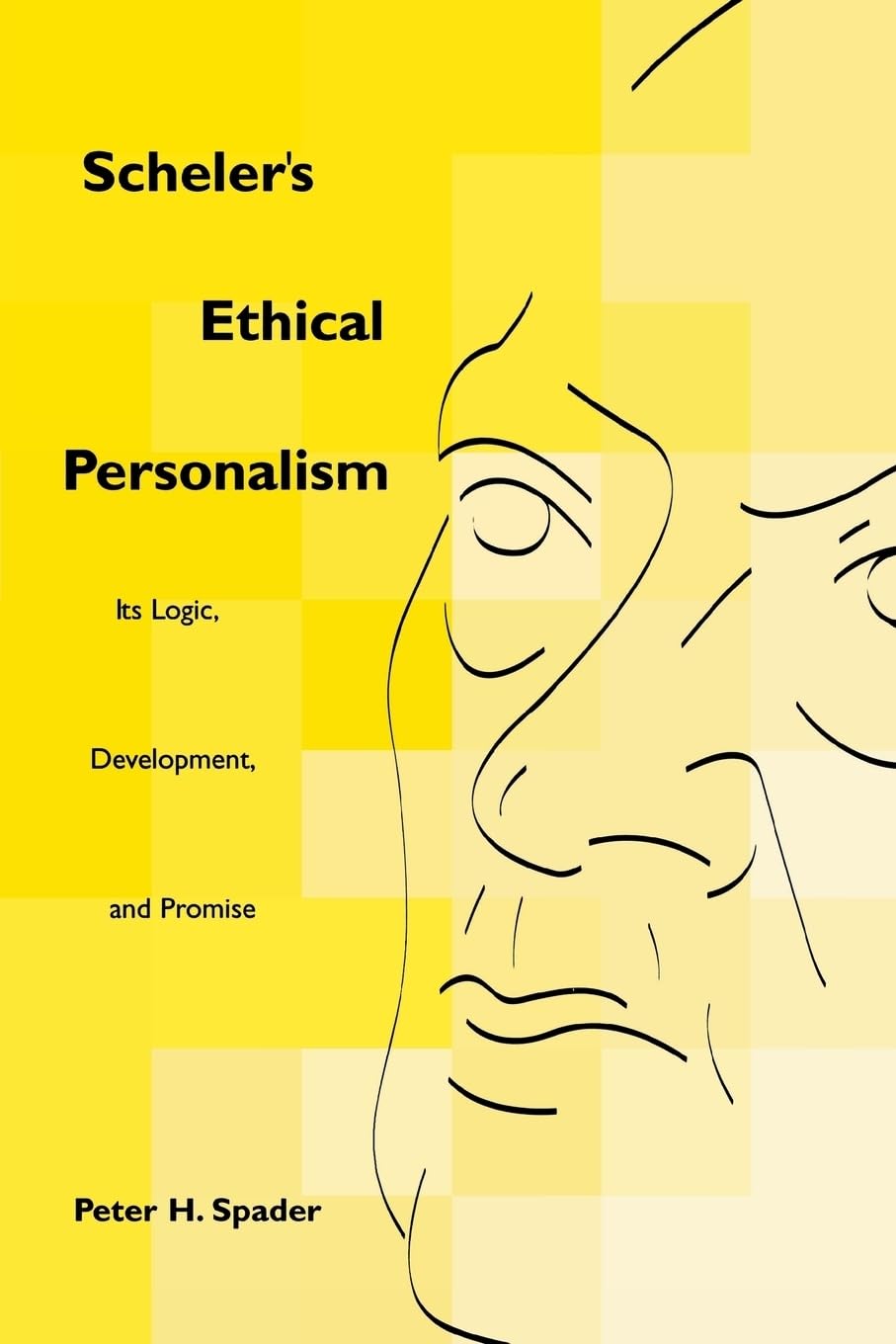
Scheler's Ethical Personalism: Its Logic, Development, and Promise by Peter H. Spader – A Phenomenological Ethics Study
Inclusive of all applicable taxes. FREE shipping on all orders.
Available Offers
- 🚚Free Delivery — Free shipping on all orders
- 💵Cash on Delivery — Pay when your order arrives
- ↩️15-Day Easy Returns — Hassle-free return policy
- 🔒Cash on Delivery — Pay safely when your order arrives
Check Delivery
Product Description
Introduction
In the landscape of phenomenological ethics, few figures stand as tall as Max Scheler, and fewer still have received the kind of rigorous, sympathetic, and systematic treatment that Peter H. Spader offers in Scheler's Ethical Personalism: Its Logic, Development, and Promise. This hardcover volume from Fordham University Press is an indispensable resource for Indian students, scholars, and anyone seeking to understand the foundations of a value-based personalist ethics. Spader does not merely summarize Scheler; he reconstructs the very logic of his thought, tracing its evolution and defending it against common misinterpretations. For those engaged in philosophy, ethics, or the study of personhood, this book is a gateway to one of the most profound yet often misunderstood thinkers of the twentieth century.
Book Overview
Peter Spader’s work is a magisterial study that follows Scheler’s use of the classic phenomenological method to present a fresh view of values, feelings, and the person. The book recreates the inner logic of Scheler’s quest, revealing the basis of his thought and the reasons for his dramatic shifts in direction. By providing a framework that allows readers to grasp Scheler’s insights in the context of their dynamic evolution, Spader corrects imbalances in the presentation of his ideas and defends him against key misunderstandings. This is not a dry commentary but a living engagement with a thinker who continues to shape ethical discourse today.
Key Highlights
- Comprehensive Reconstruction: Spader systematically traces Scheler’s intellectual journey from his early works to his mature ethical personalism.
- Defense Against Misinterpretations: The book addresses and refutes common criticisms, presenting Scheler’s thought in its full strength.
- Focus on Phenomenological Method: Explains how Scheler’s approach to values, emotions, and the person revolutionised ethics.
- Dynamic Evolution: Highlights the reasons behind Scheler’s changes in direction, offering a coherent narrative of his development.
- Scholarly Rigour: Written with clarity and depth, suitable for both advanced students and researchers.
Inside the Book
The volume is structured to guide the reader through the complexities of Scheler’s thought. Spader begins by situating Scheler within the phenomenological tradition, then moves through his early writings on values and emotions. The core chapters delve into Scheler’s concept of the person as a centre of acts, the role of love and hate in value perception, and the hierarchy of values. Later sections explore Scheler’s later turn toward metaphysics and his unfinished project of a personalist ethics. Each chapter builds on the previous, creating a cumulative understanding that mirrors Scheler’s own intellectual path.
Key Topics
- The phenomenological method and its application to ethics
- Value theory: objective, felt, and hierarchical
- The nature of the person as a moral agent
- Emotions and their cognitive role in moral life
- Love, hate, and the order of the heart
- Scheler’s critique of Kantian and utilitarian ethics
- The development of Scheler’s thought from early to late phases
- Personalism as a foundation for contemporary ethics
Reader Benefits
This book offers Indian readers a rare opportunity to engage with a European philosophical tradition that resonates deeply with Indian concerns about the dignity of the person, the centrality of love, and the quest for a value-based life. Spader’s clear prose and logical structure make Scheler accessible without oversimplification. Readers will gain a robust understanding of how phenomenological ethics can address modern moral dilemmas, and they will acquire the tools to apply personalist thinking to their own philosophical work. The book also serves as a corrective to superficial readings of Scheler, ensuring that his genuine contributions are recognised.
Learning Outcomes
- Understand the core tenets of Scheler’s ethical personalism
- Trace the logical development of Scheler’s thought over time
- Critically evaluate Scheler’s contributions to phenomenological ethics
- Apply personalist concepts to contemporary ethical issues
- Identify and refute common misinterpretations of Scheler
- Appreciate the role of emotions and values in moral reasoning
Who Should Read
This book is ideal for postgraduate students and researchers in philosophy, especially those working in ethics, phenomenology, or personalism. It will also benefit scholars in religious studies, psychology, and political theory who are interested in the foundations of personhood. Indian readers engaged in comparative philosophy—exploring intersections between Western personalism and Indian traditions such as Vedanta or Bhakti—will find rich material here. Additionally, anyone teaching or studying moral philosophy at an advanced level will find Spader’s work an essential companion to Scheler’s original texts.
About the Author
Peter H. Spader is a distinguished scholar of phenomenological ethics, known for his meticulous and empathetic readings of Max Scheler. His work has been instrumental in bringing Scheler’s thought to a wider audience, and he is recognised for his ability to combine rigorous analysis with a deep appreciation for the humanistic dimensions of philosophy. Spader’s scholarship continues to influence contemporary debates on value theory and personalism.
About the Publisher
Fordham University Press is a premier academic publisher based in New York, known for its strong list in philosophy, theology, and the humanities. With a commitment to publishing works of lasting scholarly value, Fordham has been a key player in disseminating phenomenological and personalist thought. This volume reflects the press’s dedication to producing high-quality, durable hardcover editions that serve the academic community for generations.
Conclusion
Scheler's Ethical Personalism: Its Logic, Development, and Promise is more than a study; it is an invitation to think along with one of the most original minds in ethics. Peter Spader has given us a work that illuminates not only Scheler but also the very project of a personalist ethics. For Indian readers who value depth, rigour, and the search for meaning, this book is a treasure. Order your copy from Bookshops.in today and add a foundational text to your philosophical library.
Quick Summary
'Scheler's Ethical Personalism: Its Logic, Development, and Promise' by Peter H. Spader is a definitive study of Max Scheler's phenomenological ethics, offering a clear and logical reconstruction of his ideas on values, feelings, and the person. The book traces the evolution of Scheler's thought, revealing the reasons behind his philosophical shifts and defending his contributions against common critiques. Ideal for graduate students, researchers, and scholars in continental philosophy and moral theory, this hardcover edition from Fordham University Press provides a balanced, authoritative perspective. Readers will gain a deep understanding of how Scheler's personalism reshaped ethical discourse, making it a valuable addition to any philosophy library. Purchase your copy from Bookshops.in, India's trusted source for premium academic books.
Book Highlights
Book Specifications
| ISBN-13 | 9780823221783 |
| ISBN-10 | 0823221784 |
| Publisher | Fordham Univ Pr |
| Language | English |
| Dimensions | 15.24 x 2.54 x 22.23 cm |
| Weight | 476 g |
| Country | India |
| Category | Philosophy › Ethics |
| Genre | Philosophy |
| Reading Age | Adult |
| Original Language | English |
Frequently Asked Questions
What is the main topic of 'Scheler's Ethical Personalism'?
Who is the author of this book?
Is this book suitable for undergraduate students?
Does the book cover Scheler's entire philosophical career?
What makes this book different from other studies on Scheler?
Is this a hardcover edition?
What language is the book written in?
Can I use this book for a course on phenomenological ethics?
Does the book discuss Scheler's concept of values?
Is this book available for purchase in India?
Does the book include a bibliography?
Is this book part of a series?
Readers Also Search For
Customers Also Bought

Islam
Spiritual Economies (English, Daromir Rudnyckyj)

Islam
Who Is Allah? (English, Bruce B. Lawrence)

Islam
Islam and Liberal Citizenship: The Search for an Overlapping Consensus by Andrew F. March

Islam
Fiqh Us-Sunnah: Funerals and Diggers by Al-Sayyid Sabiq – Islamic Funeral Guide

Christianity
Genetics (English, Thomas a. Shannon | Mark P. Aulisio | Françoise Baylis)

Hinduism
Karma and Creativity by Christopher Key Chapple – Indian Philosophy
Related Products
View All
Philosophy
Latin American Philosophy: Currents, Issues, Debates by Eduardo Mendieta

Philosophy
Al-Farabi's Short Commentary on Aristotle's Prior Analytics by Nicholas Rescher – Philosophy

Philosophy
Poetics of Imagining: Modern to Post-modern by Richard Kearney

Philosophy
The Metaphysics of Extrinsic Properties: 11 (Metaphysical Research, 11)

Philosophy
Dialogues on Metaphysics and on Religion by Nicolas Malebranche – Philosophy
Philosophy