
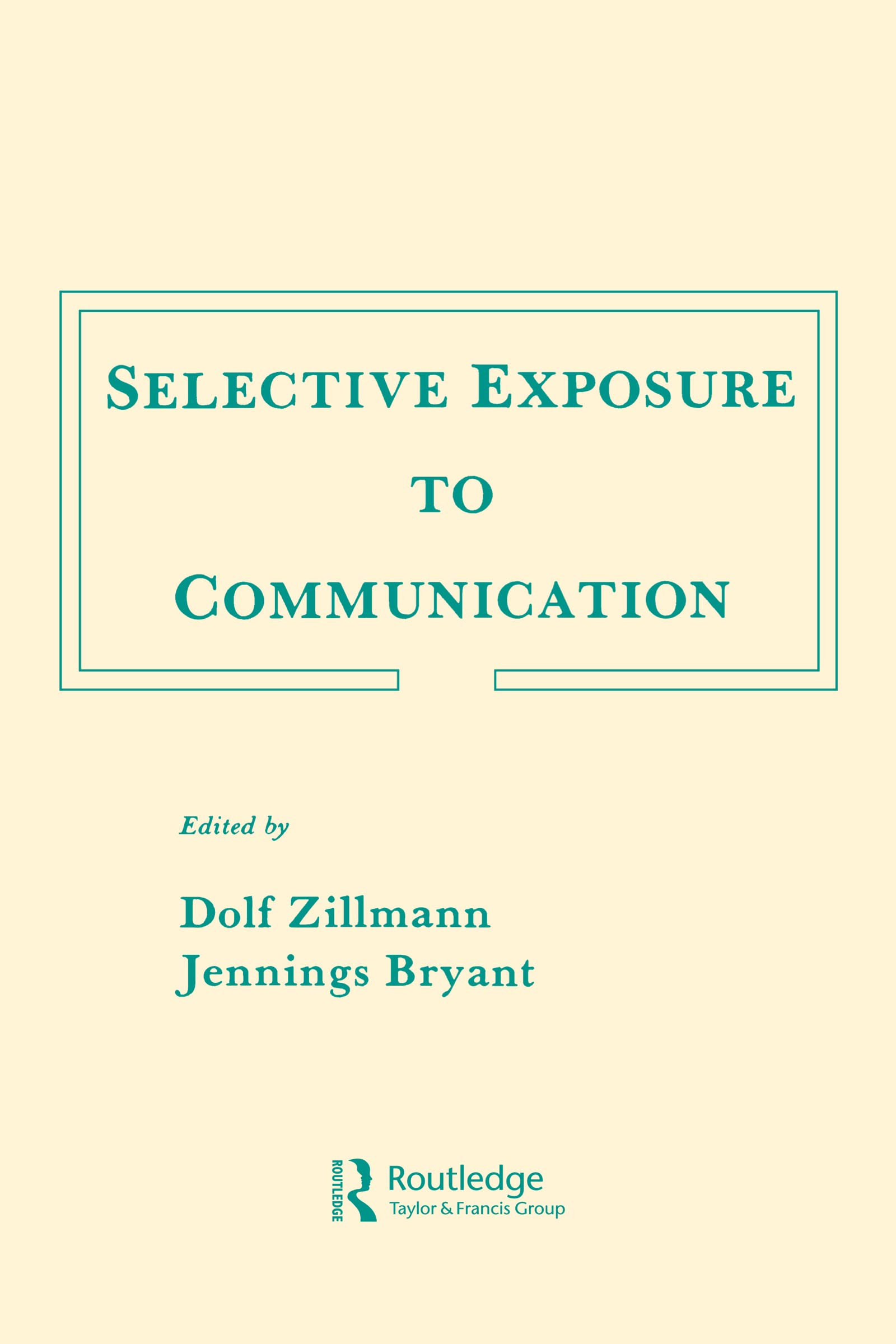
Selective Exposure To Communication: Understanding Media Choice and Audience Psychology by Dolf Zillmann – A Routledge C
Inclusive of all applicable taxes. FREE shipping on all orders.
Available Offers
- 🚚Free Delivery — Free shipping on all orders
- 💵Cash on Delivery — Pay when your order arrives
- ↩️15-Day Easy Returns — Hassle-free return policy
- 🔒Cash on Delivery — Pay safely when your order arrives
Check Delivery
Product Description
Introduction
In an age where media choices multiply by the day, understanding why individuals gravitate toward certain messages over others has never been more critical. Selective Exposure To Communication by Dolf Zillmann stands as a foundational text that unpacks the psychological and behavioral mechanisms behind media selection. First published in 1985, this hardcover volume from Routledge is a must-have for students, researchers, and professionals in communication studies, psychology, and media sociology. It addresses a gap that remains relevant: why do people choose to watch, read, or listen to what they do, and how do these choices shape their perceptions and actions?
Book Overview
This book emerged at a time when mass communication research was heavily focused on media effects—how content influences audiences. Zillmann and his contributors shifted the lens to the antecedent question: what drives exposure in the first place? The volume collects pioneering research that explores selective exposure as a dynamic process, influenced by mood, attitude, curiosity, and social context. It is not a mere historical artifact but a rigorous exploration of concepts that underpin modern media psychology, from confirmation bias to entertainment theory. The hardcover edition ensures durability for repeated reference in academic libraries and personal collections.
Key Highlights
- Pioneering Framework: Introduces selective exposure as a distinct area of inquiry, moving beyond effects to focus on choice.
- Interdisciplinary Approach: Blends insights from social psychology, communication theory, and behavioral science.
- Empirical Rigor: Presents original experiments and theoretical models that remain influential in contemporary research.
- Timeless Relevance: Offers foundational knowledge for understanding echo chambers, polarization, and media consumption patterns in the digital age.
- Authoritative Contributors: Features work from leading scholars, with Zillmann as a central figure in media psychology.
Inside the Book
The volume is structured around thematic sections that build from basic principles to complex applications. Early chapters define selective exposure and differentiate it from passive reception. Subsequent sections delve into motivational factors—such as the need for consistency, mood management, and information utility. Later chapters examine how selective exposure operates in news consumption, entertainment, and political communication. Each chapter includes detailed methodologies, data analyses, and discussions that invite critical reflection. The writing is scholarly yet accessible, making it suitable for advanced undergraduates and seasoned researchers alike.
Key Topics
- Mood Management Theory: How individuals select media to regulate emotional states.
- Cognitive Dissonance and Confirmation Bias: The role of preexisting attitudes in shaping media choices.
- Informational vs. Entertaining Content: Trade-offs between utility and pleasure in selection decisions.
- Social and Contextual Influences: How group norms and availability affect exposure patterns.
- Methodological Challenges: Issues in measuring and interpreting selective behavior in naturalistic settings.
Reader Benefits
- Deepen Understanding: Gain a comprehensive grasp of why people choose certain media over others.
- Enhance Research Skills: Learn from classic experimental designs that can be adapted for modern studies.
- Inform Practice: Apply insights to fields like advertising, journalism, content strategy, and education.
- Build Critical Thinking: Evaluate contemporary media phenomena through a historical and theoretical lens.
- Academic Edge: Access a key reference for essays, theses, and coursework in communication and psychology.
Learning Outcomes
By engaging with this book, readers will be able to identify the psychological mechanisms that drive selective exposure; critique traditional media effects models that ignore audience agency; design research studies that account for choice behavior; and connect historical theories to modern issues like filter bubbles and selective avoidance. The book equips learners to move beyond passive consumption to active analysis of media environments.
Who Should Read
This book is ideal for postgraduate students and faculty in communication studies, media psychology, sociology, and political science. It also serves advanced undergraduates in research methodology courses. Professionals in media planning, public relations, and content creation will find valuable insights into audience behavior. Anyone curious about the roots of media choice—whether in news, film, or entertainment—will benefit from Zillmann’s rigorous yet engaging presentation.
About the Author
Dolf Zillmann is a distinguished scholar in communication and media psychology. He has contributed extensively to the study of media effects, entertainment theory, and selective exposure. His work has shaped how researchers understand the interplay between emotion, cognition, and media use. Zillmann’s clear writing and innovative experiments have earned him a lasting place in the field. This volume reflects his commitment to advancing knowledge about the active, selective audience.
About the Publisher
Routledge is a premier academic publisher known for high-quality books in the social sciences and humanities. With a history spanning over a century, Routledge publishes works that set the agenda for research and teaching worldwide. This hardcover edition is produced to exacting standards, ensuring longevity for library and personal use. Indian readers can trust Routledge for authoritative content that supports academic excellence.
Conclusion
Selective Exposure To Communication remains a vital resource for anyone seeking to understand the foundations of media choice. Dolf Zillmann’s edited volume brings together rigorous research and theoretical insight that transcends its 1985 publication date. In an era of information overload, this book reminds us that the most important question is not just what media do to people, but what people do with media. Add this hardcover to your collection and deepen your grasp of the forces that shape our communication landscape.
Quick Summary
Selective Exposure To Communication by Dolf Zillmann is a foundational academic work first published in 1985 that shifts the focus of mass communication research from media impact to the psychological and situational determinants of audience choice. The book explores why individuals elect to watch, hear, or read specific informative and entertaining messages, delving into concepts like cognitive dissonance, mood management, and selective attention. Written by a pioneering media psychologist, this Routledge hardcover is essential for Indian students and researchers in mass communication, media psychology, and sociology. Readers will gain a deep understanding of how audiences actively shape their media environment, a critical insight for today's fragmented digital landscape. By purchasing from Bookshops.in, Indian scholars get a reliable, high-quality print edition delivered to their doorstep, supporting local academic growth.
Book Highlights
Book Specifications
| ISBN-13 | 9780898595857 |
| ISBN-10 | 0898595851 |
| Publisher | Routledge |
| Language | English |
| Dimensions | 16.51 x 2.54 x 24.13 cm |
| Weight | 522 g |
| Country | India |
| Category | Psychology › Developmental Psychology |
| Genre | Non-fiction |
| Original Language | English |
Frequently Asked Questions
What is Selective Exposure To Communication about?
Who is the author of this book?
Is this book suitable for Indian students?
What is the binding of this edition?
What is the ISBN-13?
What language is the book in?
What is the price of this book?
Is this book a research monograph?
Does the book cover digital media?
What is the rating of this book?
Can I use this book for my PhD research?
How does this book differ from other media effects books?
Readers Also Search For
Customers Also Bought
Psychology
Koinonia: From Hate, Through Dialogue, to Culture in the Large Group by Patrick B. Demare

Psychology
Mindfulness-Based Interventions for Trauma and Its Consequences (Concise Guides on Trauma Care, 4)

Psychology
Handbook for Teaching Statistics and Research Methods by Mark E. Ware

Psychology
Psychoanalysis and the Nuclear Threat: Clinical and Theoretical Studies
Psychology
Humor and Psyche: Psychoanalytic Perspectives by James W. Barron

Relationships
The Experience and Expression of Uncertainty in Close Relationships by Jennifer A. Theiss
Related Products
View AllPsychology
Mindfulness-Based Interventions for Trauma and Its Consequences (Concise Guides on Trauma Care, 4)
Psychology
Handbook for Teaching Statistics and Research Methods by Mark E. Ware
Psychology
Psychoanalysis and the Nuclear Threat: Clinical and Theoretical Studies
Psychology
Humor and Psyche: Psychoanalytic Perspectives by James W. Barron

Psychology
Proceedings of the First International Conference on Genetic Algorithms and Their Applications
Psychology