
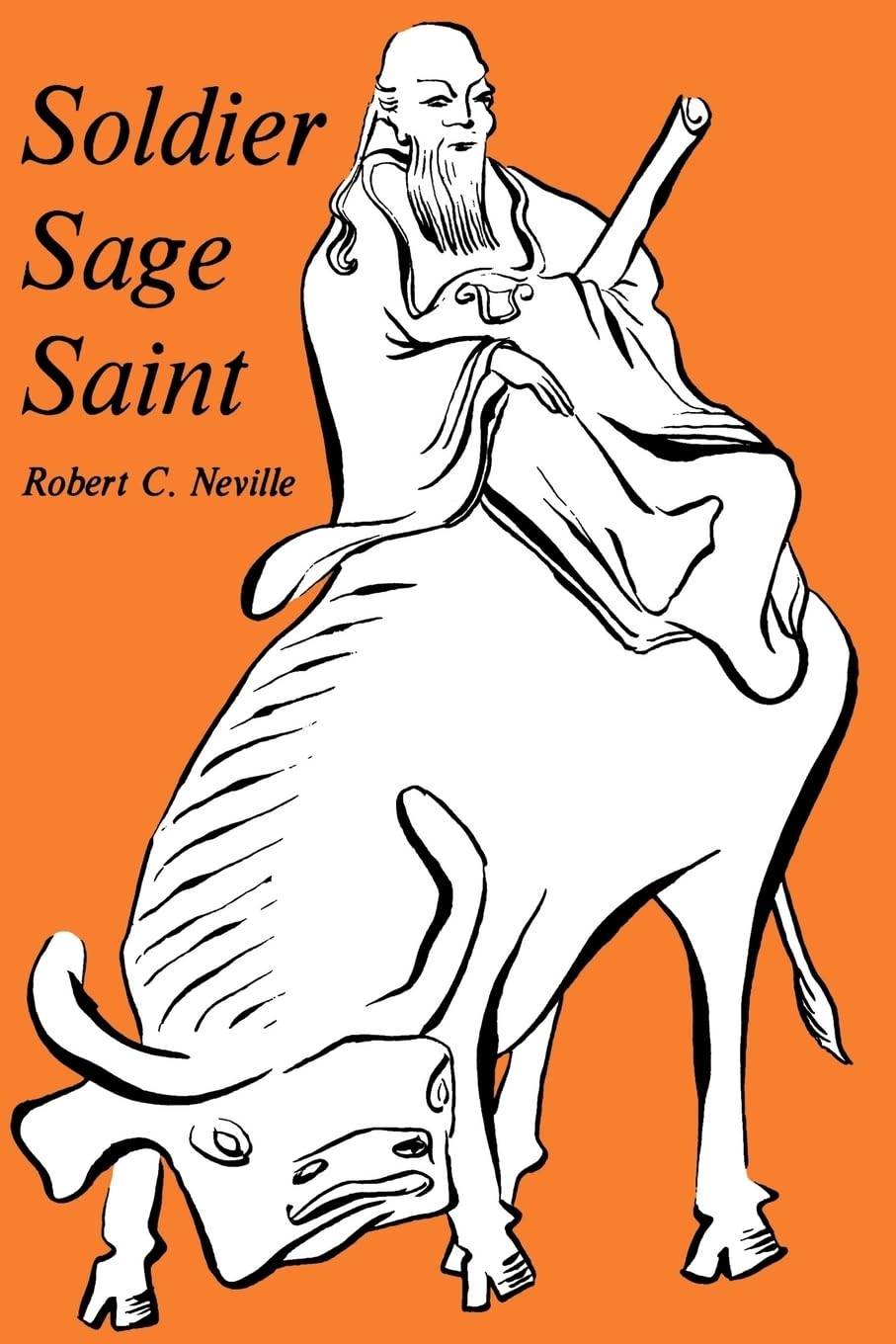
Soldier, Sage, Saint: A Philosophical Study of Spiritual Development by Robert Cummings Neville
Inclusive of all applicable taxes. FREE shipping on all orders.
Available Offers
- 🚚Free Delivery — Free shipping on all orders
- 💵Cash on Delivery — Pay when your order arrives
- ↩️15-Day Easy Returns — Hassle-free return policy
- 🔒Cash on Delivery — Pay safely when your order arrives
Check Delivery
Product Description
Introduction
In a world where spiritual seeking often feels fragmented between ancient wisdom and modern philosophy, Robert Cummings Neville’s Soldier, Sage, Saint offers a rare, intellectually rigorous bridge. This hardcover edition from Fordham University Press is not a mere self-help guide but a profound philosophical inquiry into what it means to grow spiritually. For Indian readers familiar with the rich tapestries of Vedantic, Buddhist, and Jain traditions, this book provides a comparative lens that respects Eastern insights while grounding them in Western philosophical discourse. Whether you are a student of comparative religion, a philosophy enthusiast, or a seeker on a personal journey, this book invites you to explore three archetypal paths to spiritual liberation.
Book Overview
Soldier, Sage, Saint is a philosophic study of spiritual development that transcends cultural boundaries. Professor Neville draws from multiple world traditions—including Christianity, Buddhism, Hinduism, and Taoism—to construct a coherent theory of spiritual growth. The book does not simply describe these traditions but uses them as raw material for a philosophical argument about the nature of spiritual heroism. Neville proposes that the journey toward spiritual perfection can be understood through three distinct models: the soldier, who cultivates discipline and courage; the sage, who seeks wisdom and understanding; and the saint, who embodies compassion and divine love. Each model represents a stage of development, and together they form a comprehensive framework for personal transformation. The book is both analytical and prescriptive, aiming not just to understand spiritual liberation but to promote it through philosophical clarity.
Key Highlights
- Three Archetypal Models: A detailed exploration of the soldier, sage, and saint as universal metaphors for spiritual growth, each with its own virtues, challenges, and ultimate goals.
- Comparative Philosophy: Neville engages deeply with non-Western traditions, making the book especially relevant for Indian readers familiar with concepts like dharma, jnana, and bhakti.
- Metaphysical Depth: The argument is grounded in a robust metaphysical framework, addressing questions about the nature of reality, the self, and the divine.
- Practical Philosophy: While academic in tone, the book offers practical insights for anyone seeking to integrate spiritual discipline into daily life.
- Original Synthesis: Neville does not merely repeat traditional teachings but offers an original philosophical theory that respects the integrity of each tradition.
Inside the Book
The book is structured around the three central images of spiritual heroism. The first part examines the soldier—a figure of discipline, obedience, and sacrifice, who conquers inner enemies like desire and fear. The second part focuses on the sage, who cultivates wisdom through contemplation, detachment, and understanding of ultimate reality. The third part explores the saint, whose life is marked by unconditional love, service, and union with the divine. Throughout, Neville weaves together insights from diverse sources: the Bhagavad Gita, Zen koans, Christian mysticism, and Taoist texts. He does not shy away from difficult philosophical questions, such as the relationship between personal effort and grace, or the role of suffering in spiritual growth. The writing is dense but rewarding, inviting repeated readings and deep reflection.
Key Topics
- Spiritual development as a philosophical problem
- The archetype of the soldier: discipline, courage, and renunciation
- The archetype of the sage: wisdom, contemplation, and non-attachment
- The archetype of the saint: love, compassion, and divine union
- Comparative analysis of Eastern and Western spiritual traditions
- Metaphysical foundations of spiritual growth
- The interplay of personal, social, and cosmic dimensions in spirituality
- Liberation (moksha, nirvana, salvation) as a philosophical goal
Reader Benefits
This book offers Indian readers a unique opportunity to see their own spiritual heritage through a fresh, philosophical lens. It validates the depth of traditions like Advaita Vedanta and Buddhist emptiness while engaging them in a global conversation. For students, it provides a rigorous framework for comparing different spiritual paths without reducing them to mere cultural artifacts. For practitioners, it offers intellectual grounding for their spiritual practices, helping them understand why discipline, wisdom, and love are essential. The book also challenges readers to move beyond superficial spirituality and embrace a more integrated, thoughtful approach to self-transformation. By the end, you will have a richer vocabulary for describing your own spiritual journey and a deeper appreciation for the common struggles and aspirations that unite all seekers.
Learning Outcomes
- Understand the philosophical underpinnings of spiritual development across cultures
- Identify and differentiate the three archetypal paths of soldier, sage, and saint
- Analyze how different traditions conceive of liberation and perfection
- Apply philosophical reasoning to questions of personal spiritual growth
- Critically evaluate the role of discipline, wisdom, and love in spiritual life
- Develop a comparative perspective on Eastern and Western spiritualities
Who Should Read
This book is ideal for philosophy students, especially those studying comparative religion or Indian philosophy. It is also highly recommended for spiritual seekers who want a more intellectual approach to their practice, as well as for scholars of theology, ethics, and metaphysics. Indian readers who have grown up with stories of warriors like Arjuna, sages like Yajnavalkya, and saints like Mirabai will find familiar figures reimagined in a global context. The book is accessible to advanced undergraduates but will also challenge graduate students and academics. Anyone interested in the intersection of philosophy and spirituality—whether Hindu, Buddhist, Christian, or secular—will find valuable insights here.
About the Author
Robert Cummings Neville is a distinguished American philosopher and theologian, known for his work in comparative philosophy, metaphysics, and philosophy of religion. He served as Dean of the Boston University School of Theology and has written extensively on topics such as creativity, symbolism, and spiritual development. Neville’s scholarship is marked by a rare ability to engage deeply with both Western and Eastern traditions, making him a bridge-builder between cultures. His work on the philosophy of spiritual development has influenced scholars worldwide, and Soldier, Sage, Saint remains one of his most accessible yet profound contributions.
About the Publisher
Fordham University Press is a prestigious academic publisher based in New York, known for its high-quality scholarly books in philosophy, theology, and the humanities. With a commitment to intellectual rigor and cross-cultural dialogue, the press has published works that shape contemporary thought. This hardcover edition reflects their dedication to producing durable, beautifully bound books that can be treasured for a lifetime. For Indian readers, Fordham University Press represents a gateway to the best of Western academic scholarship, especially in fields that touch upon universal human questions.
Conclusion
Soldier, Sage, Saint is not a book to be read quickly; it is a companion for a lifetime of spiritual reflection. Robert Cummings Neville offers a philosophical map for the inner journey, one that honors the wisdom of both East and West. For Indian readers, this book is a reminder that the quest for liberation—whether through the discipline of a soldier, the wisdom of a sage, or the love of a saint—is a universal human endeavor. If you are ready to deepen your understanding of what it means to grow spiritually, this hardcover volume deserves a place on your shelf. Order your copy from Bookshops.in today and embark on a journey that is as intellectually stimulating as it is spiritually enriching.
Quick Summary
Soldier, Sage, Saint by Robert Cummings Neville is a profound philosophical exploration of spiritual development, examining three archetypal models of spiritual heroism: the soldier, the sage, and the saint. Neville draws on insights from multiple world traditions, including Eastern and Western philosophies, to construct a theory that addresses personal, social, and metaphysical dimensions of the spiritual quest. This book is ideal for philosophy students, scholars of comparative religion, and any reader interested in understanding how different cultures conceptualize the journey toward liberation or perfection. By analyzing these archetypes, Neville offers a framework that transcends cultural boundaries, making it relevant for Indian readers familiar with diverse spiritual paths. The hardcover edition from Fordham University Press is a durable addition to any academic or personal library. Purchase your copy from Bookshops.in, India's trusted source for premium books, and delve into a work that bridges philosophy and spirituality with clarity and depth.
Book Highlights
Book Specifications
| ISBN-13 | 9780823210367 |
| ISBN-10 | 0823210367 |
| Publisher | Fordham Univ Pr |
| Language | English |
| Dimensions | 15.24 x 0.91 x 22.86 cm |
| Weight | 256 g |
| Country | India |
| Category | Religious Studies › Theology & Philosophy of Religion |
| Genre | Philosophy |
| Original Language | English |
Frequently Asked Questions
What is Soldier, Sage, Saint about?
Who is the author of Soldier, Sage, Saint?
Is this book suitable for Indian readers?
What are the three archetypes discussed?
Does the book compare different religions?
What is the reading level of this book?
Is this a hardcover or paperback?
What is the ISBN for this book?
Can I use this book for academic research?
Does the book offer practical spiritual guidance?
What makes this book unique?
Where can I buy Soldier, Sage, Saint in India?
Readers Also Search For
Customers Also Bought
Islam
Spiritual Economies (English, Daromir Rudnyckyj)

Islam
Who Is Allah? (English, Bruce B. Lawrence)
Islam
Islam and Liberal Citizenship: The Search for an Overlapping Consensus by Andrew F. March
Islam
Fiqh Us-Sunnah: Funerals and Diggers by Al-Sayyid Sabiq – Islamic Funeral Guide

Christianity
Genetics (English, Thomas a. Shannon | Mark P. Aulisio | Françoise Baylis)

Hinduism
Karma and Creativity by Christopher Key Chapple – Indian Philosophy
Related Products
View All
Religion & Spirituality
Spiritual Competency in Psychotherapy | by Philip Brownell | Springer Publishing Company | by Philip Brownell | Springer Publishing Company | by Philip Brownell | Springer Publishing Company | by Philip Brownell | Springer Publishing Company | by Philip Brownell | Springer Publishing Company | by Philip Brownell | Springer Publishing Company | by Philip Brownell | Springer Publishing Company | by Philip Brownell | Springer Publishing Company | by Philip Brownell | Springer Publishing Company | b
Religion & Spirituality
Religion as a Conversation Starter | by Ina Merdjanova | Continuum | by Ina Merdjanova | Continuum | by Ina Merdjanova | Continuum | by Ina Merdjanova | Continuum | by Ina Merdjanova | Continuum | by Ina Merdjanova | Continuum | by Ina Merdjanova | Continuum | by Ina Merdjanova | Continuum | by Ina Merdjanova | Continuum | by Ina Merdjanova | Continuum | by Ina Merdjanova | Continuum | by Ina Merdjanova | Continuum | by Ina Merdjanova | Continuum | by Ina Merdjanova | Continuum | by Ina Merdjano

Religion & Spirituality
The Other Jewish Question: Identifying the Jew and Making Sense of Modernity
Religion & Spirituality
The Oxford Guide to People & Places of the Bible | by Bruce M. Metzger | Michael D. Coogan | Oxford University Press | by Bruce M. Metzger | Michael D. Coogan | Oxford University Press | by Bruce M. Metzger | Michael D. Coogan | Oxford University Press | by Bruce M. Metzger | Michael D. Coogan | Oxford University Press | by Bruce M. Metzger | Michael D. Coogan | Oxford University Press | by Bruce M. Metzger | Michael D. Coogan | Oxford University Press | by Bruce M. Metzger | Michael D. Coogan |

Religion & Spirituality
Anti-Judaism in Early Christianity | by Stephen G. Wilson | Wilfrid Laurier University Press | by Stephen G. Wilson | Wilfrid Laurier University Press | by Stephen G. Wilson | Wilfrid Laurier University Press | by Stephen G. Wilson | Wilfrid Laurier University Press | by Stephen G. Wilson | Wilfrid Laurier University Press | by Stephen G. Wilson | Wilfrid Laurier University Press | by Stephen G. Wilson | Wilfrid Laurier University Press | by Stephen G. Wilson | Wilfrid Laurier University Press |
Religion & Spirituality