
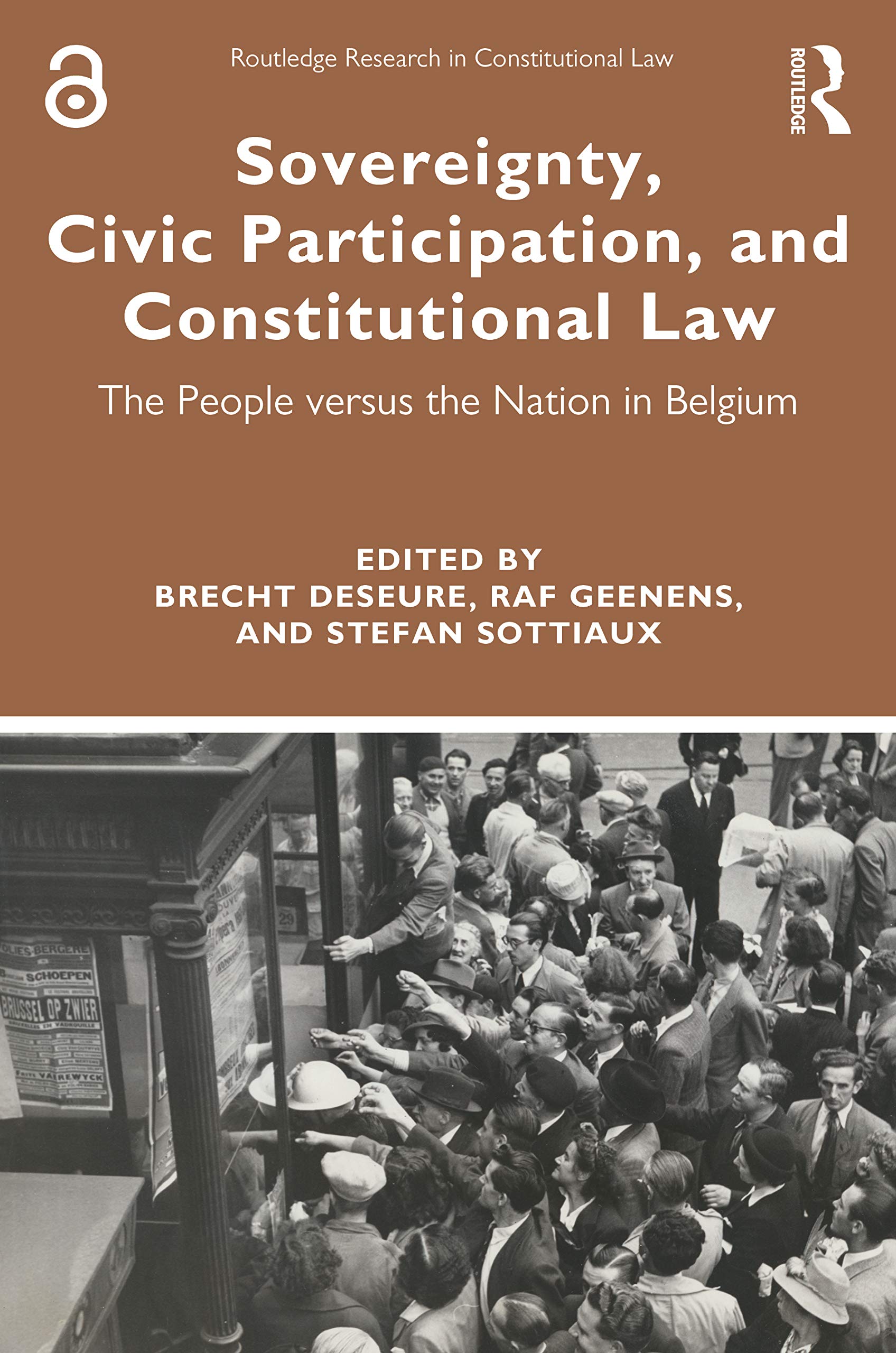
Sovereignty, Civic Participation, and Constitutional Law: The People versus the Nation in Belgium by Deseure Brecht – A
Inclusive of all applicable taxes. FREE shipping on all orders.
Available Offers
- 🚚Free Delivery — Free shipping on all orders
- 💵Cash on Delivery — Pay when your order arrives
- ↩️15-Day Easy Returns — Hassle-free return policy
- 🔒Cash on Delivery — Pay safely when your order arrives
Check Delivery
Product Description
Introduction
In an era where democratic institutions face unprecedented challenges, the question of who truly holds sovereign power—the people or the nation—has never been more urgent. Sovereignty, Civic Participation, and Constitutional Law: The People versus the Nation in Belgium by Deseure Brecht offers a penetrating analysis of this foundational tension, using the Belgian constitutional experience as a lens to examine broader global debates. This hardcover volume from Routledge is essential reading for Indian scholars, legal professionals, and students of political theory who seek to understand how constitutional frameworks shape civic engagement and democratic legitimacy.
Book Overview
This meticulously researched work delves into the heart of Belgium’s constitutional architecture, tracing how the 1831 Constitution enshrined a concept of national sovereignty that has historically marginalised direct citizen participation. Brecht challenges the prevailing interpretation that the nation—represented exclusively through parliament—holds ultimate authority, arguing instead that this view stifles modern democratic innovation. By examining the founding debates, judicial rulings, and contemporary political struggles, the book reveals how Belgium’s constitutional ambiguity has stalled reforms such as referendums and citizen councils. More than a case study, it provides a theoretical framework applicable to democracies worldwide, including India, where debates over citizen participation and constitutional interpretation remain vibrant.
Key Highlights
- Original Constitutional Analysis: Reaches back to the 1831 founding debates to uncover the original intent behind Belgium’s sovereignty clauses, challenging long-held judicial and scholarly assumptions.
- Comparative Perspective: Connects Belgian constitutional struggles to global movements for direct democracy, offering lessons for countries grappling with participatory governance.
- Interdisciplinary Approach: Bridges law, philosophy, history, and political science, making it accessible to a wide academic audience.
- Contemporary Relevance: Addresses the urgent question of how constitutions can evolve to accommodate citizen-led initiatives without undermining representative structures.
Inside the Book
The book is structured to guide readers from foundational concepts to complex applications. Early chapters dissect the theoretical distinction between popular sovereignty and national sovereignty, drawing on Enlightenment thinkers and Belgian constitutional fathers. Middle sections examine landmark judicial decisions that have reinforced the representative model, while later chapters propose alternative interpretations that could open space for referendums, citizen assemblies, and participatory budgeting. Brecht does not shy away from the practical challenges—such as protecting minority rights and preventing majoritarian tyranny—that any shift toward direct democracy must address. Detailed footnotes and a comprehensive bibliography make this a valuable resource for further research.
Key Topics
- Theoretical foundations of sovereignty: popular vs. national
- The 1831 Belgian Constitution and its framers’ intentions
- Judicial interpretation and the doctrine of representative exclusivity
- Direct democracy mechanisms: referendums, citizen councils, and initiatives
- The tension between generational sovereignty and constitutional rigidity
- Comparative constitutional law: Belgium in the European context
- Participatory governance and civic engagement in modern democracies
Reader Benefits
- Deepen Constitutional Understanding: Gain a nuanced grasp of how sovereignty clauses shape political participation, applicable to Indian constitutional debates.
- Enhance Critical Thinking: Learn to question accepted interpretations and explore alternative constitutional possibilities.
- Practical Insights: Discover how constitutional reform can be pursued within existing legal frameworks, relevant for policymakers and activists.
- Academic Edge: Equip yourself with cutting-edge scholarship for research papers, dissertations, or classroom discussions.
Learning Outcomes
By engaging with this book, readers will be able to: articulate the distinction between popular and national sovereignty with precision; critically evaluate judicial reasoning in constitutional cases; identify the historical roots of contemporary participatory deficits; propose constitutional interpretations that balance representation with direct democracy; and apply Belgian lessons to other constitutional systems, including India’s. The book fosters a sophisticated understanding of how legal texts can both enable and constrain democratic evolution.
Who Should Read
- Law Students & Academics: Those specialising in constitutional law, comparative jurisprudence, or legal history will find this an indispensable text.
- Political Scientists & Philosophers: Scholars interested in democratic theory, sovereignty, and civic participation will appreciate the rigorous theoretical engagement.
- Historians: Researchers focusing on 19th-century European constitution-making or Belgian political history will gain fresh insights.
- Policy Practitioners: Civil servants, NGO professionals, and activists working on democratic reform will find practical arguments for participatory governance.
- General Readers: Anyone curious about how constitutions shape our political lives and how citizens can reclaim a voice will be captivated.
About the Author
Deseure Brecht is a distinguished scholar whose work sits at the intersection of constitutional law, political theory, and legal history. With a deep expertise in Belgian constitutionalism and European democratic traditions, Brecht has published extensively on sovereignty, representation, and civic participation. His research brings a critical yet constructive lens to inherited constitutional dogmas, advocating for interpretations that empower citizens without destabilising legal order. This book reflects years of archival research and theoretical refinement, establishing Brecht as a leading voice in the global conversation on democratic renewal.
About the Publisher
Routledge is a premier academic publisher known for its rigorous peer-review process and commitment to advancing scholarly knowledge across the humanities and social sciences. With a catalogue that includes seminal works in law, politics, and philosophy, Routledge ensures that this book meets the highest standards of academic excellence. Indian readers can trust Routledge titles for authoritative, well-researched content that enriches both classroom learning and independent study.
Conclusion
Sovereignty, Civic Participation, and Constitutional Law is more than a study of Belgium—it is a vital resource for anyone who believes that constitutions should serve the living, breathing citizens they govern. By challenging the notion that the nation speaks only through parliament, Deseure Brecht opens the door to a more participatory, responsive democracy. For Indian readers navigating their own constitutional traditions, this book offers both a cautionary tale and a source of inspiration. Order your hardcover copy today from Bookshops.in and join the global conversation about the future of democratic governance.
Quick Summary
Sovereignty, Civic Participation, and Constitutional Law: The People versus the Nation in Belgium by Deseure Brecht is a critical academic work that dissects the constitutional foundations of Belgian democracy. The book reveals how the Belgian Constitution's vesting of sovereignty in the nation—rather than the people—has been interpreted to block direct democratic instruments such as referendums and citizen councils. Through rigorous legal and historical analysis, Brecht explores the tension between representative and participatory models, offering a fresh perspective on the global crisis of trust in party politics. This volume is essential for law students, political scientists, philosophers, and anyone interested in constitutional design and democratic renewal. By purchasing from Bookshops.in, Indian readers gain access to a premium physical edition from Routledge, ensuring a reliable addition to their academic library.
Book Highlights
Book Specifications
| ISBN-13 | 9780367483593 |
| ISBN-10 | 0367483599 |
| Publisher | Routledge |
| Language | English |
| Dimensions | 16.2 x 2.29 x 23.99 cm |
| Weight | 567 g |
| Country | India |
| Category | Philosophy › History & Surveys |
| Genre | Non-fiction |
| Reading Age | Adult |
| Original Language | English |
Frequently Asked Questions
What is the main argument of this book?
Who is the author of Sovereignty, Civic Participation, and Constitutional Law?
Is this book relevant for Indian readers?
What topics does the book cover?
What is the format of the book?
Does the book discuss other countries?
What is the ISBN?
Is the book suitable for undergraduate students?
Does the book include case studies?
What makes this book unique?
Can this book help with research on democracy?
Where can I buy this book in India?
Readers Also Search For
Customers Also Bought
Islam
Spiritual Economies (English, Daromir Rudnyckyj)

Islam
Who Is Allah? (English, Bruce B. Lawrence)
Islam
Islam and Liberal Citizenship: The Search for an Overlapping Consensus by Andrew F. March

Islam
Fiqh Us-Sunnah: Funerals and Diggers by Al-Sayyid Sabiq – Islamic Funeral Guide

Christianity
Genetics (English, Thomas a. Shannon | Mark P. Aulisio | Françoise Baylis)

Hinduism
Karma and Creativity by Christopher Key Chapple – Indian Philosophy
Related Products
View All
Philosophy
Latin American Philosophy: Currents, Issues, Debates by Eduardo Mendieta

Philosophy
Al-Farabi's Short Commentary on Aristotle's Prior Analytics by Nicholas Rescher – Philosophy

Philosophy
Poetics of Imagining: Modern to Post-modern by Richard Kearney
Philosophy
The Metaphysics of Extrinsic Properties: 11 (Metaphysical Research, 11)
Philosophy
Dialogues on Metaphysics and on Religion by Nicolas Malebranche – Philosophy
Philosophy