
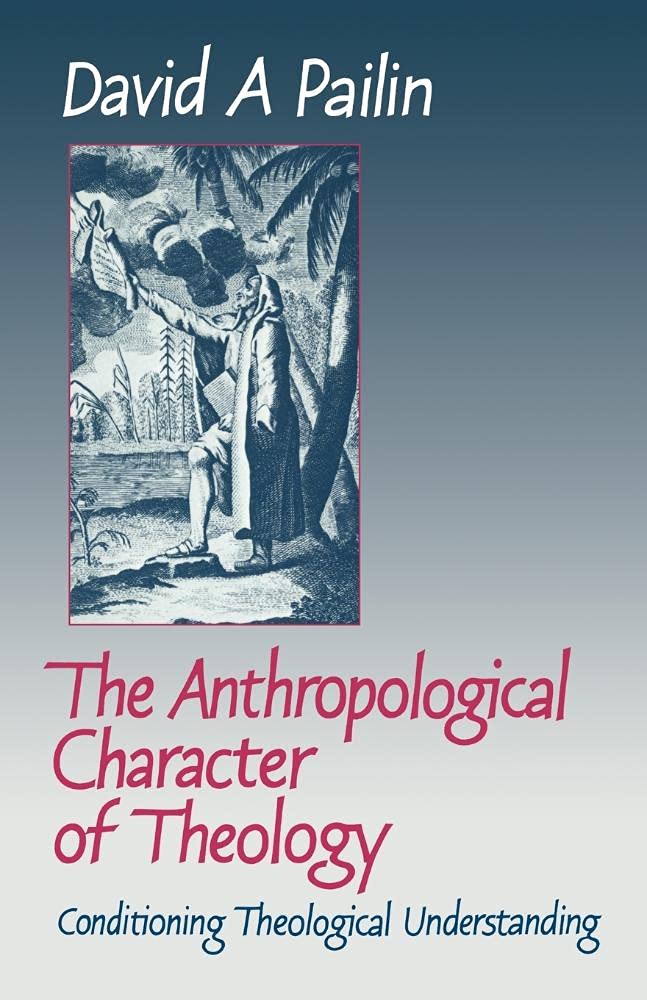
The Anthropological Character of Theology: Conditioning Theological Understanding by David A. Pailin – A Cambridge Unive
Inclusive of all applicable taxes. FREE shipping on all orders.
Available Offers
- 🚚Free Delivery — Free shipping on all orders
- 💵Cash on Delivery — Pay when your order arrives
- ↩️15-Day Easy Returns — Hassle-free return policy
- 🔒Cash on Delivery — Pay safely when your order arrives
Check Delivery
Product Description
Introduction
In an age where faith and reason often seem at odds, The Anthropological Character of Theology: Conditioning Theological Understanding by David A. Pailin offers a profound and necessary exploration of how human thought shapes theological claims. Published by the prestigious Cambridge University Press, this hardcover volume invites readers to reimagine theology not as a set of static divine decrees, but as a dynamic, humanly conditioned pursuit of ultimate truth. For Indian students, scholars, and seekers navigating the rich tapestry of religious traditions, this book provides a rigorous yet accessible framework to understand theology’s credibility and relevance in contemporary discourse.
Book Overview
This scholarly work tackles a central question: if theologians are human beings with limited perspectives, how can their conclusions claim any authority? David A. Pailin argues that acknowledging this anthropological conditioning is not a weakness but a strength. By examining the interplay of faith, belief, and reason, the book demonstrates that theology can still offer meaningful insights into the fundamental character of reality. Pailin navigates between conservative dogmatism and secular scepticism, showing that a credible theology must embrace its human roots while remaining open to the transcendent. This is not a book that offers easy answers, but one that equips readers to think critically about the very foundations of religious understanding.
Key Highlights
- Groundbreaking Thesis: Explores how human rationality and cultural context inevitably influence theological conclusions, challenging both traditional and modernist views.
- Balanced Approach: Avoids the extremes of religious conservatism and secular dismissal, offering a middle path grounded in intellectual honesty.
- Clarity on Complex Concepts: Provides clear distinctions between faith, belief, and reason, making dense philosophical ideas accessible to serious students.
- Relevance to Indian Context: The book’s emphasis on pluralism and conditioned understanding resonates deeply with India’s multi-religious landscape.
- Authoritative Publisher: Cambridge University Press ensures academic rigour and lasting value for libraries and personal collections.
Inside the Book
The volume is structured to guide readers from foundational questions to advanced reflections. Early chapters establish why theology must be seen as a human activity, shaped by language, history, and culture. Pailin then examines the nature of theological understanding itself, arguing that it is a mode of knowing reality that must stand up to rational scrutiny. Later sections tackle the relationship between divine revelation and human reason, the role of experience in shaping belief, and the implications for how we speak about God. Throughout, the author engages with major thinkers from both Western and Eastern traditions, making the book a rich resource for comparative study.
Key Topics
- The anthropological conditioning of theological thought
- Faith, belief, and reason: definitions and interrelations
- The credibility of theology as a mode of understanding
- Human rationality and its impact on religious claims
- Revelation versus human experience in theological method
- Secular challenges and conservative responses to theology
- Theology’s commitment to understanding ultimate reality
- Pluralism and the possibility of meaningful God-talk
Reader Benefits
By engaging with this book, readers will gain a sophisticated understanding of why theology matters even in a secular age. It empowers students to critically evaluate religious claims without dismissing them outright, and helps scholars build a framework for interdisciplinary dialogue. For Indian readers, the book offers tools to navigate the complex relationship between diverse faith traditions and modern rationality. It also serves as an excellent resource for those preparing for advanced studies in theology, philosophy of religion, or religious studies. The hardcover edition ensures durability for repeated reference, making it a valuable addition to any academic or personal library.
Learning Outcomes
- Understand the key arguments for and against the anthropological conditioning of theology
- Distinguish between faith, belief, and reason with precision
- Critically assess the credibility of theological claims in light of human rationality
- Apply insights from the book to contemporary debates on religion and science
- Develop a more nuanced appreciation for how culture and history shape religious thought
- Engage with major philosophical challenges to traditional theology
Who Should Read
This book is ideally suited for undergraduate and postgraduate students of theology, philosophy, religious studies, and anthropology. It will also appeal to seminary students, clergy, and thoughtful lay readers who wish to deepen their understanding of faith in a modern context. Indian academics working in comparative religion or interfaith dialogue will find Pailin’s approach especially stimulating. Additionally, anyone wrestling with questions of how human limitation relates to divine truth will find this work both challenging and rewarding.
About the Author
David A. Pailin was a distinguished theologian and philosopher of religion, known for his incisive critiques of both traditional and secular approaches to theology. He served as a professor and lecturer at the University of Manchester, where his research focused on the nature of theological understanding, the philosophy of religion, and the relationship between faith and reason. Pailin’s work is marked by a commitment to intellectual rigour and a deep respect for the human quest for meaning. His writings continue to influence scholars around the world, particularly those exploring how theology can remain credible in a pluralistic age.
About the Publisher
Cambridge University Press is one of the world’s oldest and most respected academic publishers, with a history spanning over four centuries. Known for its commitment to scholarly excellence, the Press publishes works that set the standard in fields ranging from theology to science. This hardcover edition reflects the Press’s dedication to quality production and lasting value, making it a trusted choice for students, libraries, and institutions in India and globally.
Conclusion
The Anthropological Character of Theology is more than an academic text—it is a thoughtful invitation to reconsider what theology can be when it takes its human context seriously. David A. Pailin offers readers a path beyond the dead ends of dogmatism and scepticism, showing that theology can still speak meaningfully about ultimate reality. For Indian readers seeking to engage with global theological debates while honouring their own pluralistic heritage, this book is an indispensable companion. Order your hardcover copy from Bookshops.in today and add a work of lasting intellectual value to your collection.
Quick Summary
The Anthropological Character of Theology: Conditioning Theological Understanding by David A. Pailin is a profound academic work that examines how theological conclusions are inevitably shaped by the human rationality of those who produce them. Published by Cambridge University Press, this book argues that theology must establish its credibility as a mode of understanding if it is to remain valuable. Pailin offers a critical clarification of the relationships between faith, belief, and reason, challenging assumptions of divine authority in theological discourse. The book is particularly relevant for Indian students and scholars of theology, philosophy, and religious studies who seek a rigorous, philosophical approach to understanding religion. Readers will learn to critically evaluate theological claims, appreciate the role of human thought in shaping religious beliefs, and explore theology's commitment to understanding the fundamental character of reality. This hardcover edition is a must-have for academic libraries, seminaries, and anyone interested in the intersection of faith and reason. Order from Bookshops.in for a reliable purchase experience.
Book Highlights
Book Specifications
| ISBN-13 | 9780521093286 |
| ISBN-10 | 0521093287 |
| Publisher | Cambridge University Press |
| Language | English |
| Dimensions | 13.97 x 1.93 x 21.59 cm |
| Weight | 390 g |
| Country | India |
| Category | Religious Studies › Theology & Philosophy of Religion |
| Genre | Academic |
| Reading Age | Adult |
| Original Language | English |
Frequently Asked Questions
What is the main theme of this book?
Who is the author of this book?
Is this book suitable for Indian students?
What is the ISBN of this book?
Does this book discuss faith and reason?
What is the binding type?
What is the price in Indian rupees?
What is the rating of this book?
Is this book part of a series?
What category does this book belong to?
What language is the book in?
Can I buy this book from Bookshops.in?
Readers Also Search For
Customers Also Bought
Islam
Spiritual Economies (English, Daromir Rudnyckyj)

Islam
Who Is Allah? (English, Bruce B. Lawrence)
Islam
Islam and Liberal Citizenship: The Search for an Overlapping Consensus by Andrew F. March
Islam
Fiqh Us-Sunnah: Funerals and Diggers by Al-Sayyid Sabiq – Islamic Funeral Guide

Christianity
Genetics (English, Thomas a. Shannon | Mark P. Aulisio | Françoise Baylis)

Hinduism
Karma and Creativity by Christopher Key Chapple – Indian Philosophy
Related Products
View All
Religion & Spirituality
Spiritual Competency in Psychotherapy | by Philip Brownell | Springer Publishing Company | by Philip Brownell | Springer Publishing Company | by Philip Brownell | Springer Publishing Company | by Philip Brownell | Springer Publishing Company | by Philip Brownell | Springer Publishing Company | by Philip Brownell | Springer Publishing Company | by Philip Brownell | Springer Publishing Company | by Philip Brownell | Springer Publishing Company | by Philip Brownell | Springer Publishing Company | b
Religion & Spirituality
Religion as a Conversation Starter | by Ina Merdjanova | Continuum | by Ina Merdjanova | Continuum | by Ina Merdjanova | Continuum | by Ina Merdjanova | Continuum | by Ina Merdjanova | Continuum | by Ina Merdjanova | Continuum | by Ina Merdjanova | Continuum | by Ina Merdjanova | Continuum | by Ina Merdjanova | Continuum | by Ina Merdjanova | Continuum | by Ina Merdjanova | Continuum | by Ina Merdjanova | Continuum | by Ina Merdjanova | Continuum | by Ina Merdjanova | Continuum | by Ina Merdjano
Religion & Spirituality
The Other Jewish Question: Identifying the Jew and Making Sense of Modernity
Religion & Spirituality
The Oxford Guide to People & Places of the Bible | by Bruce M. Metzger | Michael D. Coogan | Oxford University Press | by Bruce M. Metzger | Michael D. Coogan | Oxford University Press | by Bruce M. Metzger | Michael D. Coogan | Oxford University Press | by Bruce M. Metzger | Michael D. Coogan | Oxford University Press | by Bruce M. Metzger | Michael D. Coogan | Oxford University Press | by Bruce M. Metzger | Michael D. Coogan | Oxford University Press | by Bruce M. Metzger | Michael D. Coogan |

Religion & Spirituality
Anti-Judaism in Early Christianity | by Stephen G. Wilson | Wilfrid Laurier University Press | by Stephen G. Wilson | Wilfrid Laurier University Press | by Stephen G. Wilson | Wilfrid Laurier University Press | by Stephen G. Wilson | Wilfrid Laurier University Press | by Stephen G. Wilson | Wilfrid Laurier University Press | by Stephen G. Wilson | Wilfrid Laurier University Press | by Stephen G. Wilson | Wilfrid Laurier University Press | by Stephen G. Wilson | Wilfrid Laurier University Press |
Religion & Spirituality