
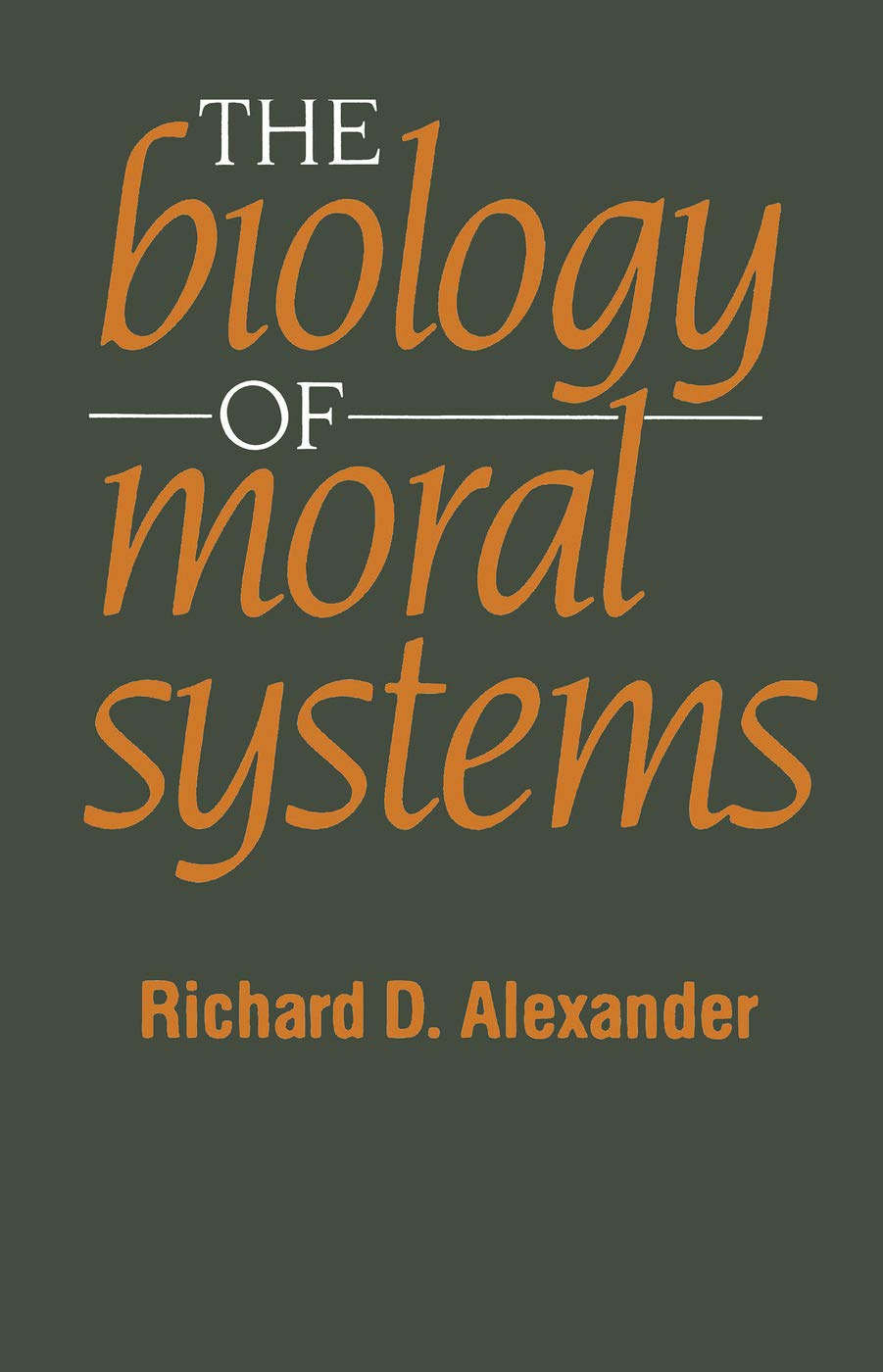
The Biology of Moral Systems by Richard Alexander – An Evolutionary Perspective on Human Ethics and Indirect Reciprocity
Inclusive of all applicable taxes. FREE shipping on all orders.
Available Offers
- 🚚Free Delivery — Free shipping on all orders
- 💵Cash on Delivery — Pay when your order arrives
- ↩️15-Day Easy Returns — Hassle-free return policy
- 🔒Cash on Delivery — Pay safely when your order arrives
Check Delivery
Product Description
Introduction
In the vast landscape of evolutionary science, few works have dared to bridge the gap between biology and moral philosophy as boldly as Richard Alexander's The Biology of Moral Systems. This hardcover edition, published by Routledge, offers Indian readers a profound exploration of how natural selection shapes human ethics, cooperation, and conflict. For students of science, philosophy, and sociology in India, this book provides a rigorous framework to understand morality not as a divine gift, but as an evolved strategy for survival and reproductive success.
Book Overview
The Biology of Moral Systems challenges the long-held assumption that moral behaviour lies outside the purview of evolutionary biology. Richard Alexander argues that moral questions arise from conflicts of interest at various levels of social organization—from individuals to families, communities, and nations. He posits that moral systems are essentially systems of indirect reciprocity, where reputation and social standing become currencies of survival. The book weaves together insights from ethology, anthropology, and evolutionary theory to present a unified theory of human interests, showing how confluences of interest at lower social levels help resolve conflicts at higher levels.
Key Highlights
- Evolutionary Foundation: A groundbreaking application of natural selection to moral reasoning, demonstrating that altruism and justice have biological roots.
- Indirect Reciprocity Model: Introduces the concept that moral behaviour is driven by reputation management and long-term social gains, not just immediate payoffs.
- Interdisciplinary Approach: Merges biology with philosophy, psychology, and sociology, making it valuable for diverse academic fields.
- Indian Context Relevance: Offers frameworks to analyze caste dynamics, kinship systems, and community ethics through an evolutionary lens.
- Routledge Quality: Published by a leading academic press, ensuring scholarly rigor and enduring relevance.
Inside the Book
The book is structured to guide readers from foundational concepts to complex applications. Early chapters establish the evolutionary logic of moral systems, explaining why morality is not contrary to biological evolution but an expression of it. Middle sections delve into the mechanics of indirect reciprocity, using examples from human societies and animal behaviour. Later chapters explore the implications for understanding law, politics, and religion. Each argument is supported by empirical evidence and logical deduction, making the content accessible yet intellectually demanding.
Key Topics
- Evolution of altruism and cooperation
- Conflict of interest at individual and group levels
- Reputation as a driver of moral behaviour
- Kin selection and inclusive fitness
- Moral systems as conflict-resolution mechanisms
- Biological basis of justice and fairness
- Role of deception and self-deception in social interactions
- Implications for ethics in contemporary India
Reader Benefits
Indian readers will find this book particularly enriching because it offers a scientific lens to examine age-old moral dilemmas present in our diverse society. Whether you are a student of biology trying to understand human behaviour, a philosophy enthusiast questioning the roots of ethics, or a sociology researcher exploring community dynamics, this book provides tools for deeper analysis. It encourages critical thinking about why we help strangers, how reputations shape social hierarchies, and what evolutionary forces underpin our sense of right and wrong.
Learning Outcomes
By engaging with this text, readers will be able to: articulate the evolutionary origins of moral systems; explain how indirect reciprocity functions in real-world social networks; critically evaluate traditional moral theories from a biological perspective; apply concepts of conflict and confluence to Indian social structures; and develop a nuanced understanding of how biology and culture interact to produce ethical norms.
Who Should Read
- Undergraduate and postgraduate students in biology, psychology, philosophy, and sociology
- Researchers in evolutionary anthropology and behavioural ecology
- Ethics scholars interested in naturalistic approaches to morality
- Indian educators looking for interdisciplinary teaching resources
- General readers with a keen interest in science and human nature
About the Author
Richard Alexander is a distinguished American evolutionary biologist and professor emeritus at the University of Michigan. His pioneering work on the evolution of social behaviour, including kin selection and moral systems, has influenced generations of scientists. He is also known for his research on the biology of human sociality and the evolutionary roots of conflict and cooperation. His writings remain foundational in the field of evolutionary psychology.
About the Publisher
Routledge, a member of the Taylor & Francis Group, is one of the world's leading academic publishers. With a history spanning over 150 years, Routledge is renowned for producing high-quality scholarly books in the humanities, social sciences, and sciences. This hardcover edition reflects their commitment to durable, long-lasting academic resources suitable for libraries and personal collections across India.
Conclusion
The Biology of Moral Systems is not merely a book—it is a paradigm shift in how we understand morality. For Indian readers, it offers a rare opportunity to explore the biological underpinnings of ethics in a way that respects both scientific rigour and cultural complexity. Whether you are preparing for competitive exams, writing a thesis, or simply seeking to understand why humans behave the way they do, this hardcover edition from Bookshops.in is an essential addition to your library. Order your copy today and embark on an intellectual journey that bridges evolution and ethics.
Quick Summary
The Biology of Moral Systems by Richard Alexander is a groundbreaking work that bridges evolutionary biology and moral philosophy. The book argues that moral systems are not contrary to biological evolution but are instead sophisticated adaptations for managing conflicts of interest through indirect reciprocity. Alexander, a leading evolutionary biologist, draws on decades of research to show how humans use confluences of interest at lower social levels to resolve conflicts at higher levels. This book is ideal for Indian students and researchers in biology, psychology, and philosophy who want to understand the scientific basis of human ethics. Readers will learn about the evolutionary origins of cooperation, altruism, and moral rules, and how these concepts apply to modern social dilemmas. By purchasing from Bookshops.in, you get a genuine hardcover copy delivered to your doorstep across India, supporting a local bookstore dedicated to academic excellence.
Book Highlights
Book Specifications
| ISBN-13 | 9780202011745 |
| ISBN-10 | 0202011747 |
| Publisher | Routledge |
| Language | English |
| Dimensions | 15.24 x 1.85 x 22.86 cm |
| Weight | 431 g |
| Country | India |
| Category | Philosophy › Ethics |
| Genre | Non-fiction |
| Original Language | English |
Frequently Asked Questions
What is The Biology of Moral Systems about?
Who is the author of this book?
Is this book suitable for beginners?
What is indirect reciprocity?
How does the book connect biology and morality?
Is this book used in Indian universities?
Does the book include case studies?
What is the main argument of the book?
What is the price in India?
Is the book hardcover or paperback?
Can I find this book in Indian bookstores?
What are some related books?
Why should I buy from Bookshops.in?
Readers Also Search For
Customers Also Bought
Islam
Spiritual Economies (English, Daromir Rudnyckyj)

Islam
Who Is Allah? (English, Bruce B. Lawrence)
Islam
Islam and Liberal Citizenship: The Search for an Overlapping Consensus by Andrew F. March

Islam
Fiqh Us-Sunnah: Funerals and Diggers by Al-Sayyid Sabiq – Islamic Funeral Guide

Christianity
Genetics (English, Thomas a. Shannon | Mark P. Aulisio | Françoise Baylis)

Hinduism
Karma and Creativity by Christopher Key Chapple – Indian Philosophy
Related Products
View All
Philosophy
Latin American Philosophy: Currents, Issues, Debates by Eduardo Mendieta

Philosophy
Al-Farabi's Short Commentary on Aristotle's Prior Analytics by Nicholas Rescher – Philosophy

Philosophy
Poetics of Imagining: Modern to Post-modern by Richard Kearney

Philosophy
The Metaphysics of Extrinsic Properties: 11 (Metaphysical Research, 11)

Philosophy
Dialogues on Metaphysics and on Religion by Nicolas Malebranche – Philosophy

Philosophy