
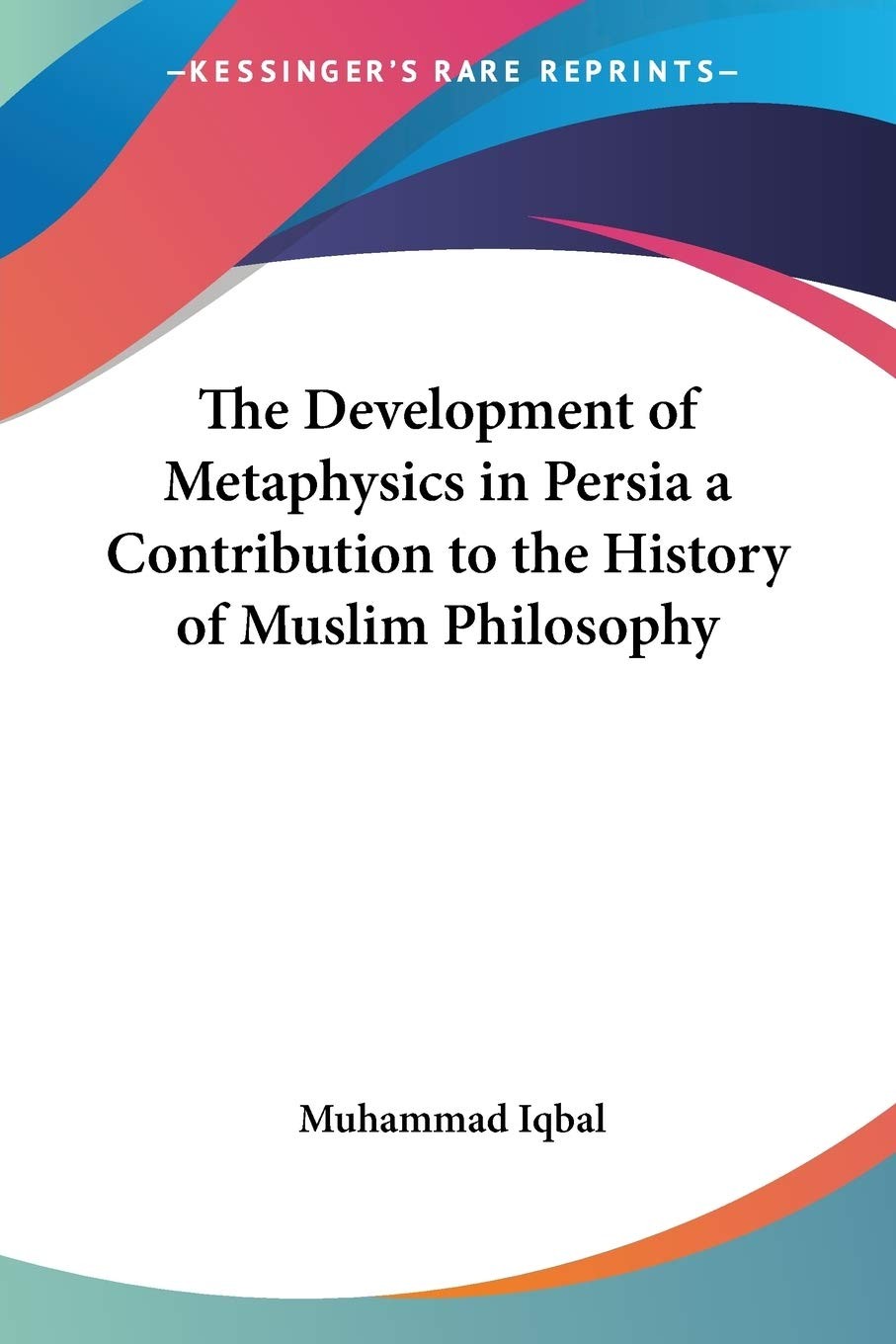
The Development of Metaphysics in Persia: A Contribution to the History of Muslim Philosophy by Muhammad Iqbal – Essenti
Inclusive of all applicable taxes. FREE shipping on all orders.
Available Offers
- 🚚Free Delivery — Free shipping on all orders
- 💵Cash on Delivery — Pay when your order arrives
- ↩️15-Day Easy Returns — Hassle-free return policy
- 🔒Cash on Delivery — Pay safely when your order arrives
Check Delivery
Product Description
Introduction
Muhammad Iqbal's The Development of Metaphysics in Persia a Contribution to the History of Muslim Philosophy stands as a monumental work that traces the evolution of metaphysical thought within the Persian intellectual tradition. Originally published as a doctoral dissertation, this book offers a rare and profound exploration of how Persian thinkers shaped Islamic philosophy from its earliest roots through the medieval period. For students, scholars, and lovers of philosophy, this facsimile reprint from Kessinger Publishing brings back a classic text that remains deeply relevant for understanding the intersection of faith, reason, and mysticism in the Islamic world.
Book Overview
This hardcover edition presents Iqbal's groundbreaking study of Persian metaphysics, examining the contributions of key philosophers such as Avicenna, Al-Ghazali, Suhrawardi, and Mulla Sadra. The book systematically unpacks the development of metaphysical concepts—from the early debates on being and essence to the later flourishing of illuminationist and existentialist schools. Written with clarity and scholarly rigour, it serves as both a historical survey and a philosophical analysis, making it an indispensable resource for anyone seeking to understand the rich tapestry of Muslim philosophy as it unfolded in Persia.
Key Highlights
- A facsimile reprint of the original 1908 edition, preserving the authentic text and scholarly apparatus of Iqbal's doctoral thesis
- Comprehensive coverage of Persian metaphysical traditions, including Peripatetic, Illuminationist, and Transcendent Theosophy schools
- Detailed analysis of how Persian philosophers engaged with Greek, Neoplatonic, and Islamic theological ideas
- Written by Muhammad Iqbal, the poet-philosopher who later became the spiritual father of Pakistan and a key figure in modern Islamic thought
- Essential reading for understanding the philosophical foundations of Persian Sufism and mysticism
Inside the Book
The book is structured around the chronological and thematic evolution of metaphysics in Persia. It begins with the early reception of Greek philosophy in the Islamic world, moves through the classical period of Avicenna and Al-Ghazali, and culminates in the innovative systems of Suhrawardi and Mulla Sadra. Each chapter delves into the core metaphysical problems—such as the nature of existence, the relationship between God and the world, the problem of evil, and the concept of the soul—showing how Persian thinkers developed original solutions that continue to influence contemporary philosophy. The text is rich with citations from original Arabic and Persian sources, offering readers a direct window into the primary texts.
Key Topics
- The transmission of Greek philosophy to the Islamic world and its Persian reception
- Avicenna's metaphysics of being and essence, and his proof of the Necessary Being
- Al-Ghazali's critique of philosophy and his integration of Sufi metaphysics
- Suhrawardi's Illuminationist philosophy and the primacy of light and presence
- Mulla Sadra's Transcendent Theosophy and the concept of substantial motion
- The role of intuition and intellectual intuition in Persian metaphysical thought
- Comparisons between Persian metaphysics and Western philosophical traditions
Reader Benefits
This book offers more than just historical knowledge—it provides a deep intellectual journey that sharpens your understanding of metaphysical concepts. Readers will gain access to a rarely seen work that bridges Eastern and Western philosophy, helping them appreciate the universal questions of existence, knowledge, and divinity. The facsimile reprint format ensures that you experience the text exactly as Iqbal wrote it, including the original footnotes and scholarly apparatus. For Indian students, this book is particularly valuable as it connects to the broader Islamic and Persian intellectual heritage that has influenced South Asian thought for centuries.
Learning Outcomes
- Understand the key stages in the development of Persian metaphysics from the 9th to the 17th centuries
- Analyse the major philosophical arguments of Avicenna, Al-Ghazali, Suhrawardi, and Mulla Sadra
- Evaluate the relationship between reason, revelation, and mystical experience in Islamic philosophy
- Compare Persian metaphysical systems with Western philosophical traditions such as Neoplatonism and existentialism
- Develop critical thinking skills through engagement with primary philosophical texts and arguments
Who Should Read
This book is ideal for university students of philosophy, Islamic studies, and comparative religion, as well as researchers interested in the history of ideas. It is also highly recommended for scholars of South Asian thought, given Iqbal's profound influence on modern Indian and Pakistani intellectual life. General readers with a curiosity about metaphysics, Sufism, or the golden age of Islamic civilisation will find this work both accessible and enlightening. Teachers and professors looking for a foundational text on Persian philosophy will appreciate its depth and scholarly rigour.
About the Author
Muhammad Iqbal (1877–1938) was a poet, philosopher, and politician widely regarded as one of the most important figures in modern Islamic thought. He earned his PhD from the University of Munich, where he wrote the dissertation that forms the basis of this book. Iqbal's later works, including his poetry in Persian and Urdu, as well as his philosophical lectures, have inspired generations across the Indian subcontinent and the Muslim world. His vision of a revived Islamic philosophy and his call for spiritual renewal continue to resonate today.
About the Publisher
Kessinger Publishing is dedicated to preserving culturally significant works by reprinting rare and out-of-print books. This facsimile edition ensures that Iqbal's seminal contribution to the history of Muslim philosophy remains available to contemporary readers. The publisher's commitment to quality means that the text is faithfully reproduced, including all original imperfections, offering an authentic reading experience that respects the historical character of the work.
Conclusion
The Development of Metaphysics in Persia a Contribution to the History of Muslim Philosophy is more than a historical document—it is a living text that invites readers to engage with the deepest questions of existence. Whether you are a seasoned philosopher or a curious student, this book will expand your horizons and deepen your appreciation for the rich intellectual heritage of Persia and the Islamic world. Add this rare gem to your library and explore the metaphysical foundations that shaped centuries of thought.
Quick Summary
The Development of Metaphysics in Persia by Muhammad Iqbal is a classic scholarly work that provides a comprehensive history of metaphysical thought within Persian Islamic civilization. Originally published in 1908, this facsimile reprint by Kessinger Publishing preserves the original text for modern readers. The book traces the evolution of Muslim philosophy from its early Greek influences through the medieval period, examining the contributions of key figures such as Avicenna, Al-Ghazali, and later Persian thinkers. Iqbal, himself a poet-philosopher, offers a unique perspective that blends analytical rigor with cultural insight. This volume is ideal for students of Islamic studies, philosophy, and Persian history, as well as anyone interested in the intellectual heritage of the Muslim world. Readers will gain a deeper understanding of how metaphysical concepts developed in dialogue with religion, science, and mysticism. By purchasing from Bookshops.in, customers receive a high-quality hardcover edition that is perfect for academic reference or personal libraries. The book's clear structure and accessible language make it suitable for both beginners and advanced scholars. It remains a vital resource for those exploring the roots of modern Islamic thought and the enduring legacy of Persian philosophy.
Book Highlights
Book Specifications
| ISBN-13 | 9780766191884 |
| ISBN-10 | 0766191885 |
| Publisher | Kessinger Publishing Co |
| Language | English |
| Dimensions | 15.24 x 1.02 x 22.86 cm |
| Weight | 272 g |
| Country | India |
| Category | Philosophy › Metaphysics |
| Genre | Non-fiction |
| Reading Age | Adult |
| Original Language | English |
Frequently Asked Questions
What is The Development of Metaphysics in Persia about?
Who is the author of this book?
Is this book suitable for beginners in Islamic philosophy?
Does the book cover Sufi metaphysics?
What is the language of the book?
Is this book part of a series?
What is the ISBN of this book?
Can I use this book for academic research?
Does the book include original Persian terms?
Is the book available in paperback?
Why should I buy from Bookshops.in?
Readers Also Search For
Customers Also Bought
Islam
Spiritual Economies (English, Daromir Rudnyckyj)

Islam
Who Is Allah? (English, Bruce B. Lawrence)
Islam
Islam and Liberal Citizenship: The Search for an Overlapping Consensus by Andrew F. March
Islam
Fiqh Us-Sunnah: Funerals and Diggers by Al-Sayyid Sabiq – Islamic Funeral Guide

Christianity
Genetics (English, Thomas a. Shannon | Mark P. Aulisio | Françoise Baylis)

Hinduism
Karma and Creativity by Christopher Key Chapple – Indian Philosophy
Related Products
View All
Philosophy
Latin American Philosophy: Currents, Issues, Debates by Eduardo Mendieta

Philosophy
Al-Farabi's Short Commentary on Aristotle's Prior Analytics by Nicholas Rescher – Philosophy
Philosophy
Poetics of Imagining: Modern to Post-modern by Richard Kearney

Philosophy
The Metaphysics of Extrinsic Properties: 11 (Metaphysical Research, 11)
Philosophy
Dialogues on Metaphysics and on Religion by Nicolas Malebranche – Philosophy
Philosophy