
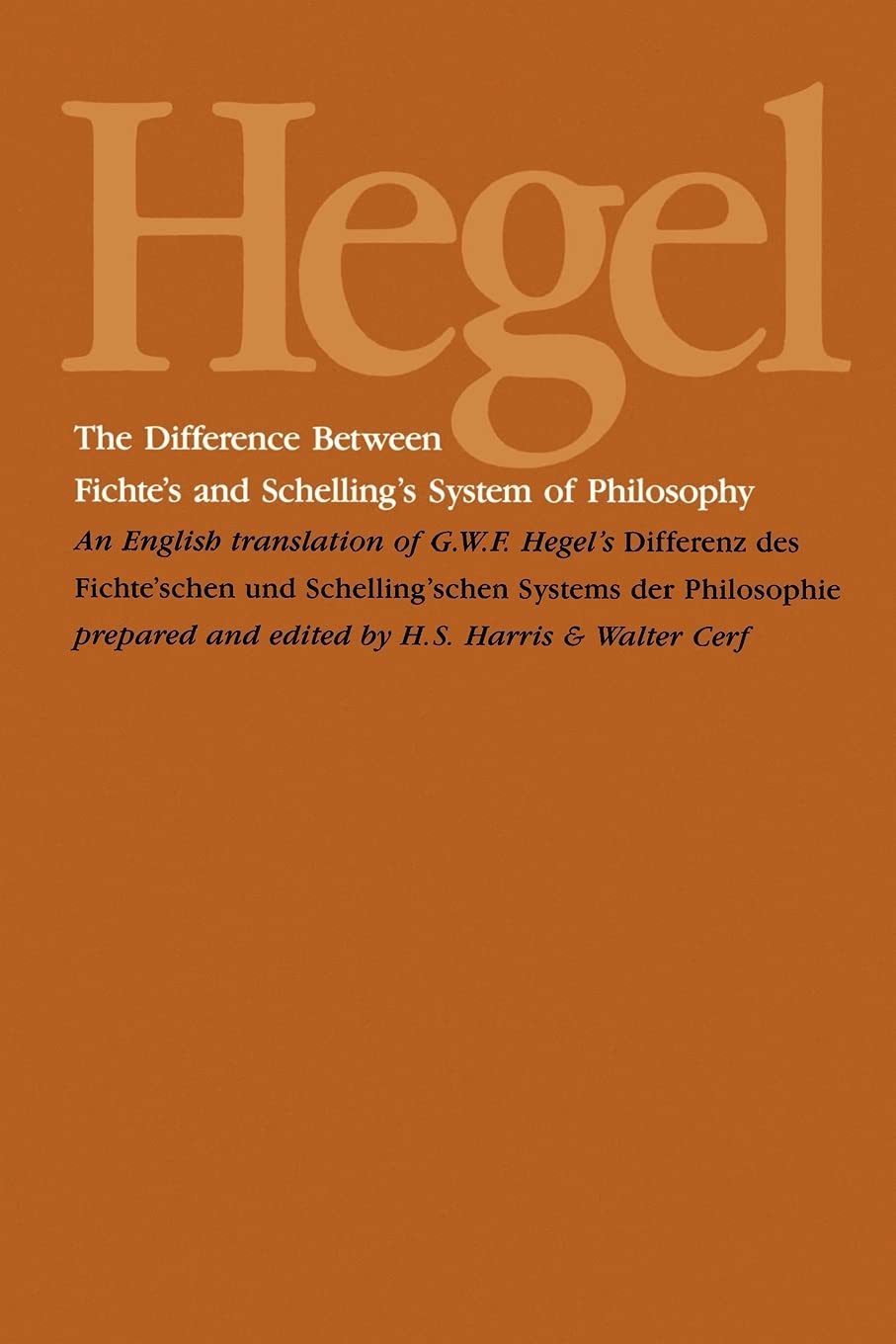
The Difference Between Fichte's and Schelling's System of Philosophy: Hegel's Critical Essay on German Idealism and the
Inclusive of all applicable taxes. FREE shipping on all orders.
Available Offers
- 🚚Free Delivery — Free shipping on all orders
- 💵Cash on Delivery — Pay when your order arrives
- ↩️15-Day Easy Returns — Hassle-free return policy
- 🔒Cash on Delivery — Pay safely when your order arrives
Check Delivery
Product Description
Introduction
G. W. F. Hegel’s The Difference Between Fichte's and Schelling's System of Philosophy is a cornerstone of German Idealism and a vital text for anyone seeking to understand the evolution of modern Western philosophy. This authoritative English translation, published by the State University of New York Press, presents Hegel’s early critical essay in a clear and accessible format. For Indian students and scholars of philosophy, this book offers a unique window into the intellectual ferment that shaped the works of Kant, Fichte, Schelling, and Hegel himself. It is not merely a historical document but a living philosophical inquiry into the nature of knowledge, reality, and method.
Book Overview
Originally written in 1801, this essay marks Hegel’s first major philosophical publication and his initial attempt to define his own position in relation to his contemporaries. Hegel examines the philosophical systems of Johann Gottlieb Fichte and Friedrich Wilhelm Joseph Schelling, arguing that while Fichte’s idealism advanced beyond Kant’s critical philosophy, it remained trapped in a subjective and formalistic framework. Hegel contends that Schelling’s philosophy of nature provides the necessary corrective by grounding idealism in an objective, dynamic reality. The essay is also famous for its general introduction, where Hegel lays out foundational ideas about philosophical method, contradiction, and the nature of speculation that would later blossom into his mature dialectical system.
Key Highlights
- First English translation of a seminal work in German Idealism, making Hegel’s early thought accessible to a wider audience.
- Critical analysis of Fichte’s Wissenschaftslehre and Schelling’s Naturphilosophie, offering a comparative study that remains relevant today.
- Foundational text for understanding the development of Hegel’s dialectical method and his concept of absolute idealism.
- Influential in the history of science, particularly in the emergence of Nature-Philosophy as a movement that sought to bridge philosophy and natural sciences.
- Hardcover edition from a prestigious academic publisher, ideal for library collections and serious study.
Inside the Book
The volume begins with Hegel’s preface, where he reflects on the task of philosophy in an age of division and fragmentation. The main body is divided into two parts: the first critically examines Fichte’s system, highlighting its abstract subjectivity and formalistic tendencies; the second presents Schelling’s philosophy as a more complete synthesis of subject and object, mind and nature. Throughout, Hegel engages with key concepts such as the absolute, reflection, identity, and difference. The translation includes helpful footnotes and a scholarly introduction that contextualizes the work within Hegel’s broader corpus and the philosophical debates of his time.
Key Topics
- The relationship between Fichte’s subjective idealism and Schelling’s objective idealism
- Hegel’s critique of formalism and abstract subjectivity in philosophy
- The concept of the Absolute and its role in philosophical systems
- Nature-Philosophy and its implications for the history of science
- The emergence of the dialectical method as a tool for resolving philosophical oppositions
- Kant’s influence on post-Kantian German Idealism
Reader Benefits
This book provides Indian readers with a direct encounter with one of philosophy’s most challenging yet rewarding thinkers. It clarifies the often-misunderstood transition from Kant to Hegel and offers a rigorous introduction to the problems of idealism, realism, and method. Students will gain a deeper appreciation for how philosophical systems are constructed and critiqued. The clear translation and scholarly apparatus make it suitable for both classroom use and independent study. Moreover, it serves as a valuable resource for those interested in the intersections of philosophy, science, and history.
Learning Outcomes
- Understand the key differences between Fichte’s and Schelling’s philosophical systems as articulated by Hegel.
- Grasp the foundational concepts of German Idealism, including the Absolute, reflection, and identity.
- Analyze Hegel’s early critique of formalism and its relevance to contemporary philosophy.
- Trace the development of Hegel’s dialectical method from its earliest formulation.
- Appreciate the role of Nature-Philosophy in the history of scientific thought.
- Develop critical reading skills through engagement with a dense, argument-driven text.
Who Should Read
This book is essential for undergraduate and postgraduate students of philosophy, especially those studying German Idealism, metaphysics, or the history of modern philosophy. It will also appeal to scholars of intellectual history, historians of science, and anyone interested in the roots of Hegelian thought. Indian readers preparing for competitive examinations like UGC NET or pursuing research in philosophy will find it an indispensable primary source. Additionally, general readers with a strong interest in philosophy and the courage to tackle a demanding text will be richly rewarded.
About the Author
Georg Wilhelm Friedrich Hegel (1770–1831) is one of the most influential philosophers in the Western tradition. His works, including The Phenomenology of Spirit, Science of Logic, and Elements of the Philosophy of Right, have shaped fields as diverse as political theory, aesthetics, theology, and social science. Hegel’s dialectical method and his concept of absolute idealism continue to provoke debate and inspire new interpretations. This early essay reveals the young Hegel grappling with the central questions that would define his entire career.
About the Publisher
The State University of New York Press (SUNY Press) is a leading academic publisher known for its rigorous scholarly standards and wide-ranging catalog in philosophy, cultural studies, and the humanities. This translation is part of their distinguished series on Hegelian studies, ensuring a reliable and authoritative edition that meets the needs of serious readers.
Conclusion
The Difference Between Fichte's and Schelling's System of Philosophy is more than a historical curiosity—it is a vibrant philosophical text that challenges readers to think deeply about the nature of reality, knowledge, and method. For Indian students and scholars, it offers a gateway into the heart of German Idealism and a chance to engage with one of philosophy’s greatest minds at the dawn of his career. Add this hardcover volume to your library and embark on a journey through the foundations of modern thought.
Quick Summary
This book presents G. W. F. Hegel's early critical essay examining the philosophical systems of Johann Gottlieb Fichte and Friedrich Wilhelm Joseph Schelling. Hegel argues that while Fichte's Science of Knowledge represents an advance from Kant's Critique of Pure Reason, it remains trapped in abstract subjectivity. Schelling's philosophy of nature, by contrast, offers a more objective and unified approach, paving the way for Hegel's own dialectical method. The essay includes a general introduction on philosophical method that is of lasting interest. This English translation, published by State University of New York Press, is essential reading for students and scholars of German idealism, continental philosophy, and the history of dialectics. Readers will gain a deeper understanding of how Hegel's thought evolved and how he positioned himself relative to his contemporaries. Order this hardcover edition from Bookshops.in for your academic library.
Book Highlights
Book Specifications
| ISBN-13 | 9780887068270 |
| ISBN-10 | 0887068278 |
| Publisher | State Univ of New York Pr |
| Language | English |
| Dimensions | 15.24 x 1.45 x 22.86 cm |
| Weight | 408 g |
| Country | India |
| Category | Philosophy › History & Surveys |
| Genre | Philosophy |
| Reading Age | Adult |
| Original Language | German |
Frequently Asked Questions
What is this book about?
Who is the author?
Is this a complete English translation?
What is the ISBN?
What is the binding?
Who should read this book?
Does this book cover Kant?
Is this book difficult to read?
What makes this edition special?
Can I use this for my thesis?
Does it include an introduction?
Is it available in Indian bookstores?
What language is the translation in?
Readers Also Search For
Customers Also Bought
Islam
Spiritual Economies (English, Daromir Rudnyckyj)

Islam
Who Is Allah? (English, Bruce B. Lawrence)
Islam
Islam and Liberal Citizenship: The Search for an Overlapping Consensus by Andrew F. March
Islam
Fiqh Us-Sunnah: Funerals and Diggers by Al-Sayyid Sabiq – Islamic Funeral Guide

Christianity
Genetics (English, Thomas a. Shannon | Mark P. Aulisio | Françoise Baylis)

Hinduism
Karma and Creativity by Christopher Key Chapple – Indian Philosophy
Related Products
View All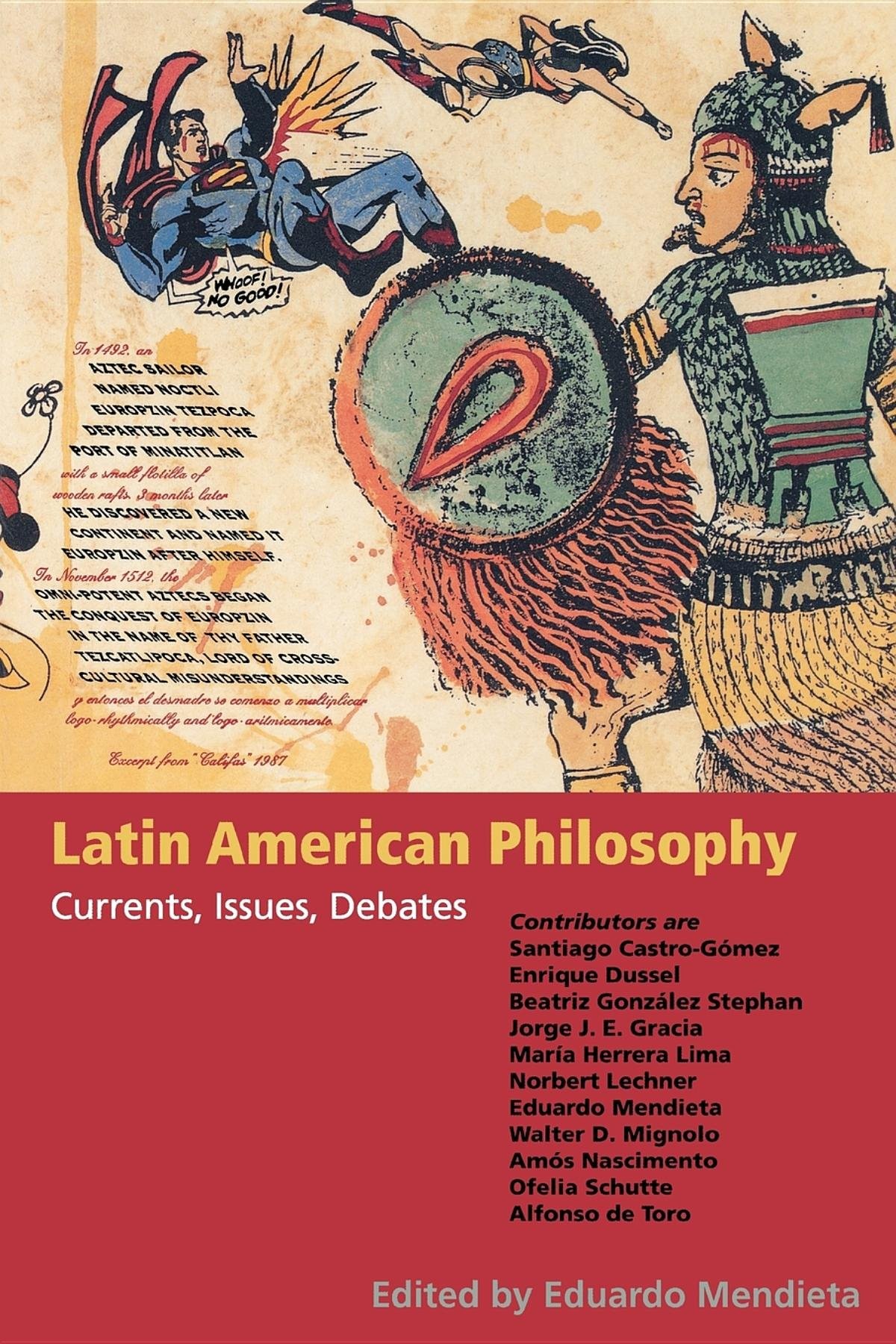
Philosophy
Latin American Philosophy: Currents, Issues, Debates by Eduardo Mendieta

Philosophy
Al-Farabi's Short Commentary on Aristotle's Prior Analytics by Nicholas Rescher – Philosophy
Philosophy
Poetics of Imagining: Modern to Post-modern by Richard Kearney
Philosophy
The Metaphysics of Extrinsic Properties: 11 (Metaphysical Research, 11)
Philosophy
Dialogues on Metaphysics and on Religion by Nicolas Malebranche – Philosophy
Philosophy