
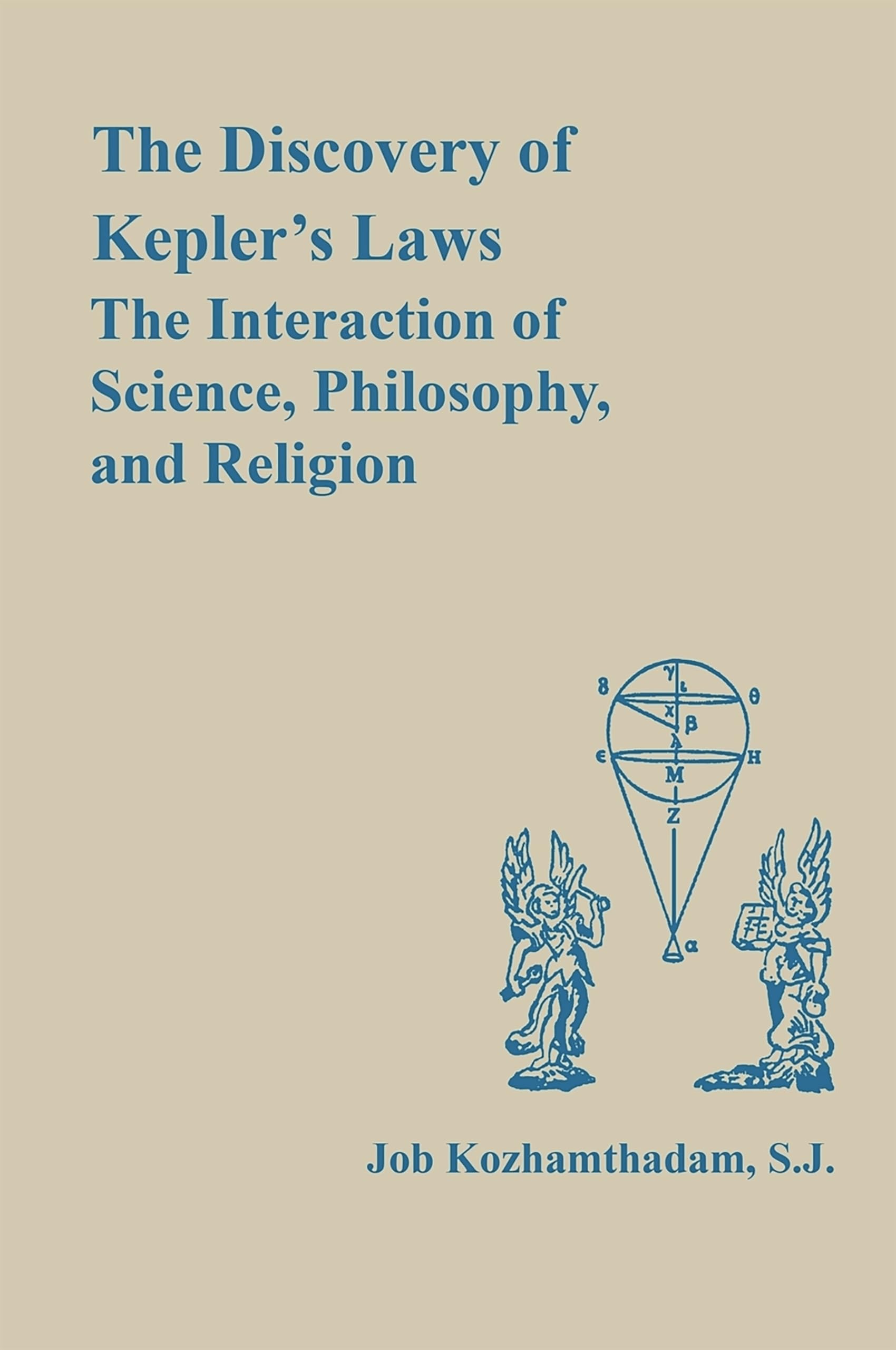
Discovery of Kepler's Law: The Interaction of Science, Philosophy, and Religion by Job Kozhamthadam – A Deep Dive into K
Inclusive of all applicable taxes. FREE shipping on all orders.
Available Offers
- 🚚Free Delivery — Free shipping on all orders
- 💵Cash on Delivery — Pay when your order arrives
- ↩️15-Day Easy Returns — Hassle-free return policy
- 🔒Cash on Delivery — Pay safely when your order arrives
Check Delivery
Product Description
Introduction
In the vast landscape of scientific discovery, few breakthroughs have reshaped human understanding as profoundly as Johannes Kepler's laws of planetary motion. Discovery of Kepler's Law: The Interaction of Science Philosophy and Religion by Job Kozhamthadam offers a unique and deeply researched exploration of how Kepler's genius was shaped not only by empirical observation but also by his philosophical and religious convictions. Published by the University of Notre Dame Press, this hardcover volume is an essential addition to the library of any serious student of science, history, or theology in India.
Book Overview
This meticulously crafted work delves into the intellectual and spiritual milieu that enabled Kepler to formulate the three fundamental laws governing planetary orbits. Unlike conventional accounts that treat Kepler's discoveries as purely mathematical triumphs, Kozhamthadam reveals the intricate interplay between Kepler's Copernican faith, his Neoplatonic philosophy, and his rigorous empirical methods. The book shows how Kepler saw the universe as a harmonious expression of divine order, and how this vision drove him to uncover the mathematical patterns that would later inspire Newton. It is a comprehensive study that bridges the often-separated domains of science, philosophy, and religion.
Key Highlights
- Interdisciplinary Approach: Integrates scientific history with philosophical and theological analysis, offering a holistic understanding of Kepler's work.
- Rigorous Scholarship: Based on primary sources and Kepler's own writings, providing an authentic account of his thought process.
- Contextual Insights: Places Kepler's discoveries within the broader intellectual currents of the Renaissance and Reformation periods.
- Accessible Style: Written in clear, engaging prose suitable for both scholars and curious readers.
- Critical Perspective: Challenges the simplistic notion of science versus religion, showing their dynamic interaction in Kepler's life.
Inside the Book
The book is structured to guide readers through Kepler's intellectual journey. It begins by setting the historical stage, examining the Copernican revolution and the scientific landscape of the early 17th century. Subsequent chapters explore Kepler's philosophical commitments, including his Pythagorean and Neoplatonic beliefs, and how they influenced his search for celestial harmonies. The author then meticulously traces Kepler's path to each of his three laws, highlighting the role of empirical data from Tycho Brahe, as well as Kepler's own theological reflections. The final chapters assess the lasting impact of Kepler's synthesis of science, philosophy, and religion on modern thought.
Key Topics
- The Copernican revolution and its theological implications
- Kepler's Neoplatonic and Pythagorean philosophy
- The role of empirical observation and mathematical reasoning in Kepler's method
- Kepler's concept of the universe as a manifestation of divine harmony
- The interaction between scientific discovery and religious faith in the early modern period
- The philosophical foundations of Kepler's three laws of planetary motion
- Kepler's influence on Newton and the Scientific Revolution
Reader Benefits
- Deepened Understanding: Gain a richer appreciation of how scientific progress is shaped by cultural and spiritual contexts.
- Critical Thinking: Develop a nuanced perspective on the relationship between science, philosophy, and religion.
- Academic Support: Ideal for research papers, essays, and projects in history of science, philosophy, or theology.
- Inspiration: Discover how one person's faith and reason can together unlock profound truths about the universe.
- Comprehensive Knowledge: Acquire a thorough grasp of Kepler's contributions beyond the textbook summaries.
Learning Outcomes
After reading this book, you will be able to: explain the philosophical and religious motivations behind Kepler's work; analyze the interplay between empirical data and metaphysical assumptions in scientific discovery; evaluate the historical significance of Kepler's laws in the broader context of the Scientific Revolution; and articulate the complex relationship between science and religion in the early modern period. You will also develop a deeper appreciation for the human dimensions of scientific inquiry.
Who Should Read
This book is ideal for undergraduate and postgraduate students of physics, astronomy, history of science, philosophy, and religious studies. It is equally valuable for educators, researchers, and general readers in India who are curious about the intellectual roots of modern science. Anyone interested in the intersection of faith and reason, or in the lives of great scientific minds, will find this work profoundly enlightening.
About the Author
Job Kozhamthadam, S.J., is a distinguished scholar and a Jesuit priest. He has taught at several universities and brings a rare depth of insight into both the scientific and spiritual dimensions of Kepler's life. His expertise in the history and philosophy of science, combined with his theological training, makes him uniquely qualified to write this integrative study. Kozhamthadam's work is respected for its clarity, balance, and original contribution to Kepler scholarship.
About the Publisher
University of Notre Dame Press is a renowned academic publisher with a strong commitment to producing high-quality works in the humanities, social sciences, and theology. Known for its rigorous editorial standards, the press has published numerous influential titles that explore the intersections of faith, culture, and intellectual history. This hardcover edition reflects the publisher's dedication to durable, beautifully crafted books that stand the test of time.
Conclusion
Discovery of Kepler's Law: The Interaction of Science Philosophy and Religion is not merely a book about a scientific discovery; it is a profound meditation on the unity of knowledge. By revealing how Kepler's religious and philosophical convictions fueled his scientific genius, Job Kozhamthadam offers a compelling narrative that resonates with contemporary debates about science and faith. For Indian readers seeking a deeper, more integrated understanding of one of history's greatest scientific minds, this hardcover volume from University of Notre Dame Press is an indispensable treasure. Add it to your collection today and embark on a journey that transcends the boundaries of discipline and time.
Quick Summary
Discovery of Kepler's Law: The Interaction of Science, Philosophy, and Religion by Job Kozhamthadam is a scholarly yet accessible exploration of how Johannes Kepler formulated his famous laws of planetary motion. Unlike conventional biographies, this book delves into the philosophical and religious convictions that guided Kepler's thinking, showing that his scientific breakthroughs were not isolated from his faith. Readers will learn about Kepler's use of Tycho Brahe's meticulous observations, his mathematical genius, and his belief in a harmonious universe created by God. The book is ideal for students of history, philosophy, astronomy, and theology, as well as anyone curious about the complex roots of modern science. By purchasing from Bookshops.in, Indian readers get a premium hardcover edition delivered reliably, supporting a trusted local bookstore that values quality and knowledge.
Book Highlights
Book Specifications
| ISBN-13 | 9780268008802 |
| ISBN-10 | 0268008809 |
| Publisher | Univ of Notre Dame Pr |
| Language | English |
| Dimensions | 15.19 x 1.85 x 22.68 cm |
| Weight | 454 g |
| Country | India |
| Category | Philosophy › History & Surveys |
| Genre | Non-fiction |
| Reading Age | Adult |
| Original Language | English |
Frequently Asked Questions
What is the main theme of Discovery of Kepler's Law?
Who is the author of this book?
Is this book suitable for beginners in astronomy?
Does the book cover all three of Kepler's laws?
What makes this book different from other Kepler biographies?
What is the ISBN of this book?
Can I use this book for academic research?
Does the book include illustrations or diagrams?
What is the price of this book?
Is the book available in hardcover?
What language is the book written in?
Who is the target audience for this book?
Does the book discuss Kepler's personal life?
Readers Also Search For
Customers Also Bought

Islam
Spiritual Economies (English, Daromir Rudnyckyj)

Islam
Who Is Allah? (English, Bruce B. Lawrence)

Islam
Islam and Liberal Citizenship: The Search for an Overlapping Consensus by Andrew F. March

Islam
Fiqh Us-Sunnah: Funerals and Diggers by Al-Sayyid Sabiq – Islamic Funeral Guide

Christianity
Genetics (English, Thomas a. Shannon | Mark P. Aulisio | Françoise Baylis)

Hinduism
Karma and Creativity by Christopher Key Chapple – Indian Philosophy
Related Products
View All
Philosophy
Latin American Philosophy: Currents, Issues, Debates by Eduardo Mendieta

Philosophy
Al-Farabi's Short Commentary on Aristotle's Prior Analytics by Nicholas Rescher – Philosophy

Philosophy
Poetics of Imagining: Modern to Post-modern by Richard Kearney

Philosophy
The Metaphysics of Extrinsic Properties: 11 (Metaphysical Research, 11)
Philosophy
Dialogues on Metaphysics and on Religion by Nicolas Malebranche – Philosophy
Philosophy