
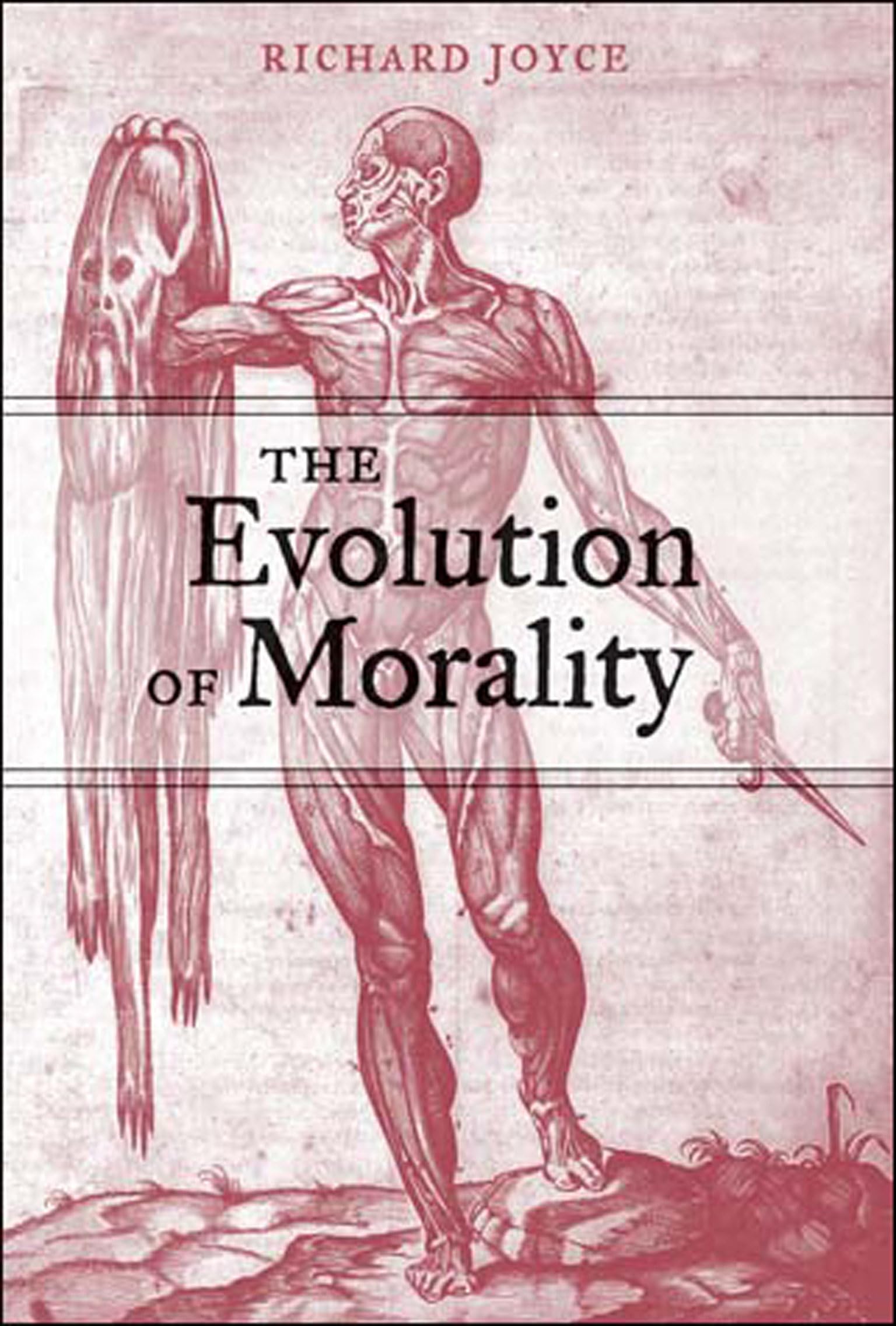
The Evolution of Morality: A Groundbreaking Philosophical and Scientific Exploration by Richard Joyce
Inclusive of all applicable taxes. FREE shipping on all orders.
Available Offers
- 🚚Free Delivery — Free shipping on all orders
- 💵Cash on Delivery — Pay when your order arrives
- ↩️15-Day Easy Returns — Hassle-free return policy
- 🔒Cash on Delivery — Pay safely when your order arrives
Check Delivery
Product Description
Introduction
What does it mean to be moral? Is our sense of right and wrong a product of culture, or is it etched into our very biology? In The Evolution of Morality, philosopher Richard Joyce takes readers on a compelling journey through the origins of human moral judgment. This hardcover edition, published by Bradford Book, is an essential read for students and scholars of science, philosophy, and psychology. Joyce challenges conventional thinking by arguing that morality is not merely a social invention but has deep evolutionary roots. For Indian readers grappling with questions of ethics in a rapidly changing world, this book offers a rigorous yet accessible exploration of how our moral instincts may have been shaped by natural selection over millennia.
Book Overview
The Evolution of Morality is a thought-provoking work that bridges evolutionary biology and moral philosophy. Richard Joyce examines whether our moral faculties are innate—a biological adaptation that helped our ancestors survive and reproduce—or a relatively recent cultural development. The book does not shy away from the controversial implications of this hypothesis. If morality is just a product of evolution, does it lose its authority? Or does understanding its origins actually strengthen the case for moral realism? Joyce navigates these questions with clarity, drawing on evidence from genetics, anthropology, and neuroscience. This is not a dry academic text; it is a lively debate that invites readers to reconsider the very foundation of ethical behaviour.
Key Highlights
- Innate Morality Thesis: Joyce presents a strong case for the biological basis of moral judgment, arguing that our brains are predisposed to think in moral terms.
- Philosophical Depth: The book tackles profound questions about moral skepticism, realism, and the implications of evolutionary explanations for ethics.
- Interdisciplinary Approach: Combines insights from evolutionary theory, cognitive science, and philosophy to create a holistic understanding of morality.
- Critical Analysis: Joyce does not merely defend his view; he systematically addresses counterarguments, making the book intellectually rigorous.
- Relevance to Modern India: In a society where traditional moral frameworks are being questioned, this book provides a scientific perspective that can enrich discussions on ethics.
Inside the Book
The book is structured to guide readers from the biological foundations of morality to its philosophical consequences. Early chapters explore the evolutionary pressures that may have selected for moral emotions like guilt, gratitude, and resentment. Joyce then examines the concept of ‘moral sense’ and how it might be an adaptation. Later chapters delve into the philosophical fallout: if morality is a biological adaptation, does that mean our moral beliefs are unjustified? Joyce argues that while an evolutionary explanation does not automatically vindicate morality, it does challenge certain forms of moral skepticism. The writing is clear and engaging, with real-world examples that make complex ideas accessible. Indian readers will appreciate the universal nature of the arguments, which apply to any human society.
Key Topics
- The evolutionary origins of moral judgment
- Natural selection and the development of moral emotions
- The debate between innate morality and cultural construction
- Moral skepticism and the threat of evolutionary debunking
- The possibility of moral realism in a Darwinian world
- The role of reason and emotion in ethical decision-making
- Comparative studies of morality in humans and other animals
Reader Benefits
- Deepen Your Understanding: Gain a sophisticated grasp of why we think in terms of right and wrong.
- Enhance Critical Thinking: Learn to evaluate arguments about human nature and ethics with greater nuance.
- Bridge Science and Philosophy: See how empirical research can inform timeless philosophical questions.
- Engage with Contemporary Debates: Understand the latest thinking on the nature of morality, relevant to fields like psychology, law, and public policy.
- Practical Insights: Reflect on how evolutionary perspectives can influence personal moral reasoning and social ethics.
Learning Outcomes
- Understand the key arguments for and against an innate basis for morality.
- Analyse the relationship between evolutionary biology and moral philosophy.
- Critically assess the implications of evolutionary explanations for moral objectivity.
- Identify the strengths and weaknesses of different theories of moral origins.
- Apply evolutionary concepts to real-world ethical dilemmas.
- Develop a nuanced position on whether science can ‘explain away’ morality.
Who Should Read
This book is ideal for university students in philosophy, psychology, anthropology, and biology. It is also perfect for curious readers who enjoy intellectual challenges and want to explore the scientific roots of human values. Indian students preparing for competitive exams or pursuing higher studies in the humanities and sciences will find it an invaluable resource. Teachers and academics looking for a rigorous yet readable text on evolutionary ethics will appreciate Joyce’s balanced approach. Anyone interested in the big questions about human nature—why we care about justice, why we feel guilt, and whether morality is more than a social convention—will be captivated by this book.
About the Author
Richard Joyce is a distinguished philosopher known for his work on metaethics and moral psychology. He is a professor of philosophy at Victoria University of Wellington, New Zealand. Joyce has written extensively on the implications of evolutionary theory for ethics, and his books, including The Myth of Morality, have been widely acclaimed. His writing is marked by clarity, intellectual honesty, and a willingness to challenge established views. Joyce’s background in both philosophy and cognitive science allows him to bridge disciplines seamlessly, making his work accessible to readers from diverse fields.
About the Publisher
Bradford Book is an imprint of MIT Press, renowned for publishing cutting-edge works in cognitive science, philosophy, and neuroscience. With a commitment to scholarly excellence, Bradford Books has brought forward many groundbreaking titles that explore the mind, brain, and behaviour. This hardcover edition reflects the high production standards expected of an academic publisher, making it a durable addition to any library. Indian readers can trust that the content is rigorously edited and peer-reviewed, ensuring a reliable and authoritative reading experience.
Conclusion
The Evolution of Morality is not just a book; it is an invitation to rethink the foundations of human ethics. Richard Joyce’s masterful synthesis of science and philosophy offers a fresh perspective that is both challenging and enlightening. Whether you are a student, a scholar, or a lifelong learner, this hardcover edition from Bradford Book will expand your mind and deepen your appreciation for the complexities of moral life. Order your copy from Bookshops.in today and embark on a journey to understand the very nature of right and wrong.
Quick Summary
The Evolution of Morality by Richard Joyce is a thought-provoking exploration of the origins of human moral thinking. Joyce, a leading moral philosopher, examines whether our moral sense is an innate biological adaptation shaped by natural selection over millions of years, or a relatively recent cultural invention. Drawing on evidence from evolutionary biology, cognitive science, and philosophy, he builds a compelling case for moral nativism—the idea that humans are biologically prepared to make moral judgments. The book then tackles the philosophical implications of this hypothesis: Does an innate basis for morality vindicate our moral beliefs against skepticism? Can it support a version of moral realism? Joyce navigates these questions with clarity and rigor, making the book accessible to students and general readers while satisfying academic specialists. Ideal for Indian students of philosophy, psychology, and biology, this hardcover edition from Bookshops.in offers a durable addition to any library. By purchasing from Bookshops.in, you support a premium Indian bookstore committed to fast delivery and quality service.
Book Highlights
Book Specifications
| ISBN-13 | 9780262600729 |
| ISBN-10 | 0262600722 |
| Publisher | Bradford Books |
| Language | English |
| Dimensions | 15.57 x 1.75 x 23.01 cm |
| Weight | 386 g |
| Country | India |
| Category | Philosophy › Ethics |
| Genre | Nonfiction |
| Original Language | English |
Frequently Asked Questions
What is The Evolution of Morality about?
Who is Richard Joyce?
Is this book suitable for beginners in philosophy?
Does the book argue for or against moral realism?
What scientific fields does the book draw on?
Is The Evolution of Morality a hardcover edition?
Can I use this book for my university course?
Does the book address Indian philosophical traditions?
What is the price of this book on Bookshops.in?
Is this book available in other languages?
What makes this book different from other books on morality?
How is the book rated?
Readers Also Search For
Customers Also Bought
Islam
Spiritual Economies (English, Daromir Rudnyckyj)

Islam
Who Is Allah? (English, Bruce B. Lawrence)
Islam
Islam and Liberal Citizenship: The Search for an Overlapping Consensus by Andrew F. March

Islam
Fiqh Us-Sunnah: Funerals and Diggers by Al-Sayyid Sabiq – Islamic Funeral Guide

Christianity
Genetics (English, Thomas a. Shannon | Mark P. Aulisio | Françoise Baylis)

Hinduism
Karma and Creativity by Christopher Key Chapple – Indian Philosophy
Related Products
View All
Philosophy
Latin American Philosophy: Currents, Issues, Debates by Eduardo Mendieta

Philosophy
Al-Farabi's Short Commentary on Aristotle's Prior Analytics by Nicholas Rescher – Philosophy
Philosophy
Poetics of Imagining: Modern to Post-modern by Richard Kearney

Philosophy
The Metaphysics of Extrinsic Properties: 11 (Metaphysical Research, 11)
Philosophy
Dialogues on Metaphysics and on Religion by Nicolas Malebranche – Philosophy
Philosophy