
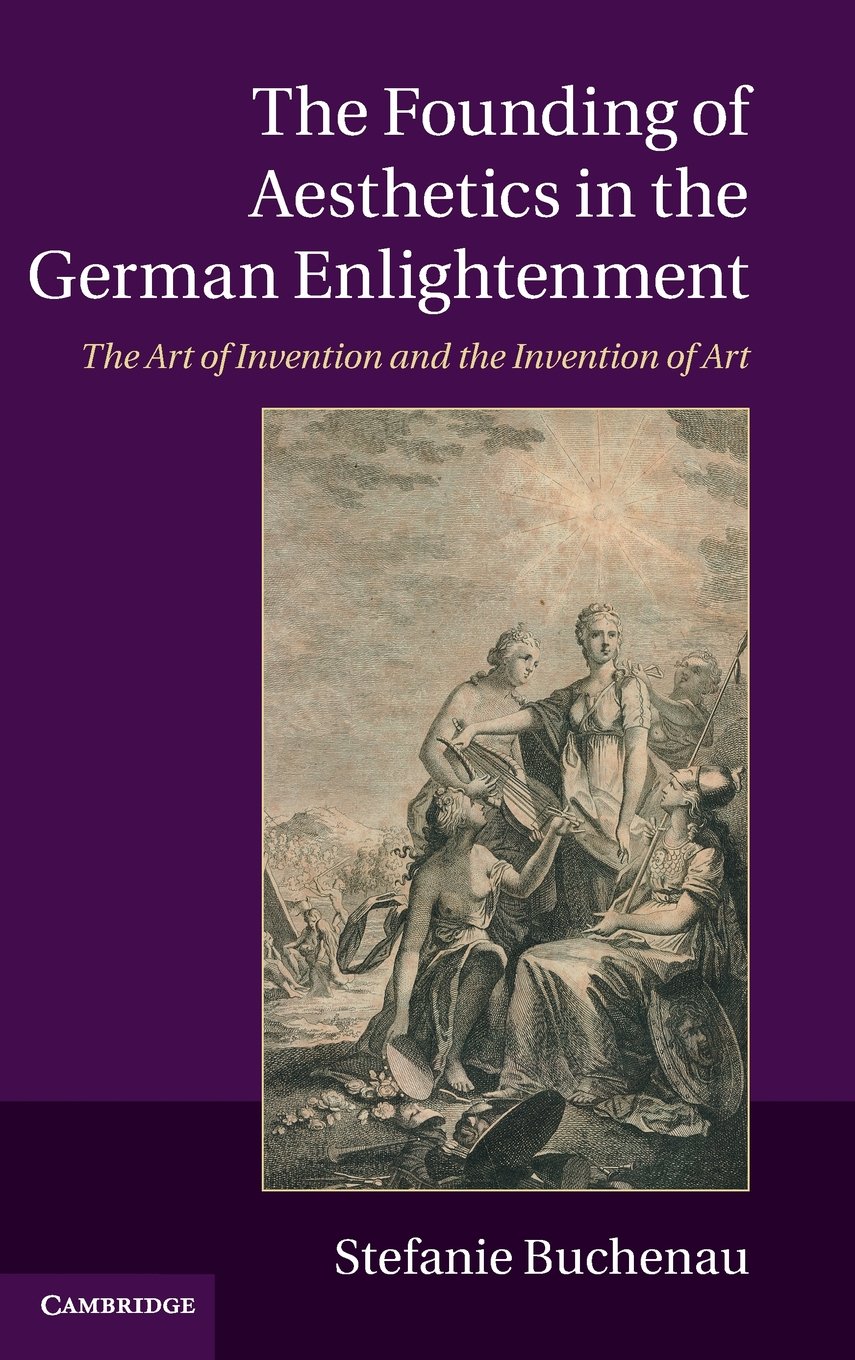
The Founding of Aesthetics in the German Enlightenment: The Art of Invention and the Invention of Art by Stefanie Buchen
Inclusive of all applicable taxes. FREE shipping on all orders.
Available Offers
- 🚚Free Delivery — Free shipping on all orders
- 💵Cash on Delivery — Pay when your order arrives
- ↩️15-Day Easy Returns — Hassle-free return policy
- 🔒Cash on Delivery — Pay safely when your order arrives
Check Delivery
Product Description
Introduction
In the rich tapestry of eighteenth-century German philosophy, few moments are as decisive as the birth of aesthetics as a formal discipline. Stefanie Buchenau’s The Founding of Aesthetics in the German Enlightenment: The Art of Invention and the Invention of Art offers a compelling and scholarly exploration of this pivotal event. Published by Cambridge University Press, this hardcover volume is an essential resource for students and researchers interested in the origins of modern aesthetic thought, the philosophy of art, and the intellectual currents of the Enlightenment. Buchenau’s work challenges conventional readings by situating Alexander Gottlieb Baumgarten’s project within the broader debate on the art of invention, revealing a coherent and original philosophical vision that continues to shape our understanding of beauty and creativity.
Book Overview
This meticulously researched monograph traces the emergence of aesthetics from its roots in early modern theories of invention and discovery. Buchenau argues that Baumgarten’s 1735 proposal for a new discipline was not a mere precursor to Kantian aesthetics but a sophisticated response to longstanding questions about the nature of artistic creation, sensory cognition, and the role of art in human life. The book repositions Baumgarten as a thinker deeply engaged with the rationalist tradition, especially the works of Leibniz and Wolff, while also drawing on classical rhetoric and poetics. By examining the interplay between the ‘art of invention’ (ars inveniendi) and the ‘invention of art’ as a modern concept, Buchenau provides a fresh perspective on how the fine arts came to be seen as a distinct sphere of human achievement.
Key Highlights
- Original Thesis: Challenges the standard view of Baumgarten as an imperfect forerunner of Kant, presenting him instead as a systematic philosopher with a coherent aesthetic project.
- Historical Context: Places Baumgarten’s work within the German Enlightenment’s broader debates on logic, rhetoric, poetics, and the methodology of the sciences.
- Interdisciplinary Approach: Bridges philosophy, art history, and literary theory to illuminate the intellectual landscape of the period.
- Fresh Insights on Kant: Offers new ways of understanding Kant’s own aesthetic theory by revealing its debt to Baumgarten’s foundational ideas.
- Scholarly Rigor: Based on extensive primary source analysis, including lesser-known texts from the German rationalist tradition.
Inside the Book
The volume is structured to guide readers from the early modern problem of invention through to Baumgarten’s formulation of aesthetics and its legacy. Early chapters explore the concept of ‘invention’ in the works of Bacon, Descartes, and Leibniz, showing how it shaped discussions of art and science. Buchenau then examines the role of rhetoric and poetics in German universities, the emergence of the ‘fine arts’ as a category, and Baumgarten’s own writings, including his Meditationes philosophicae de nonnullis ad poema pertinentibus and his incomplete Aesthetica. The final chapters assess the reception of Baumgarten’s ideas and their impact on later thinkers such as Mendelssohn, Lessing, and Kant. Throughout, Buchenau’s prose remains clear and engaging, making complex philosophical arguments accessible without sacrificing depth.
Key Topics
- The origin and meaning of the term ‘aesthetics’ in the eighteenth century
- Baumgarten’s theory of sensory cognition and ‘clarity’ in perception
- The relationship between logic, rhetoric, and the fine arts
- The concept of ‘ars inveniendi’ (art of invention) in early modern philosophy
- The invention of the modern system of the fine arts
- Baumgarten’s influence on Kant’s Critique of Judgment
- The role of beauty in science and the pursuit of knowledge
Reader Benefits
This book equips readers with a deeper understanding of how aesthetics became a cornerstone of modern philosophy. It corrects common misconceptions about Baumgarten’s place in history and provides a richer framework for interpreting later developments in German idealism and Romanticism. For scholars of aesthetics, it offers a treasure trove of historical detail and conceptual analysis. For students, it serves as a model of how to engage with primary texts and reconstruct intellectual contexts. The book also sheds light on the enduring question of what it means to create and appreciate art, making it relevant to contemporary debates in art theory and criticism.
Learning Outcomes
- Gain a nuanced understanding of the intellectual origins of modern aesthetics
- Learn to critically evaluate Baumgarten’s contributions beyond his reputation as a ‘pre-Kantian’ figure
- Develop the ability to trace the evolution of key concepts such as taste, genius, and the fine arts
- Understand the interplay between rationalist philosophy and artistic practice in the Enlightenment
- Acquire tools for analyzing the relationship between art, science, and invention in historical and contemporary contexts
Who Should Read
This book is ideal for advanced undergraduate and postgraduate students of philosophy, especially those specializing in aesthetics, eighteenth-century thought, or German idealism. It will also appeal to scholars of art history, literary theory, and intellectual history who wish to explore the philosophical foundations of their fields. Anyone interested in the history of ideas, the birth of modern art criticism, or the role of beauty in human cognition will find Buchenau’s work both enlightening and thought-provoking. Indian readers engaged with cross-cultural aesthetics or the global reception of European philosophy will discover valuable comparative insights.
About the Author
Stefanie Buchenau is a distinguished scholar of early modern philosophy and aesthetics. She has held academic positions at several leading European universities and is known for her rigorous historical approach to philosophical problems. Her research focuses on the German Enlightenment, the philosophy of art, and the intersection of logic and aesthetics. Buchenau’s work is characterized by careful attention to primary sources and a commitment to reconstructing the intellectual contexts that shape philosophical ideas. Her expertise makes her an authoritative guide through the complex terrain of eighteenth-century aesthetic theory.
About the Publisher
Cambridge University Press is one of the world’s oldest and most prestigious academic publishers. Founded in 1534, it has a long tradition of producing high-quality scholarly works that advance knowledge across disciplines. This hardcover edition reflects the Press’s commitment to rigorous editorial standards, durable binding, and clear typography — making it a lasting addition to any personal or institutional library. As a publisher of landmark works in philosophy, history, and the arts, Cambridge ensures that Buchenau’s study reaches the widest possible audience of serious readers.
Conclusion
The Founding of Aesthetics in the German Enlightenment is a vital contribution to the history of philosophy and the study of art. Stefanie Buchenau’s insightful analysis not only restores Baumgarten to his rightful place as a creative and systematic thinker but also illuminates the enduring connections between invention, art, and beauty. For anyone seeking to understand how the modern discipline of aesthetics came into being — and why it still matters — this book is an indispensable companion. Order your copy today from Bookshops.in and delve into the fascinating origins of the art of invention.
Quick Summary
The Founding of Aesthetics in the German Enlightenment by Stefanie Buchenau is a scholarly work that reexamines the birth of modern aesthetics. When Alexander Baumgarten introduced aesthetics as a new philosophical discipline in 1735, he not only founded the field but also shaped the modern concept of fine art. Buchenau argues that Baumgarten's project was consistent and original, rooted in the Enlightenment's focus on the art of invention. The book challenges the common view that Baumgarten was merely a precursor to Kant, offering fresh insights into Kantian aesthetics and the relationship between beauty in art and science. This volume is intended for advanced students, researchers, and academics in philosophy, art history, and German intellectual history. It provides a rich historical and philosophical analysis, drawing on primary sources and contemporary debates. Readers will gain a deeper understanding of how aesthetics evolved as a discipline and its connections to science and invention. By purchasing from Bookshops.in, Indian scholars and students receive a genuine Cambridge University Press hardcover edition, ensuring long-term reference quality.
Book Highlights
Book Specifications
| ISBN-13 | 9781107027138 |
| ISBN-10 | 1107027136 |
| Publisher | Cambridge University Press |
| Language | English |
| Dimensions | 15.88 x 2.54 x 23.5 cm |
| Weight | 550 g |
| Country | India |
| Category | Philosophy › Aesthetics |
| Genre | Non-fiction |
| Original Language | English |
Frequently Asked Questions
What is this book about?
Who is the author?
Is this book suitable for beginners?
What is the main argument of the book?
Does the book cover Kant?
What is the publication date?
What is the ISBN?
Is it available in hardcover?
What language is it in?
Can I use this for my university course?
Does it include Indian perspectives?
Why should I buy from Bookshops.in?
What is the price?
Readers Also Search For
Customers Also Bought

Islam
Spiritual Economies (English, Daromir Rudnyckyj)

Islam
Who Is Allah? (English, Bruce B. Lawrence)
Islam
Islam and Liberal Citizenship: The Search for an Overlapping Consensus by Andrew F. March

Islam
Fiqh Us-Sunnah: Funerals and Diggers by Al-Sayyid Sabiq – Islamic Funeral Guide

Christianity
Genetics (English, Thomas a. Shannon | Mark P. Aulisio | Françoise Baylis)

Hinduism
Karma and Creativity by Christopher Key Chapple – Indian Philosophy
Related Products
View All
Philosophy
Latin American Philosophy: Currents, Issues, Debates by Eduardo Mendieta

Philosophy
Al-Farabi's Short Commentary on Aristotle's Prior Analytics by Nicholas Rescher – Philosophy
Philosophy
Poetics of Imagining: Modern to Post-modern by Richard Kearney

Philosophy
The Metaphysics of Extrinsic Properties: 11 (Metaphysical Research, 11)
Philosophy
Dialogues on Metaphysics and on Religion by Nicolas Malebranche – Philosophy
Philosophy