
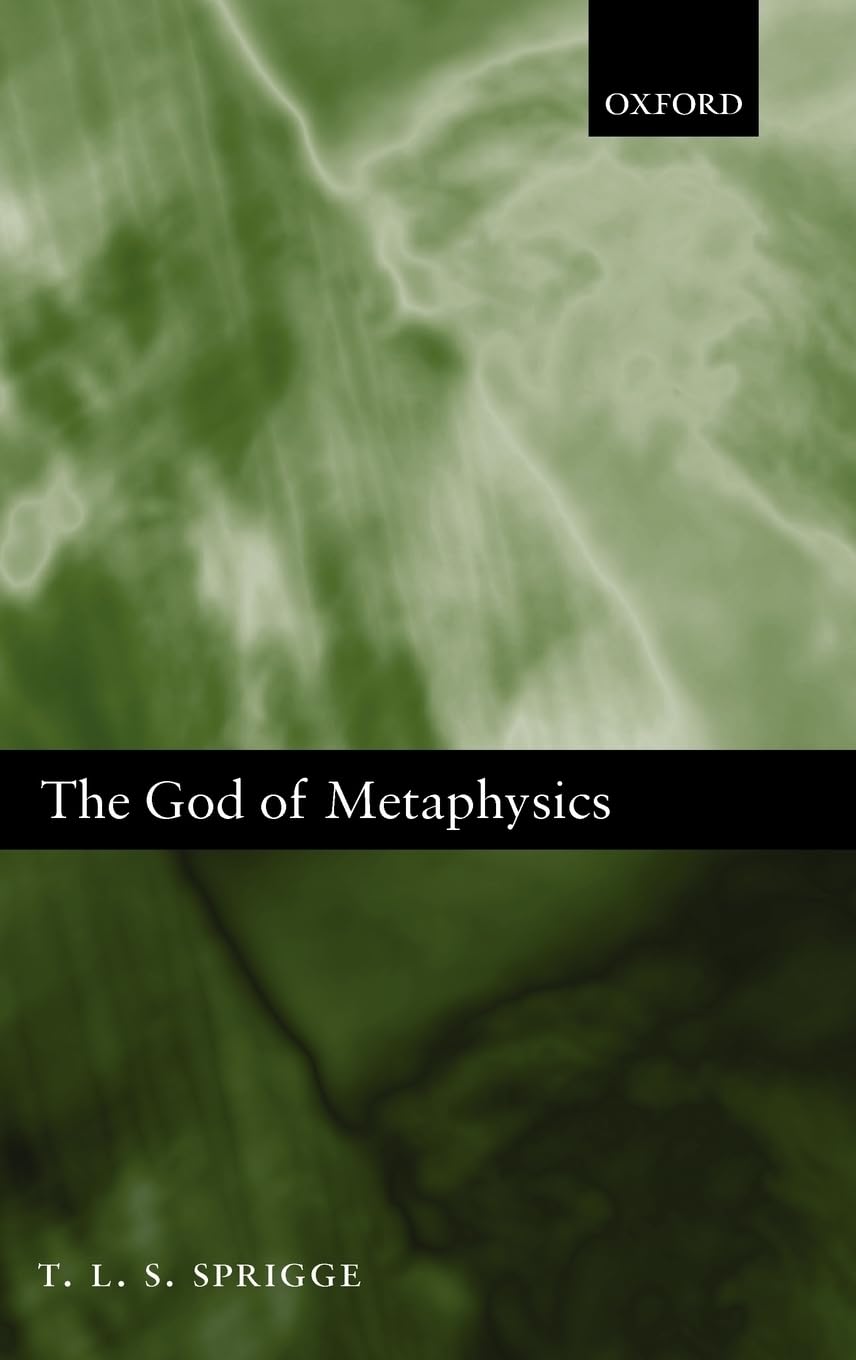
The God of Metaphysics: A Study of the Metaphysics and Religious Doctrines of Spinoza, Hegel, Kierkegaard, T.H. Green, B
Inclusive of all applicable taxes. FREE shipping on all orders.
Available Offers
- 🚚Free Delivery — Free shipping on all orders
- 💵Cash on Delivery — Pay when your order arrives
- ↩️15-Day Easy Returns — Hassle-free return policy
- 🔒Cash on Delivery — Pay safely when your order arrives
Check Delivery
Product Description
Introduction
In the vast landscape of philosophical inquiry, few questions are as enduring as the nature of God and the metaphysical foundations of reality. Timothy L. S. Sprigge’s The God of Metaphysics offers a rigorous yet accessible journey through the thought of some of the most influential Western philosophers, defending a bold pantheistic idealism that speaks to both the intellect and the spirit. For Indian readers familiar with Advaita Vedanta and other non-dual traditions, this book presents a fascinating Western parallel that enriches the global conversation on divinity and existence.
Book Overview
This hardcover volume from Oxford University Press is a comprehensive study of the metaphysical and religious doctrines of Spinoza, Hegel, Kierkegaard, T.H. Green, Bernard Bosanquet, Josiah Royce, and others. Sprigge does not merely summarize their ideas; he engages critically with each system, testing objections to what he calls “metaphysical religion.” The central thesis is that philosophy can indeed provide reasonable grounds for belief in a God that is not just a theoretical Absolute but a living center of actual faith. The book culminates in a spirited defense of pantheistic idealism, arguing that the universe is a unified, conscious whole of which we are integral parts.
Key Highlights
- Original Defense of Idealism: Sprigge revives and defends a highly unfashionable worldview, showing its relevance to contemporary metaphysics.
- Comparative Approach: The book juxtaposes thinkers from different eras—Spinoza’s rationalism, Hegel’s dialectic, Kierkegaard’s existential leap—to reveal common threads and tensions.
- Engagement with Objections: Each philosopher’s system is tested against classic criticisms, making the argument robust and nuanced.
- Pantheistic Vision: A coherent case for a God that is immanent in all things, resonating with Indian philosophical traditions like Kashmir Shaivism and Advaita.
Inside the Book
The text is divided into thematic chapters, each devoted to a major philosopher or school. Sprigge begins with Spinoza’s substance monism, moves through Hegel’s absolute spirit, and then examines Kierkegaard’s existential faith. Later chapters cover British idealists like T.H. Green and Bosanquet, and American pragmatist-idealist Josiah Royce. Throughout, Sprigge weaves his own constructive argument, showing how each thinker contributes to a viable metaphysical religion. The writing is dense yet clear, with careful explanations of technical terms, making it suitable for serious students and scholars alike.
Key Topics
- Pantheism and panentheism
- The nature of the Absolute
- Consciousness and the unity of reality
- Faith, reason, and existential commitment
- Idealism versus materialism
- The problem of evil in a pantheistic framework
- Metaphysics as a foundation for religious belief
Reader Benefits
This book is not just an academic exercise; it is an invitation to rethink the deepest questions of existence. Readers will gain a clearer understanding of how Western philosophy has grappled with the concept of God, and how these ideas can inform personal faith and worldview. Sprigge’s defense of pantheistic idealism offers a powerful alternative to both atheistic naturalism and traditional theism, providing a middle path that honors both science and spirituality. For Indian students of philosophy, the parallels with non-dual traditions will be especially illuminating, fostering cross-cultural dialogue.
Learning Outcomes
- Understand the core metaphysical arguments of Spinoza, Hegel, Kierkegaard, and other idealists.
- Evaluate the strengths and weaknesses of pantheistic idealism as a philosophical system.
- Develop the ability to critically engage with complex metaphysical texts.
- Appreciate the relationship between philosophy and religious faith.
- Gain insight into how Western idealism compares with Indian Advaita and other non-dual schools.
Who Should Read
This book is ideal for advanced undergraduate and postgraduate students of philosophy, theology, and religious studies. It will also appeal to scholars of comparative religion, especially those interested in East-West dialogue. General readers with a strong background in philosophy and a curiosity about metaphysical questions will find it rewarding, though it demands careful attention. Anyone who has ever wondered whether the universe is a conscious whole—and what that means for our lives—will be captivated by Sprigge’s vision.
About the Author
Timothy L. S. Sprigge (1932–2007) was a British philosopher and Professor of Logic and Metaphysics at the University of Edinburgh. A leading exponent of panpsychism and absolute idealism, he was known for his clarity, originality, and willingness to defend unfashionable views. His other major works include The Vindication of Absolute Idealism and James and Bradley: American Truth and British Reality. Sprigge’s thought continues to influence contemporary metaphysics and philosophy of mind.
About the Publisher
Oxford University Press (OUP) is the world’s largest university press, with a distinguished history of publishing authoritative works in philosophy, science, and the humanities. This volume is part of OUP’s commitment to making rigorous scholarship accessible to a global audience. The hardcover edition is bound to high standards, ensuring durability for years of study and reference.
Conclusion
The God of Metaphysics is a masterful work that bridges the gap between abstract philosophy and lived faith. Timothy Sprigge’s passionate defense of pantheistic idealism challenges readers to see the world as a unified, conscious reality—a vision that is both intellectually coherent and spiritually profound. Whether you are a seasoned philosopher or a curious seeker, this book will leave you with a deeper appreciation for the power of metaphysical thinking. Order your copy from Bookshops.in today and embark on a transformative intellectual journey.
Quick Summary
The God of Metaphysics by Timothy L. S. Sprigge is a scholarly exploration of whether philosophy can provide rational grounds for a God that is the center of actual faith, rather than a mere theoretical Absolute. Sprigge examines the metaphysical systems of six major philosophers: Spinoza, Hegel, Kierkegaard, T.H. Green, Bernard Bosanquet, and Josiah Royce. He tests common objections to 'metaphysical religion' against each system, ultimately offering a compelling defence of pantheistic idealism. This book is ideal for advanced philosophy students, researchers in metaphysics and philosophy of religion, and anyone interested in idealist thought. Readers will gain a deep understanding of how these thinkers conceived of God, the universe, and human experience. By purchasing from Bookshops.in, Indian customers receive a genuine hardcover edition from Oxford University Press, ensuring reliable delivery and authentic content for academic or personal study.
Book Highlights
Book Specifications
| ISBN-13 | 9780199283040 |
| ISBN-10 | 0199283044 |
| Publisher | Clarendon Pr |
| Language | English |
| Dimensions | 16.51 x 3.18 x 24.13 cm |
| Weight | 1 kg 40 g |
| Category | Philosophy › History & Surveys |
| Genre | Non-fiction |
| Reading Age | Adult |
| Original Language | English |
Frequently Asked Questions
What is the main argument of The God of Metaphysics?
Which philosophers are covered in this book?
Is this book suitable for beginners in philosophy?
Does the book defend a specific religious tradition?
What is pantheistic idealism?
How does Sprigge address objections to metaphysical religion?
Who is the publisher?
What is the ISBN-13 of this book?
Is this book available in hardcover?
What is the price of this book on Bookshops.in?
Does this book include a defence of atheism?
Can I use this book for a university course?
Is there a digital edition available?
Readers Also Search For
Customers Also Bought

Islam
Spiritual Economies (English, Daromir Rudnyckyj)

Islam
Who Is Allah? (English, Bruce B. Lawrence)

Islam
Islam and Liberal Citizenship: The Search for an Overlapping Consensus by Andrew F. March

Islam
Fiqh Us-Sunnah: Funerals and Diggers by Al-Sayyid Sabiq – Islamic Funeral Guide

Christianity
Genetics (English, Thomas a. Shannon | Mark P. Aulisio | Françoise Baylis)

Hinduism
Karma and Creativity by Christopher Key Chapple – Indian Philosophy
Related Products
View All
Philosophy
Latin American Philosophy: Currents, Issues, Debates by Eduardo Mendieta

Philosophy
Al-Farabi's Short Commentary on Aristotle's Prior Analytics by Nicholas Rescher – Philosophy
Philosophy
Poetics of Imagining: Modern to Post-modern by Richard Kearney

Philosophy
The Metaphysics of Extrinsic Properties: 11 (Metaphysical Research, 11)
Philosophy
Dialogues on Metaphysics and on Religion by Nicolas Malebranche – Philosophy
Philosophy