
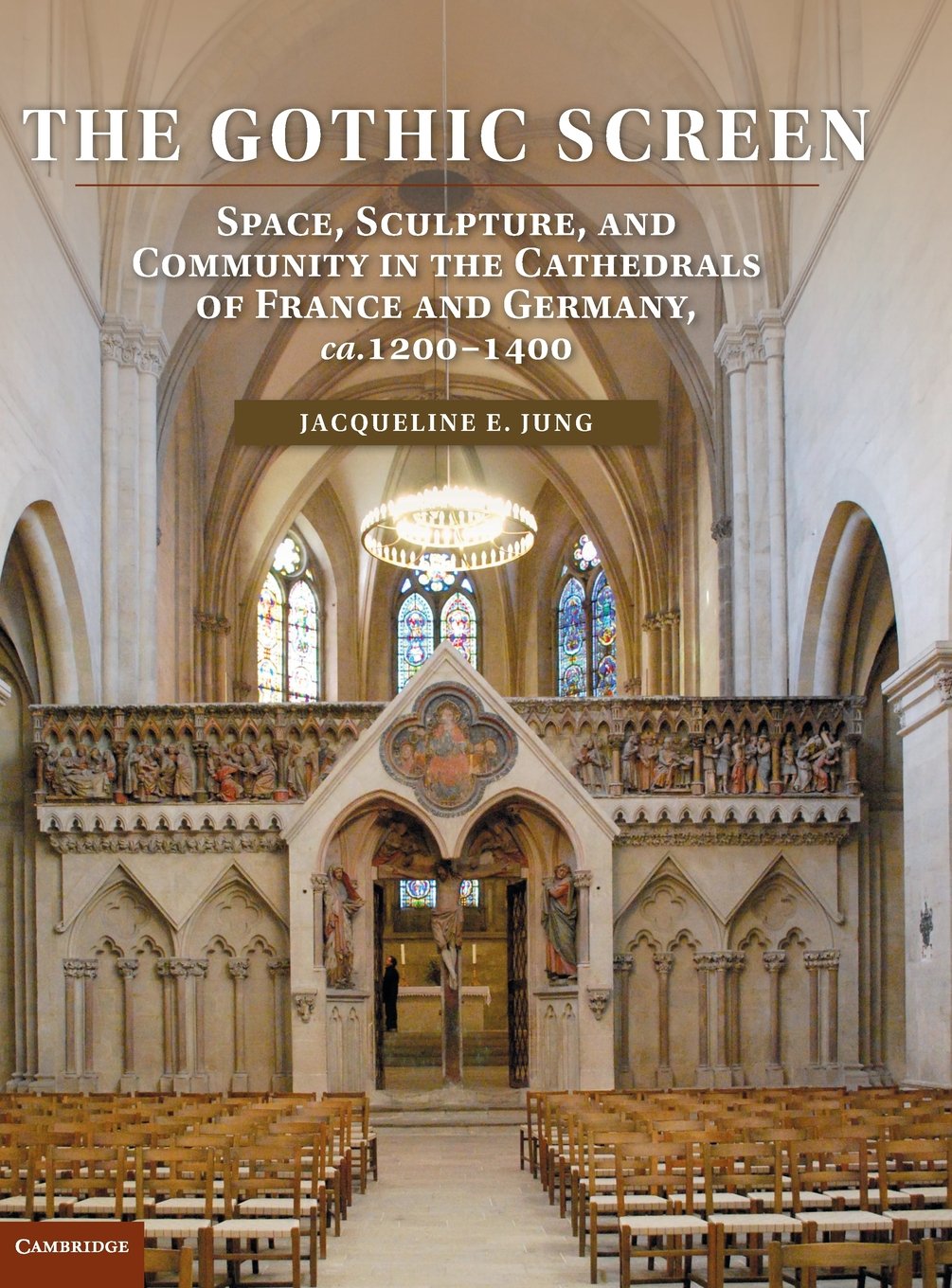
The Gothic Screen: Space, Sculpture, and Community in the Cathedrals of France and Germany, ca.1200–1400 by Jacqueline E
Inclusive of all applicable taxes. FREE shipping on all orders.
Available Offers
- 🚚Free Delivery — Free shipping on all orders
- 💵Cash on Delivery — Pay when your order arrives
- ↩️15-Day Easy Returns — Hassle-free return policy
- 🔒Cash on Delivery — Pay safely when your order arrives
Check Delivery
Product Description
Introduction
In the grand cathedrals of medieval Europe, the choir screen stood as a magnificent boundary—not merely a barrier, but a vibrant canvas of art, faith, and community. Jacqueline E. Jung’s The Gothic Screen: Space, Sculpture, and Community in the Cathedrals of France and Germany, ca.1200–1400 offers a groundbreaking exploration of these often-overlooked architectural features. Published by Cambridge University Press, this hardcover volume is an essential resource for students, scholars, and enthusiasts of medieval art, architecture, and religious history.
Book Overview
This meticulously researched work focuses on the choir screens of thirteenth- and fourteenth-century cathedrals in France and Germany. Jung reinterprets these structures not as obstacles separating clergy from laity, but as dynamic spaces that fostered interaction, storytelling, and community bonding. Through detailed analysis of surviving screens, fragments, and historical records, the book reveals how these sculpted partitions shaped liturgical practice, social hierarchies, and the spiritual imagination of medieval people. The author’s fresh perspective challenges long-held assumptions, making this a pivotal text in Gothic studies.
Key Highlights
- First comprehensive study of Gothic choir screens from both France and Germany, covering the period ca. 1200–1400.
- Rich visual documentation of fully extant screens, along with fragments and graphic sources, bringing lost monuments to life.
- Interdisciplinary approach blending art history, architecture, liturgy, and social history to understand the screen’s multifaceted role.
- Original argument that choir screens were communicative and inclusive, rather than exclusive or divisive.
Inside the Book
Jung takes readers on a journey through the nave and sanctuary, examining how the choir screen served as a canopy for altars, a stage for liturgical drama, a pedestal for crucifixes and reliquaries, and a foundation for intricate narrative and iconic sculptures. Each chapter delves into specific cathedrals—such as Chartres, Reims, Naumburg, and Bamberg—analyzing the interaction between architectural form and sculptural content. The book also explores how the screen mediated relationships between clerical and lay communities, offering a space for shared ritual and visual storytelling.
Key Topics
- The architectural evolution of the choir screen in Gothic cathedrals
- Sculptural programs: narrative cycles, saints, and biblical figures
- Liturgical functions: processions, readings, and the Eucharist
- Social dynamics: clergy, laity, gender, and community identity
- Methods of reconstructing lost screens through archaeological and archival evidence
Reader Benefits
This book equips readers with a deeper understanding of medieval sacred spaces. Art history students will gain tools for analyzing architectural sculpture in its original context. Historians of religion will appreciate the nuanced discussion of how physical structures shaped worship and community. Architects and designers will find inspiration in the integration of form, function, and meaning. Indian readers, particularly those interested in global heritage, will discover parallels between these European monuments and the rich traditions of temple architecture and community gathering spaces in South Asia.
Learning Outcomes
- Analyze the role of choir screens as active participants in medieval religious life
- Identify key stylistic and iconographic features of Gothic sculpture from France and Germany
- Understand how architectural space influences social interaction and ritual performance
- Critically evaluate primary sources, including fragments and historical descriptions
- Connect medieval European art to broader themes of community, power, and belief
Who Should Read
This book is ideal for: postgraduate students and researchers in art history, medieval studies, and theology; architecture enthusiasts curious about Gothic design; historians exploring the intersection of material culture and religion; and general readers who appreciate scholarly yet accessible works on medieval art. It is also a valuable addition to university libraries and personal collections of those passionate about European heritage.
About the Author
Jacqueline E. Jung is a professor of art history at Yale University, where she specializes in medieval European art and architecture. Her research focuses on the visual and spatial dimensions of religious experience, particularly in Gothic cathedrals. She has received numerous fellowships for her work, including from the Guggenheim Foundation and the National Endowment for the Humanities. Jung’s writing is known for its clarity, depth, and ability to make complex ideas accessible to a wide audience.
About the Publisher
Cambridge University Press, founded in 1534, is one of the world’s oldest and most prestigious academic publishers. Based in the United Kingdom, it is renowned for producing authoritative works in the humanities, sciences, and social sciences. This hardcover edition reflects the Press’s commitment to high-quality scholarship, with durable binding, clear typography, and carefully reproduced illustrations. For Indian readers, Cambridge University Press titles are widely available through Bookshops.in, ensuring access to world-class academic resources.
Conclusion
The Gothic Screen is a transformative study that invites readers to see medieval cathedrals anew. By focusing on the choir screen, Jacqueline E. Jung reveals how art and architecture were not just decorative but deeply functional—shaping community, faith, and identity. Whether you are a seasoned scholar or a curious reader, this book will enrich your understanding of the medieval world and its enduring legacy. Order your copy today from Bookshops.in and bring this masterpiece of scholarship into your library.
Quick Summary
'The Gothic Screen: Space, Sculpture, and Community in the Cathedrals of France and Germany, ca.1200–1400' by Jacqueline E. Jung is a groundbreaking scholarly work that examines the often-overlooked choir screens of Gothic cathedrals. These elaborate structures, positioned between the nave and sanctuary, were far more than mere partitions—they functioned as altars, stages for liturgical drama, pedestals for crucifixes and reliquaries, and canvases for intricate narrative and iconic sculptures. Jung draws together the most important examples from France and Germany, including both fully preserved screens and those known only through fragments and historical illustrations. The book explores how these screens shaped the liturgical experience and social interactions of the diverse communities—clergy and laity alike—who shared the cathedral interior. Readers will gain a nuanced understanding of medieval architectural design, sculptural programs, and the performative aspects of worship. This volume is essential for art history students, medievalists, architects, and anyone passionate about Gothic cathedrals. By ordering from Bookshops.in, Indian readers receive a high-quality hardcover edition from Cambridge University Press, with reliable delivery and competitive pricing.
Book Highlights
Book Specifications
| ISBN-13 | 9781107022959 |
| ISBN-10 | 1107022959 |
| Publisher | Cambridge University Press |
| Language | English |
| Dimensions | 21.59 x 1.91 x 27.94 cm |
| Weight | 1 kg 170 g |
| Country | India |
| Category | Religious Studies › History of Religion |
| Genre | Art History |
| Reading Age | Adult |
| Original Language | English |
Frequently Asked Questions
What is the main focus of 'The Gothic Screen'?
Who is the author Jacqueline E. Jung?
Which cathedrals are discussed in the book?
Is this book suitable for undergraduate students?
Does the book include illustrations?
What time period does the book cover?
How does the book address lost or fragmentary screens?
What is the significance of choir screens in medieval churches?
Is this a comparative study of French and German examples?
What academic discipline does this book belong to?
Does the book discuss the social role of choir screens?
Can this book be used for a course on Gothic architecture?
Where can I buy this book in India?
Readers Also Search For
Customers Also Bought

Islam
Spiritual Economies (English, Daromir Rudnyckyj)

Islam
Who Is Allah? (English, Bruce B. Lawrence)

Islam
Islam and Liberal Citizenship: The Search for an Overlapping Consensus by Andrew F. March

Islam
Fiqh Us-Sunnah: Funerals and Diggers by Al-Sayyid Sabiq – Islamic Funeral Guide

Christianity
Genetics (English, Thomas a. Shannon | Mark P. Aulisio | Françoise Baylis)

Hinduism
Karma and Creativity by Christopher Key Chapple – Indian Philosophy
Related Products
View All
Religion & Spirituality
Spiritual Competency in Psychotherapy | by Philip Brownell | Springer Publishing Company | by Philip Brownell | Springer Publishing Company | by Philip Brownell | Springer Publishing Company | by Philip Brownell | Springer Publishing Company | by Philip Brownell | Springer Publishing Company | by Philip Brownell | Springer Publishing Company | by Philip Brownell | Springer Publishing Company | by Philip Brownell | Springer Publishing Company | by Philip Brownell | Springer Publishing Company | b
Religion & Spirituality
Religion as a Conversation Starter | by Ina Merdjanova | Continuum | by Ina Merdjanova | Continuum | by Ina Merdjanova | Continuum | by Ina Merdjanova | Continuum | by Ina Merdjanova | Continuum | by Ina Merdjanova | Continuum | by Ina Merdjanova | Continuum | by Ina Merdjanova | Continuum | by Ina Merdjanova | Continuum | by Ina Merdjanova | Continuum | by Ina Merdjanova | Continuum | by Ina Merdjanova | Continuum | by Ina Merdjanova | Continuum | by Ina Merdjanova | Continuum | by Ina Merdjano

Religion & Spirituality
The Other Jewish Question: Identifying the Jew and Making Sense of Modernity
Religion & Spirituality
The Oxford Guide to People & Places of the Bible | by Bruce M. Metzger | Michael D. Coogan | Oxford University Press | by Bruce M. Metzger | Michael D. Coogan | Oxford University Press | by Bruce M. Metzger | Michael D. Coogan | Oxford University Press | by Bruce M. Metzger | Michael D. Coogan | Oxford University Press | by Bruce M. Metzger | Michael D. Coogan | Oxford University Press | by Bruce M. Metzger | Michael D. Coogan | Oxford University Press | by Bruce M. Metzger | Michael D. Coogan |

Religion & Spirituality
Anti-Judaism in Early Christianity | by Stephen G. Wilson | Wilfrid Laurier University Press | by Stephen G. Wilson | Wilfrid Laurier University Press | by Stephen G. Wilson | Wilfrid Laurier University Press | by Stephen G. Wilson | Wilfrid Laurier University Press | by Stephen G. Wilson | Wilfrid Laurier University Press | by Stephen G. Wilson | Wilfrid Laurier University Press | by Stephen G. Wilson | Wilfrid Laurier University Press | by Stephen G. Wilson | Wilfrid Laurier University Press |
Religion & Spirituality