
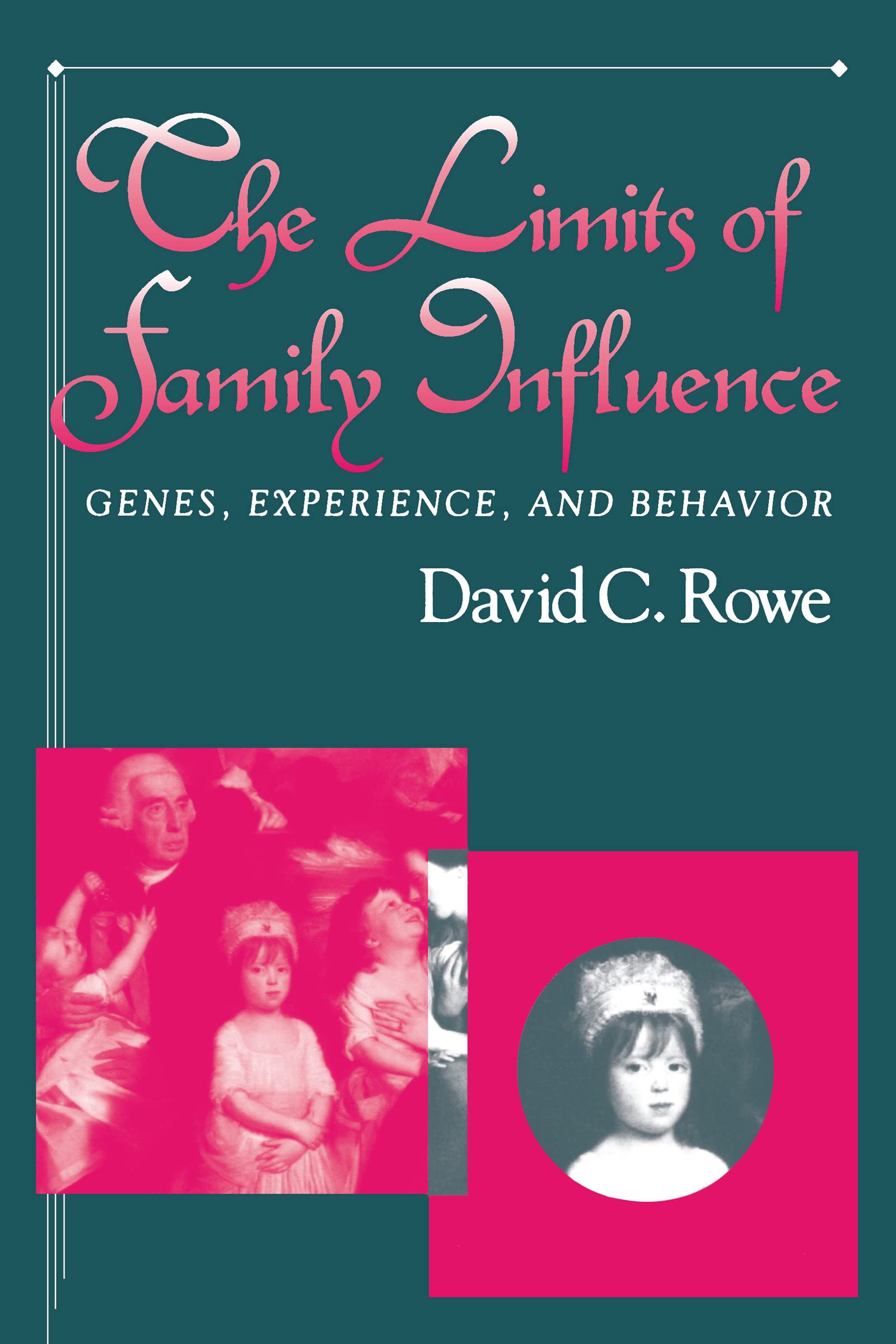
The Limits of Family Influence: Genes, Experience, and Behavior by David C. Rowe – A Critical Look at Child Rearing and
Inclusive of all applicable taxes. FREE shipping on all orders.
Available Offers
- 🚚Free Delivery — Free shipping on all orders
- 💵Cash on Delivery — Pay when your order arrives
- ↩️15-Day Easy Returns — Hassle-free return policy
- 🔒Cash on Delivery — Pay safely when your order arrives
Check Delivery
Product Description
Introduction
In the landscape of developmental psychology and behavioural science, few questions are as provocative as the one posed by David C. Rowe in The Limits of Family Influence: Genes, Experience, and Behavior: How much do parents truly shape their children's personalities, intelligence, and life outcomes? This hardcover volume, published by Guilford Publications, challenges the deeply held belief that child rearing and family environment are the primary architects of who we become. Drawing on decades of behaviour genetic research, Rowe presents a compelling argument that the role of the family may be far more limited than traditionally assumed. For Indian readers, students, and professionals navigating the intersections of nature and nurture, this book offers a rigorous, evidence-based reassessment of how we think about parenting, education, and social policy.
Book Overview
First published in 1994 and still widely cited, this book remains a landmark text in behavioural genetics. Rowe systematically dismantles the notion that environmental variables such as social class, parental warmth, or household structure have a direct causal impact on child development. Instead, he synthesises twin studies, adoption research, and quantitative genetics to show that genetic predispositions often drive both family environments and child outcomes. The book is not a denial of environmental influence but a call for precision: understanding how genes and experience interact, and why many so-called 'environmental' effects may actually reflect genetic inheritance. Written in accessible yet scholarly prose, it bridges psychology, sociology, and genetics with clarity.
Key Highlights
- Groundbreaking Thesis: Directly challenges the traditional socialization model that dominates child psychology and parenting advice.
- Behaviour Genetic Evidence: Uses twin and adoption data to separate genetic from environmental influences on behaviour and cognition.
- Critical Analysis of Social Variables: Examines why factors like socioeconomic status, parenting style, and family structure often show little causal effect on child outcomes.
- Gene-Environment Correlation: Explores how children's genetic tendencies shape their environments, creating a feedback loop that mimics parental influence.
- Implications for Policy: Discusses what these findings mean for education, social work, and family interventions.
Inside the Book
The book is structured to first establish the theoretical foundations of socialization science, then introduce the methods and findings of behaviour genetics. Rowe begins by reviewing classic studies that seemed to support strong family effects, before revealing how those studies failed to control for genetic relatedness. Subsequent chapters delve into specific domains: intelligence, personality, psychopathology, and social attitudes. Each chapter presents data from twin and adoption studies, often showing that shared family environment accounts for surprisingly little variance. The final chapters address the implications for understanding human development and for designing effective interventions. Throughout, Rowe maintains a balanced tone, acknowledging the complexity of gene-environment interplay while avoiding dogmatic claims.
Key Topics
- Nature vs. Nurture Debate: A nuanced look beyond the false dichotomy.
- Behavioural Genetics Methods: Twin studies, adoption studies, and heritability estimates explained.
- Parenting and Child Outcomes: Why warmth, discipline, and involvement may not cause the effects we assume.
- Intelligence and IQ: The heritability of cognitive abilities and the limits of family influence.
- Personality Development: How genes shape temperament and character.
- Psychopathology: Genetic contributions to mental health disorders.
- Social Class and Mobility: The role of genes in socioeconomic outcomes.
- Gene-Environment Correlation and Interaction: How genetic predispositions evoke and select environments.
Reader Benefits
- Critical Thinking Tool: Equips readers to evaluate research claims about parenting and child development.
- Scientific Literacy: Builds understanding of behavioural genetics without requiring a background in statistics.
- Reframing Personal Experience: Helps readers reconsider their own family histories and assumptions about influence.
- Policy Insight: Provides a foundation for evidence-based decisions in education, mental health, and social welfare.
- Academic Foundation: Essential reading for psychology, sociology, and human development courses.
Learning Outcomes
- Understand the key findings of behaviour genetic research on intelligence, personality, and psychopathology.
- Critically evaluate claims about parenting effects and family environment.
- Differentiate between shared and non-shared environmental influences.
- Recognize the role of gene-environment correlations in development.
- Apply this knowledge to real-world contexts such as education and clinical practice.
Who Should Read
This book is ideal for undergraduate and postgraduate students in psychology, sociology, human development, and education. It is also valuable for researchers, clinicians, and educators who want a deeper understanding of the factors shaping child development. Indian readers—especially those in academic or policy settings—will find the arguments relevant to debates about parenting, schooling, and social mobility in the Indian context. Parents and general readers with an interest in science and human behaviour will also appreciate its accessible yet rigorous approach.
About the Author
David C. Rowe (1949–2003) was a pioneering behavioural geneticist and professor at the University of Arizona. He was known for his rigorous empirical work on the genetic and environmental origins of individual differences in behaviour. His research spanned intelligence, personality, antisocial behaviour, and family relationships. Rowe was a strong advocate for integrating genetic perspectives into the social sciences, and his work continues to influence contemporary developmental science.
About the Publisher
Guilford Publications is a respected independent publisher based in New York, specialising in psychology, psychiatry, neuroscience, and education. Known for its academic rigour and high editorial standards, Guilford has published seminal works by leading researchers worldwide. This hardcover edition reflects the publisher's commitment to producing durable, scholarly books that serve as enduring resources for students and professionals.
Conclusion
The Limits of Family Influence: Genes, Experience, and Behavior is a thought-provoking, evidence-driven book that reshapes how we understand the forces that make us who we are. By challenging conventional wisdom with data, David C. Rowe invites readers to think more critically about parenting, education, and human potential. Whether you are a student, researcher, or curious reader, this hardcover volume from Guilford Publications is a valuable addition to your library—one that will stimulate reflection and debate long after you turn the last page.
Quick Summary
The Limits of Family Influence: Genes, Experience, and Behavior by David C. Rowe is a groundbreaking work that challenges the long-standing belief that family upbringing is the primary determinant of a child's personality and intelligence. Drawing on decades of behavior genetic research, including twin and adoption studies, Rowe argues that many environmental variables—such as social class, parental warmth, and household structure—have been mistakenly assigned causal power. Instead, he shows that genetic factors and unique experiences (non-shared environment) play a far more significant role. This book is ideal for psychology and sociology students, researchers, parents, and educators who want to understand the real drivers of human development. Readers will learn to critically evaluate claims about parenting effects and appreciate the complexity of nature and nurture. By purchasing from Bookshops.in, you get a genuine hardcover edition delivered to your doorstep in India, with trusted service and competitive pricing.
Book Highlights
Book Specifications
| ISBN-13 | 9780898621488 |
| ISBN-10 | 0898621488 |
| Publisher | Guilford Press |
| Language | English |
| Dimensions | 15.24 x 1.4 x 22.86 cm |
| Weight | 318 g |
| Category | Psychology › Developmental Psychology |
| Genre | Nonfiction |
| Original Language | English |
Frequently Asked Questions
What is the main argument of The Limits of Family Influence?
Who is the author of this book?
What kind of research does the book use?
Is this book suitable for beginners?
Does the book completely deny the role of parenting?
What is the 'non-shared environment'?
How does the book address social class?
Is this book relevant for Indian readers?
Is this a textbook?
Does the book cover intelligence?
What is the binding of this edition?
Can I use this book for my research?
Where can I buy this book in India?
Readers Also Search For
Customers Also Bought
Psychology
Koinonia: From Hate, Through Dialogue, to Culture in the Large Group by Patrick B. Demare
Psychology
Mindfulness-Based Interventions for Trauma and Its Consequences (Concise Guides on Trauma Care, 4)

Psychology
Handbook for Teaching Statistics and Research Methods by Mark E. Ware

Psychology
Psychoanalysis and the Nuclear Threat: Clinical and Theoretical Studies
Psychology
Humor and Psyche: Psychoanalytic Perspectives by James W. Barron

Relationships
The Experience and Expression of Uncertainty in Close Relationships by Jennifer A. Theiss
Related Products
View AllPsychology
Mindfulness-Based Interventions for Trauma and Its Consequences (Concise Guides on Trauma Care, 4)
Psychology
Handbook for Teaching Statistics and Research Methods by Mark E. Ware
Psychology
Psychoanalysis and the Nuclear Threat: Clinical and Theoretical Studies
Psychology
Humor and Psyche: Psychoanalytic Perspectives by James W. Barron

Psychology
Proceedings of the First International Conference on Genetic Algorithms and Their Applications
Psychology