
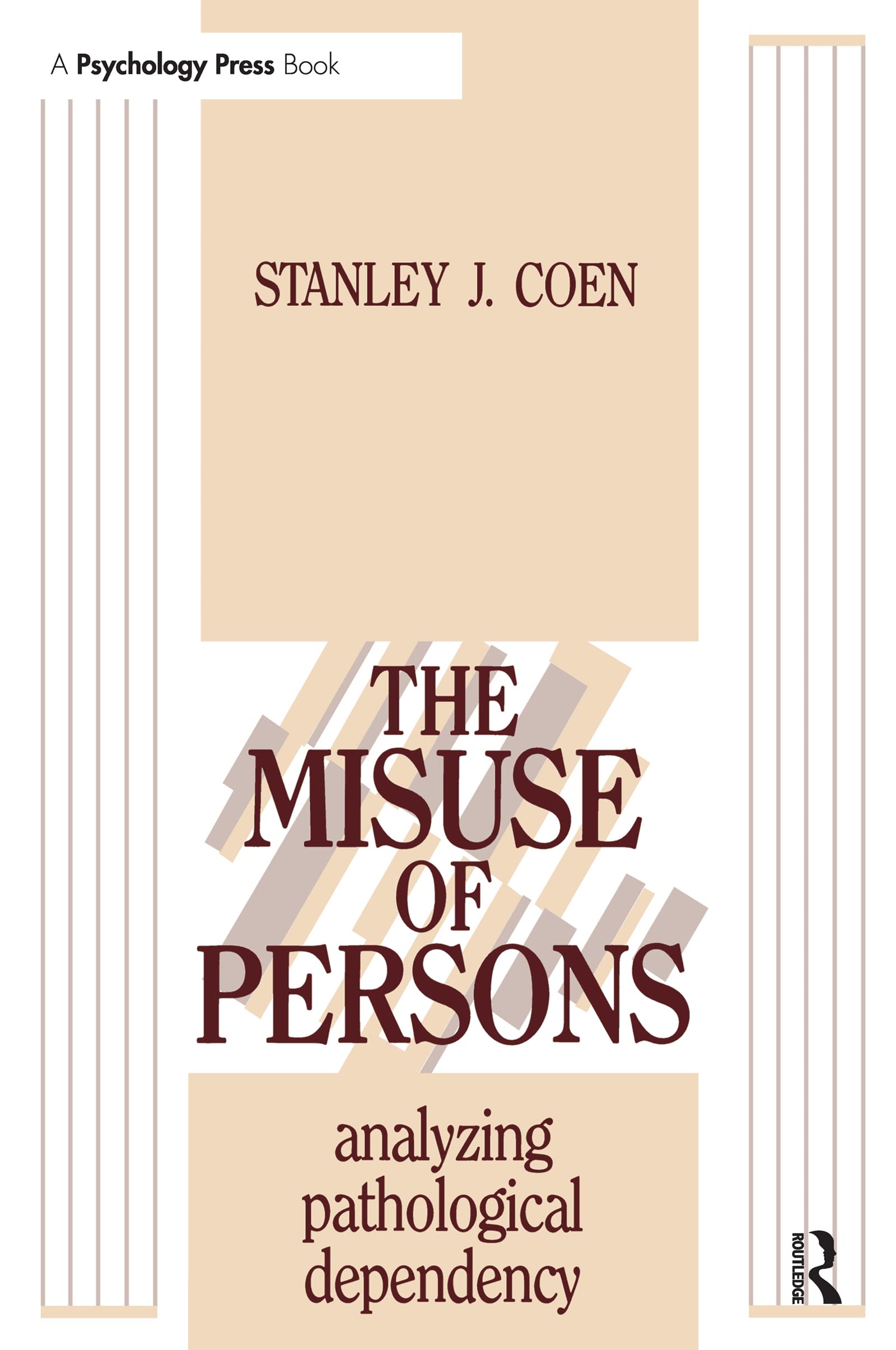
The Misuse of Persons: Analysing Pathological Dependency by Stanley J. Coen – A Psychoanalytic Exploration of Character
Inclusive of all applicable taxes. FREE shipping on all orders.
Available Offers
- 🚚Free Delivery — Free shipping on all orders
- 💵Cash on Delivery — Pay when your order arrives
- ↩️15-Day Easy Returns — Hassle-free return policy
- 🔒Cash on Delivery — Pay safely when your order arrives
Check Delivery
Product Description
Introduction
In the vast and nuanced field of psychoanalysis, few works have dared to delve as deeply into the stubborn, silent resistance of the human psyche as Stanley J. Coen's The Misuse of Persons: Analysing Pathological Dependency. This hardcover edition, published by Routledge, offers Indian students, clinicians, and mental health professionals a rigorous yet accessible exploration of a character structure that defies conventional therapeutic progress. Coen’s work is not merely a clinical manual; it is a profound inquiry into how dependency can become a weapon against growth, disguised as compliance or affection. For anyone training in psychotherapy, counselling, or psychoanalysis in India, this book provides an indispensable lens through which to understand why some patients remain stuck in treatment, unable to use insight, and how the analyst can navigate this treacherous terrain.
Book Overview
The Misuse of Persons identifies a specific character pathology—pathological dependency—that is not defined by surface traits like clinginess or passivity, but by a unique intrapsychic response to the demands of analysis. Coen argues that such patients may appear cooperative or even grateful, but they covertly resist change by turning the therapeutic relationship into a sadomasochistic enmeshment. The book traces the origins of this pattern to early parent-child interactions where repetitive behavioural enactments replaced genuine conflict resolution. Drawing on decades of clinical experience, Coen offers a fresh framework for understanding why interpretation fails and how the analyst can recognise and work through this misuse of the analytic relationship.
Key Highlights
- Pioneering framework: First comprehensive description of pathological dependency as a distinct character structure resistant to analytic process.
- Clinical depth: Rich case illustrations from Coen’s own practice, showing how patients remain in treatment without profiting from it.
- Genetic roots: Expands beyond trauma theories to examine how parent-child enactments substitute for conflict resolution.
- Transference focus: Detailed analysis of how dependent attachment to the analyst becomes a barrier to insight.
- Practical guidance: Strategies for identifying and addressing sadomasochistic patterns in the consulting room.
Inside the Book
The book is structured to guide the reader from theoretical understanding to clinical application. Early chapters define pathological dependency and differentiate it from other forms of dependence. Coen then explores the intrapsychic dynamics, including the role of aggression, envy, and the fear of separateness. Later chapters delve into the genetic origins, focusing on families where behavioural repetition replaced emotional dialogue. The final sections offer detailed case studies and technical recommendations for analysts, emphasising how to interpret the patient’s misuse of the analyst without provoking regression or dropout. Each chapter builds on the last, making complex psychoanalytic concepts accessible to Indian readers who may be new to object relations theory.
Key Topics
- Pathological dependency as a character defence
- Sadomasochistic enmeshment in the transference
- Resistance to insight and interpretation
- Parent-child enactment patterns
- The analyst’s countertransference challenges
- Differentiating healthy from pathological dependence
- Working with patients who stay in treatment without changing
- Repetitive behavioural substitutes for conflict resolution
Reader Benefits
Indian readers will find this book particularly valuable for understanding the cultural dimensions of dependency. In a society where family bonds and hierarchical relationships are deeply valued, distinguishing between healthy interdependence and pathological misuse can be clinically challenging. Coen’s framework helps clinicians recognise when a patient’s apparent compliance is actually a sophisticated form of resistance. Students will gain a clearer understanding of why some therapeutic relationships stagnate, while experienced practitioners will find new techniques for breaking through treatment impasses. The book also offers insights for anyone interested in the darker, more hidden aspects of human attachment—how love and need can become tools of control.
Learning Outcomes
- Identify the core features of pathological dependency in clinical presentations
- Understand the intrapsychic mechanisms that prevent insight from being used
- Recognise sadomasochistic patterns in the transference and countertransference
- Differentiate between healthy dependency and pathological misuse
- Develop strategies for interpreting resistance without rupturing the therapeutic alliance
- Apply Coen’s genetic model to understand early relational trauma
- Enhance clinical effectiveness with treatment-resistant patients
Who Should Read
This book is essential reading for psychoanalysts, psychotherapists, clinical psychologists, and psychiatry residents in India. It is also highly recommended for postgraduate students in counselling and clinical psychology programmes, especially those studying object relations theory or personality disorders. Social workers, psychiatric nurses, and mental health counsellors working with long-term clients will find Coen’s insights transformative. Additionally, scholars of Indian psychology and culture who are interested in the intersection of dependency and pathology will benefit from the theoretical depth. The book assumes some familiarity with psychoanalytic concepts, but Coen’s clear writing makes it accessible to advanced undergraduates and dedicated lay readers.
About the Author
Stanley J. Coen, MD, is a distinguished psychoanalyst and clinical professor of psychiatry at the Columbia University College of Physicians and Surgeons. With over four decades of clinical practice, supervision, and teaching, Coen has contributed extensively to the literature on character pathology, narcissism, and the therapeutic relationship. He is a training and supervising analyst at the Columbia University Center for Psychoanalytic Training and Research. His work is known for its clinical precision, theoretical rigour, and deep empathy for both patients and clinicians. The Misuse of Persons represents the culmination of his lifelong study of how patients unconsciously sabotage their own growth.
About the Publisher
Routledge, a member of the Taylor & Francis Group, is one of the world’s leading academic publishers in the social sciences and humanities. With a legacy spanning over 150 years, Routledge is renowned for publishing seminal works in psychoanalysis, psychology, and psychiatry. This hardcover edition is produced to the highest standards of academic publishing, ensuring durability and readability for years of reference. For Indian readers and institutions, Routledge books are widely available through Bookshops.in, offering authentic editions with global editorial excellence.
Conclusion
The Misuse of Persons: Analysing Pathological Dependency is not just a book—it is a clinical companion for anyone who has ever felt stuck in a therapeutic relationship. Stanley J. Coen offers a compassionate yet unflinching look at how dependency can be misused, and how the analyst can help the patient move from enmeshment to genuine autonomy. For Indian mental health professionals and students, this hardcover edition is a valuable addition to any library, providing enduring insights that will deepen clinical practice and theoretical understanding. Order your copy from Bookshops.in today and take a step closer to mastering the art of working with the most challenging of patients.
Quick Summary
The Misuse of Persons: Analysing Pathological Dependency by Stanley J. Coen is a seminal psychoanalytic work that identifies a character structure resistant to analytic progress. Coen argues that pathologically dependent patients are defined not by surface traits but by their response to the intrapsychic demands of analysis. They remain in treatment, often contentedly or with complaints, yet fail to use insight, especially in the transference. Instead, they engage in sadomasochistic enmeshment and dependent attachment to the analyst. The book explores the genetic roots of this dependency, moving beyond existing trauma theories to describe a pattern of attachment that undermines therapeutic change. This hardcover edition from Routledge is essential for psychoanalysts, psychotherapists, clinical psychology students, and mental health professionals in India seeking to understand and treat resistant patients. Readers will gain a deeper understanding of character resistance, transference dynamics, and clinical strategies for managing dependency. By purchasing from Bookshops.in, Indian readers receive a high-quality physical copy with reliable delivery and customer support.
Book Highlights
Book Specifications
| ISBN-13 | 9780881634570 |
| ISBN-10 | 0881634573 |
| Publisher | Routledge |
| Language | English |
| Dimensions | 15.19 x 1.98 x 22.91 cm |
| Weight | 614 g |
| Country | India |
| Category | Psychology › Psychotherapy |
| Genre | Nonfiction |
| Original Language | English |
Frequently Asked Questions
What is The Misuse of Persons about?
Who is Stanley J. Coen?
Is this book suitable for Indian students?
Is this a hardcover or paperback?
What is the ISBN?
Which publisher released this book?
What is the price in India?
What is the rating of this book?
What language is the book in?
Is this book about trauma?
Who should read this book?
Does the book include case studies?
Can I buy this book from Bookshops.in?
Readers Also Search For
Customers Also Bought
Psychology
Koinonia: From Hate, Through Dialogue, to Culture in the Large Group by Patrick B. Demare
Psychology
Mindfulness-Based Interventions for Trauma and Its Consequences (Concise Guides on Trauma Care, 4)

Psychology
Handbook for Teaching Statistics and Research Methods by Mark E. Ware

Psychology
Psychoanalysis and the Nuclear Threat: Clinical and Theoretical Studies
Psychology
Humor and Psyche: Psychoanalytic Perspectives by James W. Barron

Relationships
The Experience and Expression of Uncertainty in Close Relationships by Jennifer A. Theiss
Related Products
View AllPsychology
Mindfulness-Based Interventions for Trauma and Its Consequences (Concise Guides on Trauma Care, 4)
Psychology
Handbook for Teaching Statistics and Research Methods by Mark E. Ware
Psychology
Psychoanalysis and the Nuclear Threat: Clinical and Theoretical Studies
Psychology
Humor and Psyche: Psychoanalytic Perspectives by James W. Barron

Psychology
Proceedings of the First International Conference on Genetic Algorithms and Their Applications
Psychology