
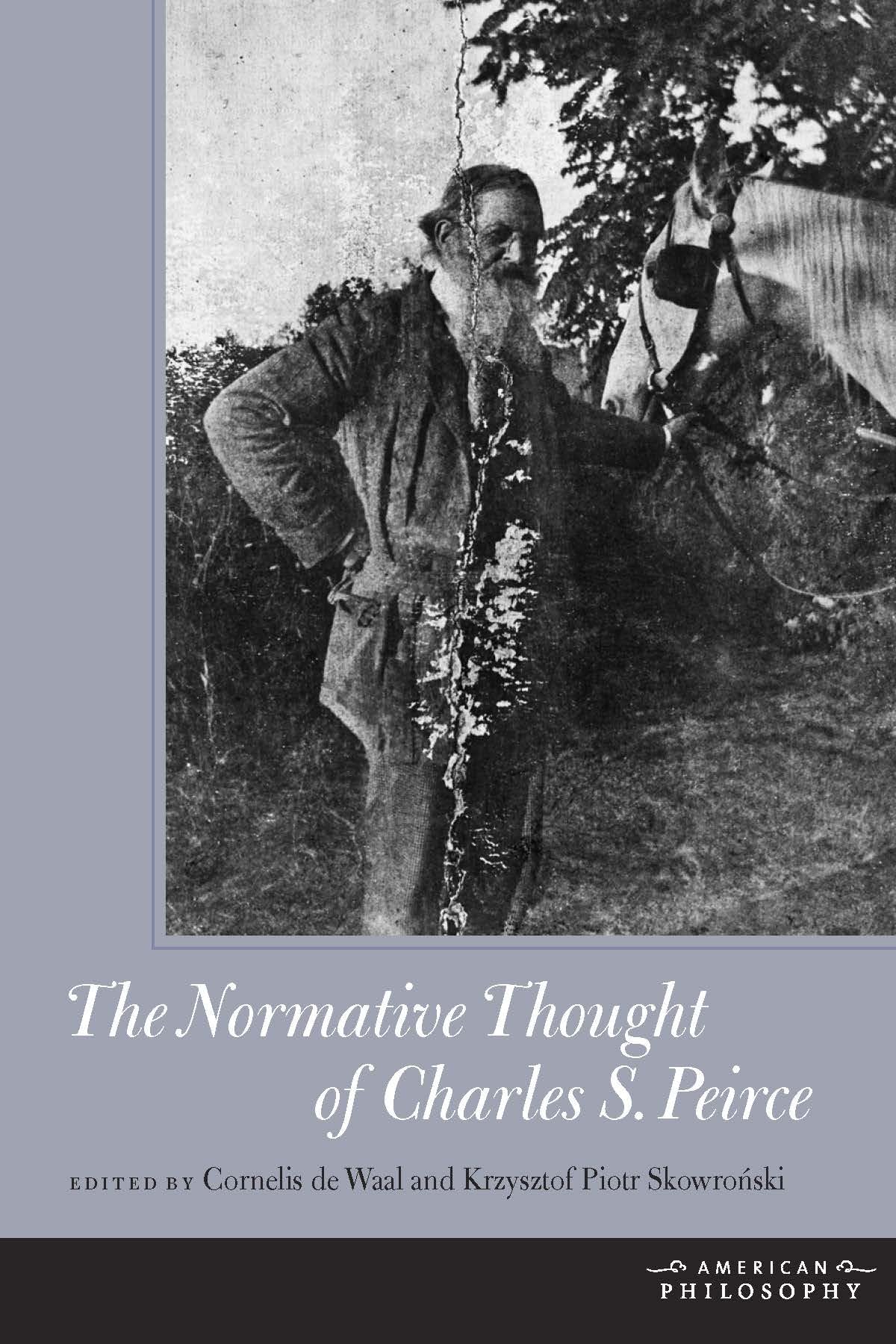
The Normative Thought of Charles S. Peirce: A Scholarly Volume on Peircean Normative Sciences by Cornelis de Waal
Inclusive of all applicable taxes. FREE shipping on all orders.
Available Offers
- 🚚Free Delivery — Free shipping on all orders
- 💵Cash on Delivery — Pay when your order arrives
- ↩️15-Day Easy Returns — Hassle-free return policy
- 🔒Cash on Delivery — Pay safely when your order arrives
Check Delivery
Product Description
Introduction
Charles Sanders Peirce, the founding figure of American pragmatism, left behind a rich and intricate philosophical system that continues to challenge and inspire scholars worldwide. In The Normative Thought of Charles S. Peirce, editor Cornelis de Waal brings together a compelling collection of essays that delve into the heart of Peirce’s normative philosophy. This volume is an indispensable resource for students, researchers, and anyone seeking a deeper understanding of how aesthetics, ethics, and logic form the backbone of Peirce’s pragmatic vision.
Book Overview
Published by Fordham University Press, this hardbound edition offers a rigorous examination of the three normative sciences that Peirce identified: aesthetics, ethics, and logic. The essays explore their interconnections with phenomenology and metaphysics, raising fundamental questions about moral theory, self-control, truth, and communication. The volume does not shy away from the tensions in Peirce’s work, such as his denial that a moral theory can be derived from his philosophy, and instead uses these tensions as springboards for fresh insights.
Key Highlights
- Multidisciplinary Perspectives: Essays range from the normativity of logic to an innovative application of Peircean semiotics to John Coltrane’s iconic jazz composition, A Love Supreme.
- Critical Engagement: Contributors grapple with whether Peirce’s framework can support a robust ethical theory, offering both affirmative and skeptical viewpoints.
- Philosophical Depth: The book bridges Peirce’s theoretical ethics with practical moral concerns, examining the role of meliorism—the belief that the world can be improved through human effort.
- Semiotic Expansion: It extends Peirce’s speculative rhetoric into communication theory, showing how his ideas remain relevant in contemporary discourse.
Inside the Book
The volume is structured to guide readers through Peirce’s normative landscape. Early chapters lay the groundwork by situating aesthetics, ethics, and logic within his broader philosophical system. Later essays tackle the dichotomy between theoretical and practical ethics, the centrality of self-control in moral reasoning, and the normative dimensions of truth. Each contribution is self-contained yet builds toward a cohesive understanding of Peirce’s thought.
Key Topics
- The Normative Sciences: Aesthetics as the science of ideals, ethics as the science of conduct, and logic as the science of reasoning.
- Phenomenology and Metaphysics: How normative inquiry relates to the categories of experience and the nature of reality.
- Moral Theory in Peirce: The possibility and limits of grounding ethics in a pragmatic framework.
- Self-Control and Meliorism: The role of deliberate habit-formation in moral and intellectual growth.
- Truth and Normativity: Examining truth not as a static property but as a regulative ideal guiding inquiry.
- Communication and Semiotics: Applying Peirce’s theory of signs to human interaction and understanding.
Reader Benefits
- Deepen Your Philosophical Toolkit: Gain clarity on one of the most challenging yet rewarding aspects of Peirce’s system.
- Engage with Cutting-Edge Scholarship: Access essays from leading Peirce scholars that push the boundaries of interpretation.
- Bridge Theory and Practice: See how abstract normative concepts apply to art, music, ethics, and everyday reasoning.
- Enhance Your Research: The book serves as a springboard for further inquiry into pragmatism, semiotics, and American philosophy.
Learning Outcomes
- Understand the foundational role of the three normative sciences in Peirce’s philosophy.
- Critically evaluate the arguments for and against deriving a moral theory from Peirce’s work.
- Analyze the connection between aesthetics and ethics in shaping human ideals.
- Apply Peircean concepts to real-world domains like communication, music, and truth-seeking.
- Develop a nuanced appreciation for the interplay between logic, ethics, and metaphysical inquiry.
Who Should Read
This book is ideal for postgraduate students and faculty in philosophy, especially those specializing in American pragmatism, ethics, aesthetics, or semiotics. It will also appeal to scholars in communication studies, musicology, and critical theory who seek a rigorous philosophical foundation. Advanced undergraduates with a background in Peirce will find the essays accessible yet challenging. Anyone fascinated by the question of how we ought to think, feel, and act will be richly rewarded.
About the Author
Cornelis de Waal is a professor of philosophy at Indiana University-Purdue University Indianapolis and a leading authority on Charles S. Peirce. He has authored and edited several books on Peirce and pragmatism, including Peirce: A Guide for the Perplexed and Charles S. Peirce: The Essential Writings. His editorial work ensures that this volume maintains scholarly rigor while remaining accessible.
About the Publisher
Fordham University Press is a distinguished academic publisher based in New York, known for its contributions to philosophy, theology, and the humanities. Their commitment to high-quality scholarship makes this volume a trusted addition to any serious library.
Conclusion
The Normative Thought of Charles S. Peirce is a vital exploration of the ethical and logical dimensions of one of America’s greatest philosophers. By bringing together diverse voices and perspectives, this book illuminates the enduring relevance of Peirce’s normative vision. Whether you are a seasoned scholar or a curious student, this volume will deepen your understanding of how we reason, choose, and create meaning in a complex world.
Quick Summary
The Normative Thought of Charles S. Peirce, edited by Cornelis de Waal, is a scholarly anthology that delves into the three normative sciences identified by Charles Sanders Peirce: aesthetics, ethics, and logic. The essays explore how these normative domains relate to phenomenology and metaphysics, offering fresh interpretations of Peirce's philosophy. A key question running through the volume is whether a moral theory can be derived from Peirce's work, despite his own reservations. The book also applies Peircean semiotics to unexpected areas, such as John Coltrane's jazz composition 'A Love Supreme', and examines themes like self-control, meliorism, and communication theory. This volume is intended for advanced philosophy students, researchers, and academics interested in American pragmatism, semiotics, and normative ethics. By purchasing from Bookshops.in, Indian readers gain access to a high-quality hardcover edition from a trusted local bookstore, ensuring prompt delivery and excellent customer service.
Book Highlights
Book Specifications
| ISBN-13 | 9780823242443 |
| ISBN-10 | 0823242447 |
| Publisher | Fordham Univ Pr |
| Language | English |
| Dimensions | 15.88 x 2.54 x 24.13 cm |
| Weight | 590 g |
| Category | Philosophy › Aesthetics |
| Genre | Philosophy |
| Reading Age | Adult |
| Original Language | English |
Frequently Asked Questions
What is the main focus of this book?
Who is the author of The Normative Thought of Charles S. Peirce?
Is this book suitable for undergraduate students?
Does the book include practical applications of Peirce's thought?
Can I use this book for a course on American philosophy?
Is the book available in hardcover?
Does the book address Peirce's view on moral theory?
What is the ISBN of this book?
Is this book part of a series?
Does the book cover Peirce's semiotics?
Where can I buy this book in India?
Readers Also Search For
Customers Also Bought
Islam
Spiritual Economies (English, Daromir Rudnyckyj)

Islam
Who Is Allah? (English, Bruce B. Lawrence)
Islam
Islam and Liberal Citizenship: The Search for an Overlapping Consensus by Andrew F. March

Islam
Fiqh Us-Sunnah: Funerals and Diggers by Al-Sayyid Sabiq – Islamic Funeral Guide

Christianity
Genetics (English, Thomas a. Shannon | Mark P. Aulisio | Françoise Baylis)

Hinduism
Karma and Creativity by Christopher Key Chapple – Indian Philosophy
Related Products
View All
Philosophy
Latin American Philosophy: Currents, Issues, Debates by Eduardo Mendieta

Philosophy
Al-Farabi's Short Commentary on Aristotle's Prior Analytics by Nicholas Rescher – Philosophy
Philosophy
Poetics of Imagining: Modern to Post-modern by Richard Kearney

Philosophy
The Metaphysics of Extrinsic Properties: 11 (Metaphysical Research, 11)
Philosophy
Dialogues on Metaphysics and on Religion by Nicolas Malebranche – Philosophy
Philosophy