
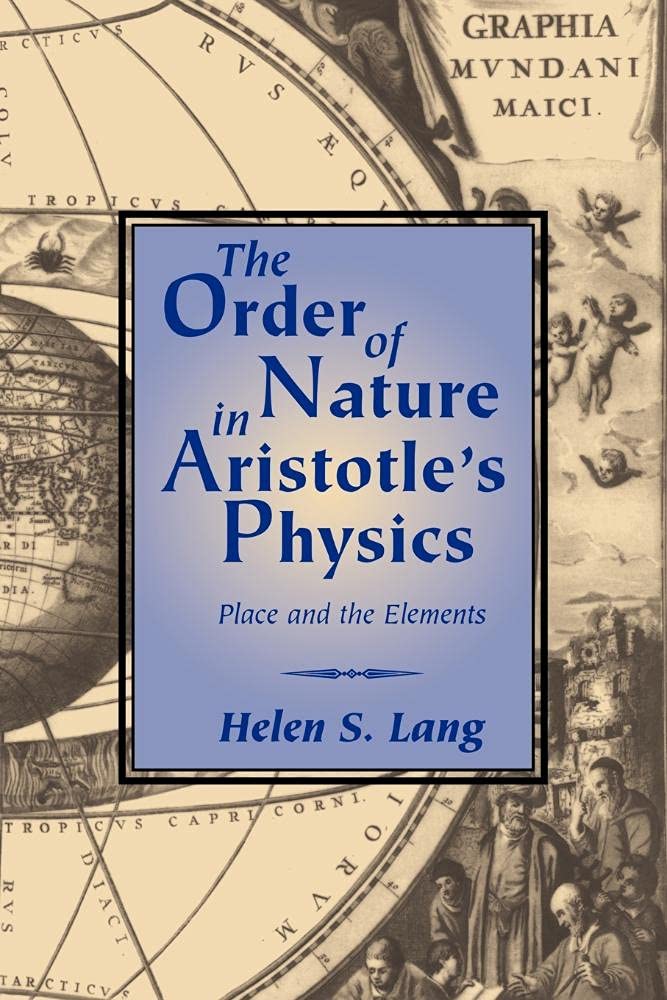
The Order of Nature in Aristotle's Physics: Place and the Elements by Helen S. Lang – A Scholarly Examination of Aristot
Inclusive of all applicable taxes. FREE shipping on all orders.
Available Offers
- 🚚Free Delivery — Free shipping on all orders
- 💵Cash on Delivery — Pay when your order arrives
- ↩️15-Day Easy Returns — Hassle-free return policy
- 🔒Cash on Delivery — Pay safely when your order arrives
Check Delivery
Product Description
Introduction
For students and scholars of ancient philosophy, the works of Aristotle remain a towering achievement of human thought. Yet, reading his physical treatises often feels like navigating a labyrinth of disconnected arguments. Helen S. Lang's The Order of Nature in Aristotle's Physics: Place and the Elements offers a brilliant solution. Published by Cambridge University Press, this hardcover volume provides a fresh, unified reading of Aristotle's natural philosophy. It reveals a continuous, elegant line of reasoning that runs from the Physics to De Caelo, making sense of arguments usually treated in isolation. This book is not merely a historical commentary; it is an invitation to rethink how we approach Aristotle's science.
Book Overview
Lang's central thesis is that Aristotle's concepts of 'place' and 'the elements' are not separate topics but are deeply interconnected. She demonstrates how Aristotle's definition of place—as the innermost motionless boundary of what contains something—leads directly to his theory of natural motion and the elemental bodies. The book meticulously follows Aristotle's arguments, showing how he builds a coherent picture of a structured, ordered cosmos. Rather than dismissing Aristotle's physics as outdated, Lang asks a provocative question: why do these arguments still fascinate us, even though we now consider them scientifically wrong? The answer lies in their logical power and philosophical depth.
Key Highlights
- Unified Reading: Bridges the gap between Physics and De Caelo, showing them as a single, continuous project.
- Original Method: Offers a new methodology for reading Aristotelian texts, focusing on internal coherence.
- Elegant Arguments: Reveals the beauty and logic behind Aristotle's concepts of place, void, and natural motion.
- Provocative Conclusion: Asks why Aristotle's physics remains compelling despite being replaced by modern science.
- Scholarly Rigour: A deeply researched work that engages with both ancient and modern commentators.
Inside the Book
The book is structured to guide the reader through Aristotle's reasoning step by step. Lang begins with a detailed analysis of Aristotle's definition of place in Physics Book IV, arguing against common misinterpretations. She then explores the implications of this definition for the theory of the elements in De Caelo. The discussion covers natural motion, the distinction between the sublunary and celestial realms, and the role of the unmoved mover. Each chapter builds on the last, creating a compelling narrative. The final chapter is particularly striking, as it reflects on the enduring value of a scientific system we no longer accept.
Key Topics
- Aristotle's definition of place and its philosophical significance
- The theory of the four elements (earth, water, air, fire)
- Natural motion and the concept of the 'natural place'
- The relationship between the sublunary and celestial spheres
- Critique of the void and the plenum
- The role of the unmoved mover in physical explanation
Reader Benefits
This book will transform how you read Aristotle. Instead of seeing his physics as a collection of odd ideas, you will appreciate its systematic coherence. For Indian students, this is particularly valuable, as it offers a rigorous model of how to engage with a classical philosophical tradition critically. The book sharpens analytical skills, teaches close reading of complex texts, and provides a deeper understanding of the foundations of Western science. It also serves as a bridge between philosophy and the history of science, showing how these disciplines can enrich each other.
Learning Outcomes
After reading this book, you will be able to: articulate Aristotle's definition of place with precision; explain how his theory of the elements follows from his physics; identify the logical structure of arguments in Physics and De Caelo; critique modern interpretations of Aristotle's natural philosophy; and reflect on the nature of scientific progress and the value of 'wrong' theories.
Who Should Read
- Students of philosophy, especially those studying Aristotle or ancient Greek thought
- Scholars and researchers in classics, history of science, and metaphysics
- Teachers looking for a clear, rigorous text to guide advanced courses
- Anyone curious about the foundations of physics and cosmology
- Indian readers interested in comparative studies of Eastern and Western natural philosophy
About the Author
Helen S. Lang is a distinguished scholar of ancient philosophy. She has spent decades studying Aristotle's physical and metaphysical works, publishing extensively in leading academic journals. Her approach is known for its clarity and its willingness to challenge established interpretations. Lang's deep familiarity with the original Greek texts, combined with her sensitivity to philosophical argument, makes her an authoritative guide through Aristotle's demanding thought.
About the Publisher
Cambridge University Press is one of the world's oldest and most prestigious academic publishers. Founded in 1534, it has a long tradition of producing high-quality scholarly works in philosophy, science, and the humanities. This hardcover edition reflects their commitment to durable binding and clear typesetting, making it a valuable addition to any serious library.
Conclusion
The Order of Nature in Aristotle's Physics: Place and the Elements is a masterful work that will change the way you think about Aristotle. It is not a dry commentary but a lively, argument-driven book that recovers the elegance of a system we have long dismissed. For anyone serious about understanding the history of ideas, this volume is indispensable. Order your copy from Bookshops.in today and discover the hidden order in Aristotle's cosmos.
Quick Summary
The Order of Nature in Aristotle's Physics: Place and the Elements by Helen S. Lang is a rigorous scholarly work that reinterprets Aristotle's physical science by revealing a continuous line of argument running from the Physics to De Caelo. Lang demonstrates that Aristotle's concepts of place and the elements are not isolated topics but form a coherent philosophical system about natural order. The book is intended for philosophy students, classicists, and historians of science, especially those in Indian universities where classical thought is highly valued. Readers will learn a method for reading Aristotelian texts that highlights their internal elegance, even while acknowledging that Aristotle's conclusions have been superseded by modern science. This edition from Cambridge University Press is a premium hardcover, ideal for academic libraries and serious scholars. Buying from Bookshops.in ensures you receive an authentic, well-packaged copy delivered across India, supporting a trusted local bookstore.
Book Highlights
Book Specifications
| ISBN-13 | 9780521624534 |
| ISBN-10 | 0521624533 |
| Publisher | Cambridge University Press |
| Language | English |
| Dimensions | 16.51 x 2.54 x 24.13 cm |
| Weight | 610 g |
| Country | India |
| Category | Philosophy › History & Surveys |
| Genre | Philosophy |
| Original Language | English |
Frequently Asked Questions
What is the main argument of The Order of Nature in Aristotle's Physics?
Who is Helen S. Lang?
Is this book suitable for undergraduate students?
Does the book only discuss Aristotle's Physics?
Why is this book relevant for Indian readers?
What makes this book different from other works on Aristotle?
Is the book critical of Aristotle's ideas?
What is the price of this book?
Does this book include references to modern physics?
What is the ISBN of this book?
Can this book be used for a course on ancient philosophy?
Is the book written in technical language?
Where can I buy this book in India?
Readers Also Search For
Customers Also Bought
Islam
Spiritual Economies (English, Daromir Rudnyckyj)

Islam
Who Is Allah? (English, Bruce B. Lawrence)
Islam
Islam and Liberal Citizenship: The Search for an Overlapping Consensus by Andrew F. March
Islam
Fiqh Us-Sunnah: Funerals and Diggers by Al-Sayyid Sabiq – Islamic Funeral Guide

Christianity
Genetics (English, Thomas a. Shannon | Mark P. Aulisio | Françoise Baylis)

Hinduism
Karma and Creativity by Christopher Key Chapple – Indian Philosophy
Related Products
View All
Philosophy
The Metaphysics of Extrinsic Properties: 11 (Metaphysical Research, 11)
Philosophy
Dialogues on Metaphysics and on Religion by Nicolas Malebranche – Philosophy
Philosophy
Metaphysics and Oppression: Heidegger's Challenge to Western Philosophy by John McCumber
Philosophy
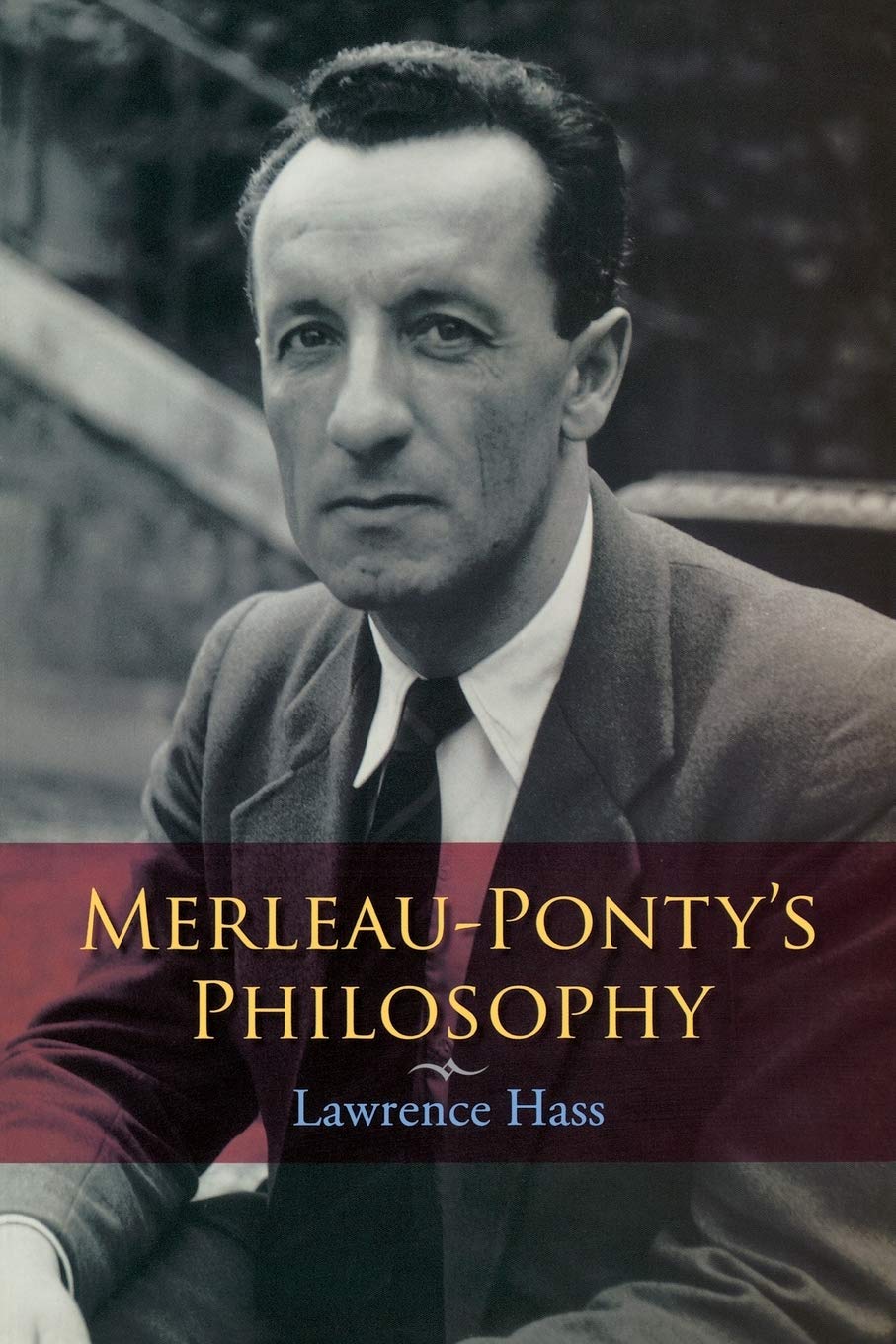
Merleau-Ponty's Philosophy by Lawrence Hass – Phenomenology & Continental Philosophy

Philosophy
Feminism, Capitalism, and Ecology
Philosophy