
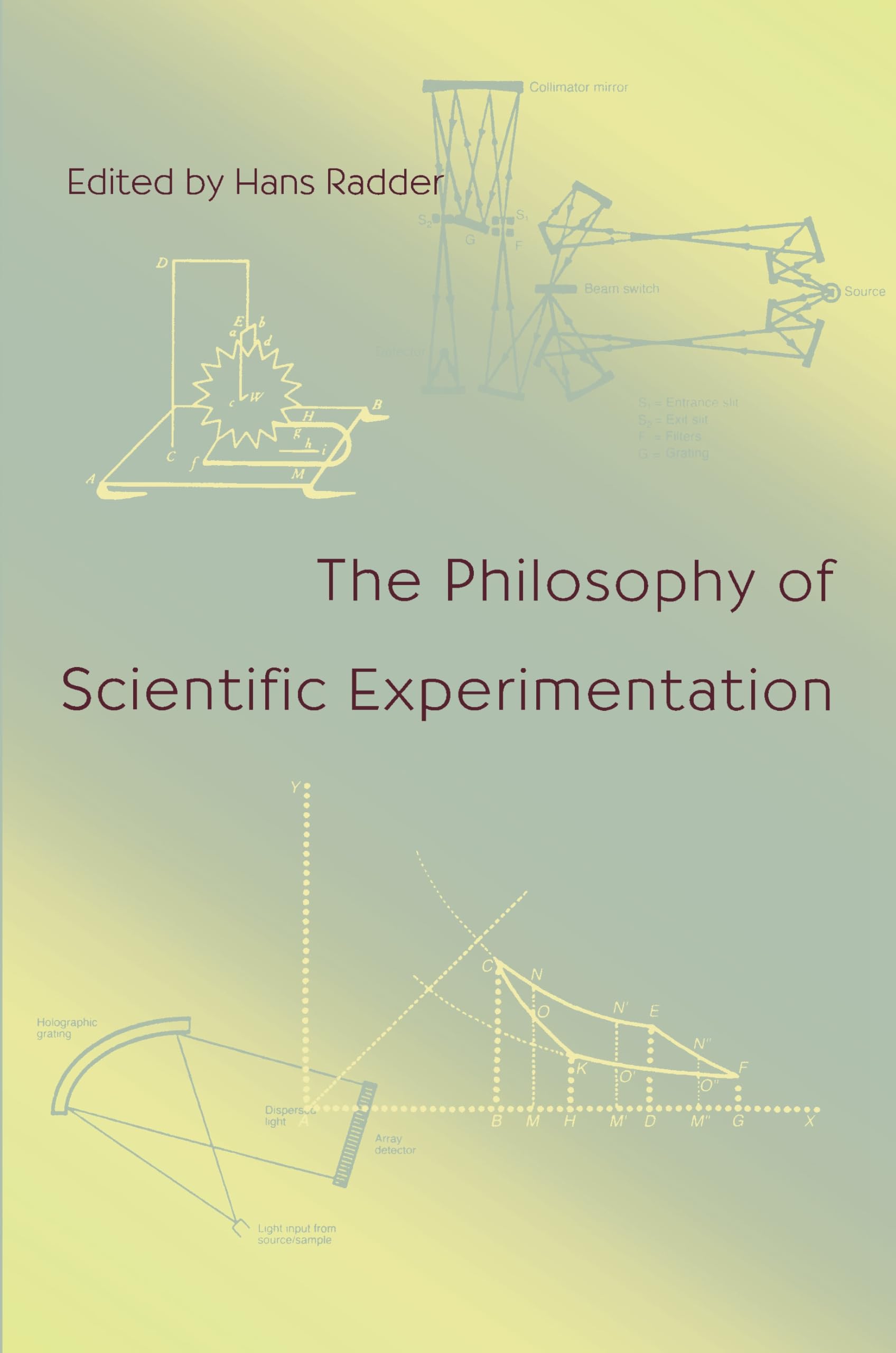
The Philosophy of Scientific Experimentation by Hans Radder – A Philosophical Inquiry into Experimental Practice and Cau
Inclusive of all applicable taxes. FREE shipping on all orders.
Available Offers
- 🚚Free Delivery — Free shipping on all orders
- 💵Cash on Delivery — Pay when your order arrives
- ↩️15-Day Easy Returns — Hassle-free return policy
- 🔒Cash on Delivery — Pay safely when your order arrives
Check Delivery
Product Description
Introduction
For decades, the philosophy of science focused overwhelmingly on theories, laws, and deductive reasoning, leaving the messy, hands-on world of experimentation largely unexplored. The Philosophy of Scientific Experimentation, edited by Hans Radder, shatters this imbalance by placing experimental practice at the very heart of scientific inquiry. This rigorous yet accessible volume invites Indian students, researchers, and curious readers to rethink how science actually works—through material intervention, instrument design, and the deliberate manipulation of nature. Published by the University of Pittsburgh Press, this hardcover edition is an essential addition to any serious library in the social sciences and philosophy.
Book Overview
Since the late 1980s, a quiet revolution has transformed the philosophy of science: experiment is no longer a footnote but a central subject of analysis. This collection brings together prominent philosophers who directly address fundamental questions about experimental practice. Rather than merely recounting historical case studies, the contributors develop new philosophical accounts and offer fresh perspectives on what it means to actively interfere with the material world. The book weaves together six interconnected themes—from causality and technology to modelling, simulation, and the role of instruments—creating a comprehensive framework for understanding modern scientific experimentation.
Key Highlights
- Original philosophical essays that move beyond historical narratives to tackle theoretical and conceptual issues.
- Focus on material intervention—explores how actively manipulating the physical world shapes scientific knowledge.
- Interdisciplinary relevance bridging philosophy, physics, engineering, and the social sciences.
- Critical analysis of modelling and simulation in contemporary experimental contexts.
- In-depth treatment of scientific instruments—their design, operation, and philosophical implications.
Inside the Book
Each chapter in this volume examines one or more of the six core themes, ensuring a rich, multi-layered reading experience. Readers will encounter discussions on the causal interpretation of experiments, the intricate link between science and technology, and the ways theory informs material and causal intervention. The book also tackles the growing impact of computer simulation on experimental design and the philosophical consequences of using advanced instruments. The essays are structured to be both self-contained and complementary, allowing readers to dip into specific topics or journey through the entire collection.
Key Topics
- Philosophical implications of actively interfering with material reality.
- Causality and interpretation in experimental settings.
- The science–technology nexus and its epistemological dimensions.
- The interplay between theory and experimental practice.
- Modelling, simulation, and their effect on traditional experimentation.
- Design, operation, and philosophical significance of scientific instruments.
Reader Benefits
This book empowers readers to critically evaluate the experimental foundations of modern science. It clarifies how experiments are not mere tests of theory but are creative, constructive acts that shape our understanding of nature. For Indian students grappling with the rapid expansion of scientific research, the volume offers a conceptual toolkit to analyze laboratory practices, technological innovations, and the ethical dimensions of experimentation. It also enhances one's ability to read and critique scientific literature with greater depth.
Learning Outcomes
- Gain a nuanced understanding of the philosophical significance of experimental interference.
- Analyze causal reasoning in experimental contexts with greater precision.
- Evaluate the relationship between scientific theory and material practice.
- Critically assess the role of computer simulations and models in contemporary science.
- Appreciate how instrument design influences knowledge production.
Who Should Read
The Philosophy of Scientific Experimentation is ideal for postgraduate and advanced undergraduate students in philosophy of science, sociology of science, and science and technology studies. It is equally valuable for practicing scientists and engineers who wish to reflect on the deeper implications of their work. Indian readers preparing for competitive examinations such as UGC-NET or JRF in philosophy or social sciences will find this volume an indispensable resource. Additionally, curious general readers with a background in science will discover a stimulating intellectual journey.
About the Author
Hans Radder is a distinguished philosopher of science known for his pioneering work on experimentation, materiality, and scientific practice. He has taught and researched at leading institutions in Europe and the United States, and his edited volumes have become standard references in the field. Radder’s scholarship emphasizes the concrete, hands-on aspects of science, challenging abstract and theory-centric views.
About the Publisher
The University of Pittsburgh Press is a renowned academic publisher with a strong tradition in philosophy, history of science, and social sciences. Its publications are known for rigorous scholarship and intellectual depth, making them trusted resources for students and researchers worldwide.
Conclusion
In an era where science increasingly relies on complex instruments, simulations, and collaborative experiments, understanding the philosophy behind experimentation is more crucial than ever. The Philosophy of Scientific Experimentation offers a timely, thought-provoking, and thoroughly engaging exploration of how we know what we know through material intervention. Whether you are a student, a researcher, or a lifelong learner, this book will transform the way you see the laboratory and the world. Add this hardcover volume to your collection from Bookshops.in and deepen your engagement with the very fabric of scientific inquiry.
Quick Summary
The Philosophy of Scientific Experimentation by Hans Radder is a rigorous academic work that delves into the philosophical underpinnings of experimental science. It moves beyond historical case studies to address core theoretical questions such as the implications of actively interfering with the material world, the interpretation of causality, and the intrinsic link between science and technology. The book is structured around six interconnected themes, offering original insights from prominent philosophers of experiment. Ideal for postgraduate students, researchers, and academics in philosophy of science, this volume equips readers with a deeper understanding of how experiments shape scientific knowledge. By examining the role of theory in material and causal interventions, it challenges conventional views and encourages critical reflection. Published by the University of Pittsburgh Press, this hardcover edition is a durable addition to any scholarly library. Indian students and faculty will find it particularly useful for advanced seminars and research projects. Purchasing from Bookshops.in ensures you receive an authentic copy with prompt delivery across India.
Book Highlights
Book Specifications
| ISBN-13 | 9780822957959 |
| ISBN-10 | 0822957957 |
| Publisher | Univ of Pittsburgh Pr |
| Language | English |
| Dimensions | 15.56 x 3.81 x 23.5 cm |
| Weight | 476 g |
| Category | Humanities › Philosophy |
| Genre | Philosophy |
| Reading Age | Adult |
| Original Language | English |
Frequently Asked Questions
What is The Philosophy of Scientific Experimentation about?
Who is the author of this book?
Is this book suitable for undergraduate students?
What topics are covered in this book?
Is this book available in hardcover?
Can Indian students benefit from this book?
Does this book include case studies?
What is the ISBN of this book?
Is this book part of a series?
What language is the book in?
Why buy from Bookshops.in?
What is the price of this book?
Readers Also Search For
Customers Also Bought

Islam
Spiritual Economies (English, Daromir Rudnyckyj)

Islam
Who Is Allah? (English, Bruce B. Lawrence)

Islam
Islam and Liberal Citizenship: The Search for an Overlapping Consensus by Andrew F. March

Islam
Fiqh Us-Sunnah: Funerals and Diggers by Al-Sayyid Sabiq – Islamic Funeral Guide

Christianity
Genetics (English, Thomas a. Shannon | Mark P. Aulisio | Françoise Baylis)

Hinduism
Karma and Creativity by Christopher Key Chapple – Indian Philosophy
Related Products
View All
Philosophy
Latin American Philosophy: Currents, Issues, Debates by Eduardo Mendieta

Philosophy
Al-Farabi's Short Commentary on Aristotle's Prior Analytics by Nicholas Rescher – Philosophy

Philosophy
Poetics of Imagining: Modern to Post-modern by Richard Kearney

Philosophy
The Metaphysics of Extrinsic Properties: 11 (Metaphysical Research, 11)

Philosophy
Dialogues on Metaphysics and on Religion by Nicolas Malebranche – Philosophy
Philosophy