
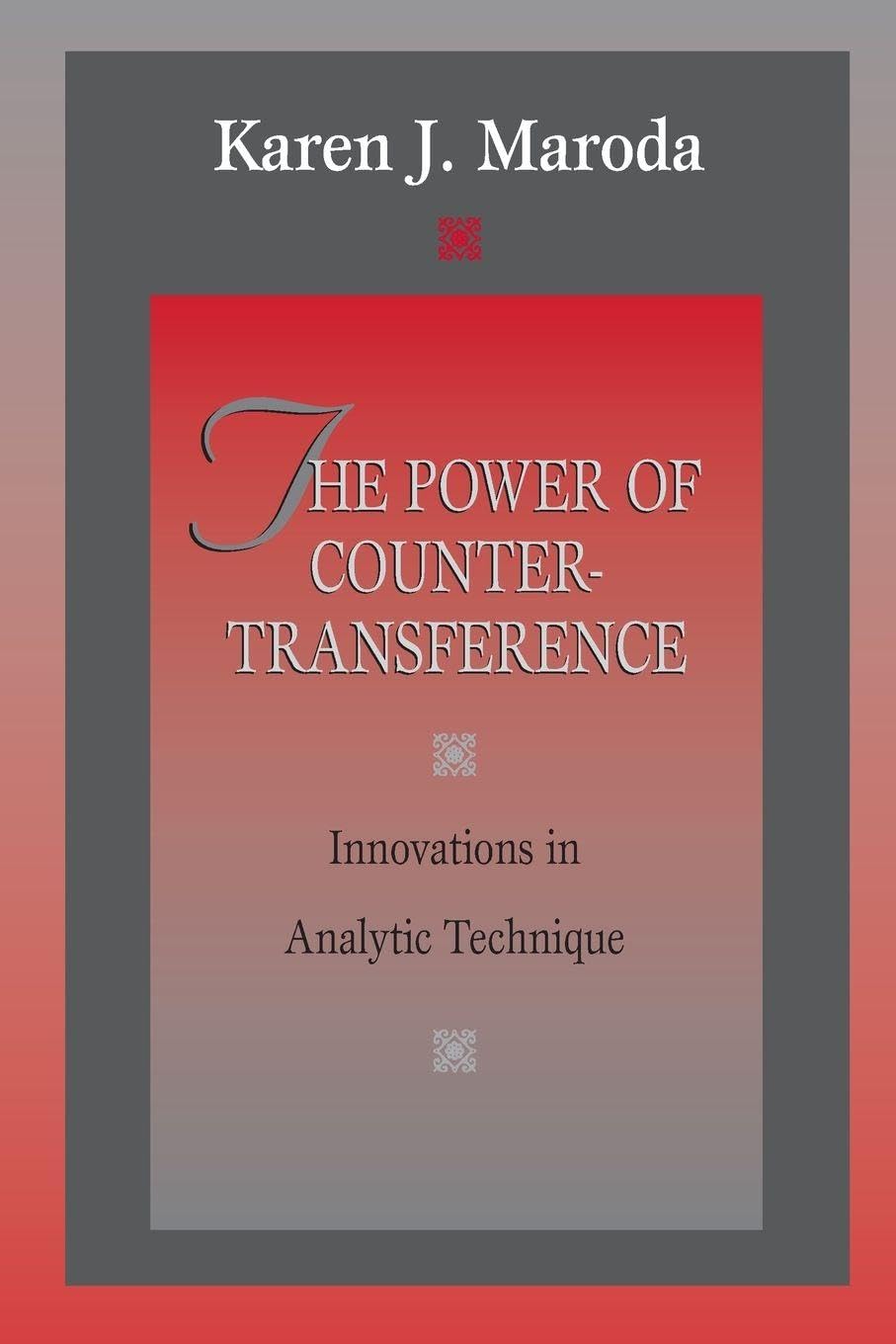
The Power of Countertransference: Innovations in Analytic Technique by Karen J. Maroda – A Relational Psychoanalysis Cla
Inclusive of all applicable taxes. FREE shipping on all orders.
Available Offers
- 🚚Free Delivery — Free shipping on all orders
- 💵Cash on Delivery — Pay when your order arrives
- ↩️15-Day Easy Returns — Hassle-free return policy
- 🔒Cash on Delivery — Pay safely when your order arrives
Check Delivery
Product Description
Introduction
In the evolving landscape of psychoanalytic thought, few works have challenged and reshaped clinical practice as profoundly as Karen J. Maroda’s The Power of Countertransference: Innovations in Analytic Technique. This revised hardcover edition, published by Routledge, remains a cornerstone for mental health professionals and students in India and worldwide who seek a deeper, more relational understanding of the therapeutic encounter. Maroda’s work invites readers to move beyond traditional neutrality and embrace the emotional honesty that transforms the analyst-analysand relationship.
Book Overview
First published in 1991, The Power of Countertransference marked a turning point in psychoanalysis by systematically integrating the analyst’s emotional responses and self-disclosures into a collaborative, interactive model of practice. This updated edition includes a new Foreword by Lewis Aron and an Afterword where Maroda reflects on the evolution of psychoanalytic technique over the decades. The book argues that mutual emotional exchanges—far from being a liability—are essential for authentic therapeutic change. Maroda’s pioneering ideas have influenced generations of clinicians, making this volume a vital resource for anyone interested in relational psychoanalysis.
Key Highlights
- Revised and Updated: Features a new Foreword by Lewis Aron and an Afterword by the author, offering contemporary insights on countertransference.
- Pioneering Framework: One of the first systematic attempts to advocate for analyst self-disclosure as a therapeutic tool.
- Relational Turn: A foundational text in the relational psychoanalysis movement, emphasizing emotional honesty.
- Clinically Relevant: Packed with case examples and practical guidance for applying these concepts in real sessions.
- Endorsed by Experts: Highly praised by Harold Searles and other leading figures in psychoanalysis.
Inside the Book
This book delves into the complexities of countertransference, exploring how the analyst’s feelings—when acknowledged and used wisely—can deepen the therapeutic process. Maroda challenges the classical ideal of the blank-screen analyst, proposing instead that authentic emotional engagement fosters healing. The text covers the ethics of self-disclosure, the dynamics of mutual influence, and practical strategies for managing intense emotional reactions. Each chapter builds a compelling case for integrating the analyst’s subjectivity into the work, making it both a theoretical treatise and a practical manual.
Key Topics
- The role of countertransference in modern psychoanalysis
- Affective self-disclosure and its therapeutic potential
- Mutual emotional exchanges in the analytic dyad
- Ethical boundaries and professional responsibility
- Integrating relational theory with clinical practice
- Case studies illustrating emotional honesty in sessions
Reader Benefits
Readers will gain a nuanced understanding of how countertransference can be a powerful ally rather than an obstacle. By embracing Maroda’s approach, clinicians can reduce the risk of acting out emotions, build stronger therapeutic alliances, and facilitate deeper transformation in their clients. The book also offers clarity on navigating the delicate balance between personal disclosure and professional boundaries, making it an invaluable guide for practitioners at all levels.
Learning Outcomes
- Understand the theoretical shift from neutrality to relational engagement.
- Identify and work productively with personal emotional responses in therapy.
- Apply ethical self-disclosure techniques to enhance therapeutic outcomes.
- Critically evaluate classical and contemporary views on countertransference.
- Develop a more authentic, interactive style of analytic practice.
Who Should Read
This book is essential for psychoanalysts, psychotherapists, clinical psychologists, and mental health counsellors in India. It is also highly recommended for postgraduate students in clinical psychology, psychiatry, and social work who wish to deepen their understanding of the therapeutic relationship. Academics and researchers in psychoanalytic theory will find Maroda’s arguments both provocative and enriching. Anyone interested in the human dimensions of healing—beyond rigid technique—will benefit from this work.
About the Author
Karen J. Maroda is a renowned psychoanalyst, author, and clinical supervisor with decades of experience in relational psychoanalysis. She has contributed extensively to the literature on countertransference, self-disclosure, and the emotional life of the analyst. Her work has been widely cited and continues to influence contemporary practice. Maroda is known for her clear, compassionate writing and her commitment to demystifying the analytic process.
About the Publisher
Routledge is a leading global publisher of academic and professional books in the social sciences, including psychology, psychoanalysis, and counselling. With a rich history dating back to the 19th century, Routledge is trusted by scholars and practitioners worldwide for its rigorous editorial standards and cutting-edge content. This edition reflects Routledge’s dedication to making seminal works accessible to new generations of readers.
Conclusion
The Power of Countertransference: Innovations in Analytic Technique is more than a book—it is a call to reimagine the therapeutic relationship. Karen J. Maroda’s brave and thoughtful exploration of emotional honesty offers Indian clinicians and students a roadmap to more authentic, effective practice. Whether you are a seasoned professional or a student beginning your journey, this revised edition will challenge, inspire, and ultimately transform how you understand the heart of psychoanalysis.
Quick Summary
The Power of Countertransference: Innovations in Analytic Technique by Karen J. Maroda is a seminal work in relational psychoanalysis that redefines the role of the analyst's emotions in therapy. Maroda argues that countertransference is not a hindrance but a powerful tool for deepening the therapeutic alliance and promoting healing. This book offers practical guidance on emotional honesty, self-disclosure, and mutual exchange between analyst and patient, moving beyond traditional neutral stances. It is ideal for psychoanalysts, psychodynamic therapists, clinical psychology students, and anyone interested in modern therapeutic relationships. Readers will learn to embrace their own emotional responses, use self-disclosure effectively, and foster more authentic connections with clients. By integrating theory with clinical examples, Maroda provides a roadmap for more effective and humane practice. Buy from Bookshops.in for a trusted source of academic and professional psychology books in India.
Book Highlights
Book Specifications
| ISBN-13 | 9780881634143 |
| ISBN-10 | 088163414X |
| Publisher | Routledge |
| Language | English |
| Dimensions | 15.19 x 1.22 x 22.91 cm |
| Weight | 295 g |
| Country | India |
| Category | Psychology › Clinical Psychology |
| Genre | Psychology |
| Original Language | English |
Frequently Asked Questions
What is The Power of Countertransference about?
Who is Karen J. Maroda?
Is this book suitable for beginners in psychoanalysis?
Does the book include case studies?
How does this book differ from traditional psychoanalytic texts?
What is the relational turn in psychoanalysis?
Can this book help therapists with self-awareness?
Is this book used in Indian psychology courses?
Does the book address ethical considerations of self-disclosure?
Who endorsed this book?
What is the format of the book?
Is this book relevant for non-psychoanalytic therapists?
Where can I buy this book in India?
Readers Also Search For
Customers Also Bought
Psychology
Koinonia: From Hate, Through Dialogue, to Culture in the Large Group by Patrick B. Demare

Psychology
Mindfulness-Based Interventions for Trauma and Its Consequences (Concise Guides on Trauma Care, 4)

Psychology
Handbook for Teaching Statistics and Research Methods by Mark E. Ware

Psychology
Psychoanalysis and the Nuclear Threat: Clinical and Theoretical Studies

Psychology
Humor and Psyche: Psychoanalytic Perspectives by James W. Barron

Relationships
The Experience and Expression of Uncertainty in Close Relationships by Jennifer A. Theiss
Related Products
View AllPsychology
Mindfulness-Based Interventions for Trauma and Its Consequences (Concise Guides on Trauma Care, 4)
Psychology
Handbook for Teaching Statistics and Research Methods by Mark E. Ware
Psychology
Psychoanalysis and the Nuclear Threat: Clinical and Theoretical Studies
Psychology
Humor and Psyche: Psychoanalytic Perspectives by James W. Barron

Psychology
Proceedings of the First International Conference on Genetic Algorithms and Their Applications
Psychology