
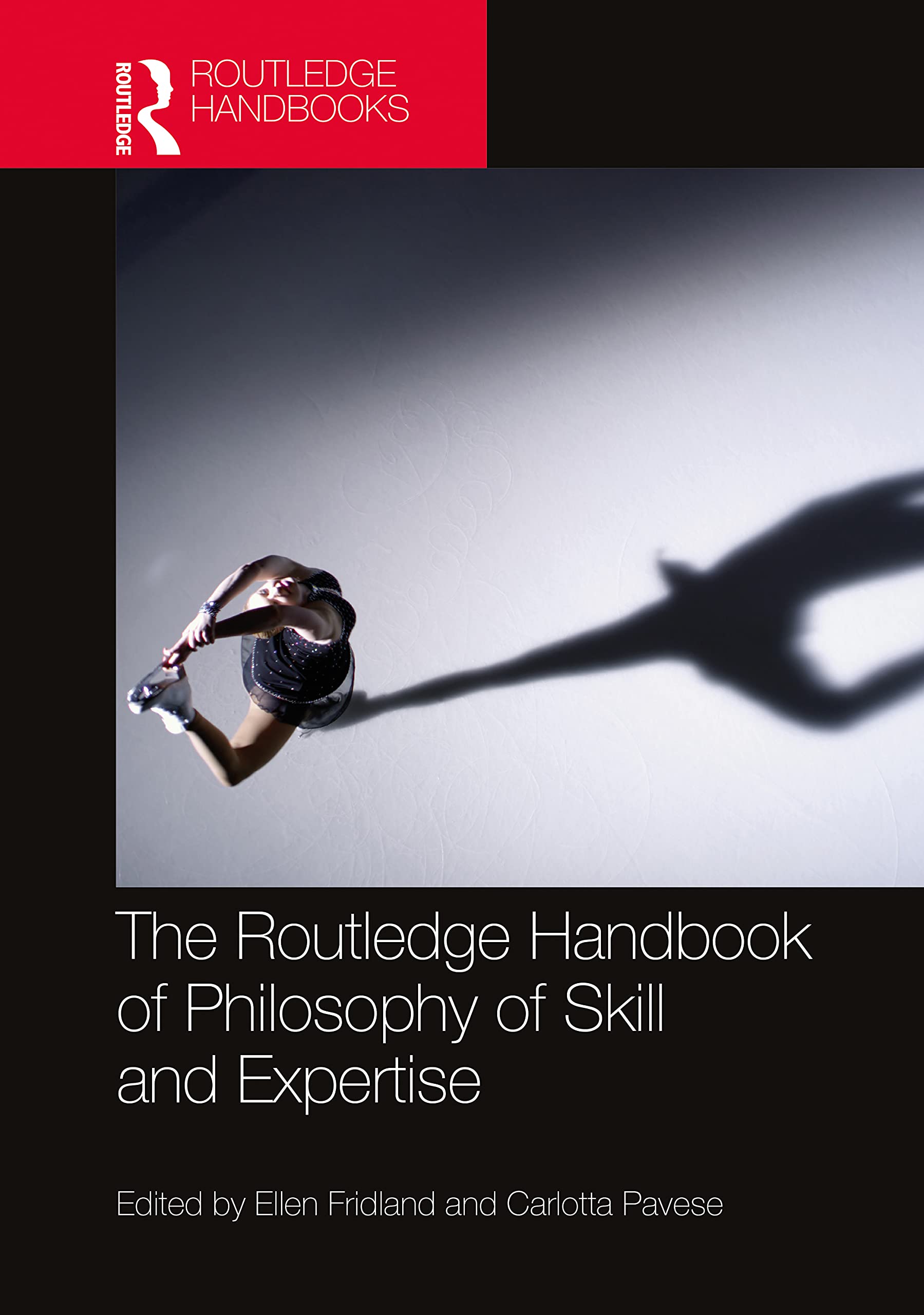
The Routledge Handbook of Philosophy of Skill and Expertise by Ellen Fridland – An Essential Reference for Scholars of S
Inclusive of all applicable taxes. FREE shipping on all orders.
Available Offers
- 🚚Free Delivery — Free shipping on all orders
- 💵Cash on Delivery — Pay when your order arrives
- ↩️15-Day Easy Returns — Hassle-free return policy
- 🔒Cash on Delivery — Pay safely when your order arrives
Check Delivery
Product Description
Introduction
What does it mean to truly master a skill? From the deft hands of a surgeon to the intuitive strokes of a classical musician, skill and expertise shape our world in profound ways. Yet, the philosophy behind skilled action has often remained in the shadows of academic discussion—until now. The Routledge Handbook of Philosophy of Skill and Expertise, edited by Ellen Fridland and published by Routledge, is a landmark volume that brings together leading thinkers to explore the nature of skill from ancient wisdom to contemporary cognitive science. For Indian students, scholars, and lifelong learners, this hardbound reference work offers a rare opportunity to engage with a subject that touches every domain of human achievement, from yoga to engineering, from classical dance to artificial intelligence.
Book Overview
This comprehensive handbook is the first major collection of its kind, reflecting the explosive growth of interest in skill and expertise within philosophy and related fields. Spanning 39 chapters written by an international team of contributors, the volume is organized into six clear parts: skill in the history of philosophy (both Eastern and Western), skill in epistemology, skill and agency, skill in perception and emotion, skill and social cognition, and skill in normative philosophy. The book bridges classical insights from Plato, Aristotle, and the Upanishads with cutting-edge debates in embodied cognition, virtue ethics, and expertise studies. It is an essential resource for anyone seeking a rigorous yet accessible exploration of what it means to be skilled.
Key Highlights
- First of its kind: The most comprehensive philosophical treatment of skill and expertise ever published in a single volume.
- Global perspectives: Includes chapters on Indian, Chinese, and Western philosophical traditions, making it uniquely relevant for Indian readers.
- Interdisciplinary reach: Draws on cognitive science, psychology, sports studies, and education, not just philosophy.
- Expert contributors: Features leading philosophers and cognitive scientists from top universities worldwide.
- Practical relevance: Connects abstract theory to real-world domains like medicine, music, sports, and craft.
Inside the Book
The handbook is divided into six parts that guide the reader from foundational questions to advanced applications. Part I traces the history of skill in philosophy, including neglected traditions from India and China. Part II explores how skill relates to knowledge, justification, and intellectual virtue. Part III examines the relationship between skill, intelligence, and agency, asking whether skilled action is automatic or reflective. Part IV delves into the role of perception, imagination, and emotion in skilled performance. Part V investigates how language and social interaction shape expertise. Part VI addresses ethical and political dimensions of skill, including expertise in democracy and professional practice. Each chapter is self-contained yet thematically connected, allowing for both deep dives and broad overviews.
Key Topics
- The concept of skill in classical Indian philosophy (e.g., Nyaya, Yoga, and Buddhist traditions)
- Skill and know-how: the legacy of Gilbert Ryle and Michael Polanyi
- Embodied cognition and the role of the body in expertise
- Intuition, deliberation, and decision-making in skilled performance
- Skill acquisition and the stages of expertise (from novice to master)
- Ethics of expertise: trust, authority, and responsibility
- Skill in art, sport, and everyday life
- Artificial intelligence and the future of human skill
Reader Benefits
- Deepen your understanding: Gain a systematic grasp of one of philosophy's most dynamic emerging fields.
- Enhance your research: Use this handbook as a definitive reference for essays, theses, or teaching.
- Bridge theory and practice: Learn how philosophical ideas illuminate real-world expertise in fields like medicine, law, and performing arts.
- Cultural relevance: Discover how Indian philosophical traditions have long engaged with questions of skill and mastery.
- Save time: Access 39 expert chapters in one authoritative volume—no need to hunt through scattered journals.
Learning Outcomes
By engaging with this handbook, readers will be able to: critically analyze different theories of skill and expertise; trace the historical development of these ideas across cultures; evaluate the role of the body, perception, and emotion in skilled action; apply philosophical insights to practical domains like education and professional training; and contribute to ongoing debates about the nature of intelligence, both human and artificial.
Who Should Read
- Philosophy students and researchers looking for a state-of-the-art reference in epistemology, philosophy of mind, and ethics.
- Cognitive scientists and psychologists interested in the conceptual foundations of skill and expertise.
- Educators and trainers who want to understand how expertise develops and how best to cultivate it.
- Practitioners in skilled professions—musicians, athletes, surgeons, craftspeople—seeking deeper insight into their own mastery.
- Indian readers keen to explore how classical Indian thought intersects with contemporary philosophy.
About the Author
Ellen Fridland is a philosopher of mind and cognitive science, known for her influential work on skill, attention, and the nature of expertise. She has published widely in leading journals such as Philosophical Studies and Mind & Language, and her research bridges analytic philosophy with empirical psychology. As the editor of this handbook, she has brought together a stellar international team to create a volume that is both authoritative and engaging.
About the Publisher
Routledge is a world-leading academic publisher known for its comprehensive handbooks and reference works in philosophy, social sciences, and humanities. With a legacy spanning over 180 years, Routledge is committed to publishing rigorous, accessible scholarship that shapes global intellectual discourse. This handbook upholds that tradition, offering Indian readers a gateway to cutting-edge philosophical research.
Conclusion
The Routledge Handbook of Philosophy of Skill and Expertise is more than a reference book—it is an invitation to think deeply about what makes us capable, creative, and accomplished. Whether you are a student in Delhi, a professor in Mumbai, or a lifelong learner in Chennai, this volume will enrich your understanding of skill in all its forms. Order your hardbound copy today from Bookshops.in and join the global conversation on the philosophy of expertise.
Quick Summary
The Routledge Handbook of Philosophy of Skill and Expertise, edited by Ellen Fridland, is the first major collection dedicated to the philosophical study of skill and expertise. Published in 2023 by Routledge, this hardcover volume brings together 39 chapters from leading international scholars, covering historical perspectives from ancient Greece, China, and India, as well as contemporary debates in epistemology, phenomenology, and cognitive science. Readers will explore topics such as tacit knowledge, embodied cognition, deliberate practice, and the ethics of expertise. The handbook is designed for advanced students and researchers in philosophy, cognitive science, education, and sports studies. It offers a unique interdisciplinary lens, connecting classical philosophical questions to modern applications in artificial intelligence, professional training, and moral philosophy. Indian readers will appreciate the inclusion of Indian philosophical traditions on skill. By purchasing from Bookshops.in, customers receive a genuine, high-quality hardcover edition with reliable delivery across India. This volume is an essential resource for anyone serious about understanding what it means to be skilled and how expertise shapes human life.
Book Highlights
Book Specifications
| ISBN-13 | 9780367533373 |
| ISBN-10 | 0367533375 |
| Publisher | Routledge |
| Language | English |
| Dimensions | 17.4 x 3.12 x 24.61 cm |
| Weight | 970 g |
| Category | Philosophy › Aesthetics |
| Genre | Academic Reference |
| Original Language | English |
Frequently Asked Questions
What is The Routledge Handbook of Philosophy of Skill and Expertise about?
Who edited this handbook?
How many chapters are in the book?
Which philosophical traditions are covered?
Is this book suitable for Indian students?
What is the binding of this book?
What is the ISBN-13?
Who is the publisher?
What is the price in India?
What are the main topics covered?
Does the book discuss Indian philosophy?
Is this book part of a series?
What is the reading level?
Can I buy this book from Bookshops.in?
Readers Also Search For
Customers Also Bought
Islam
Spiritual Economies (English, Daromir Rudnyckyj)

Islam
Who Is Allah? (English, Bruce B. Lawrence)
Islam
Islam and Liberal Citizenship: The Search for an Overlapping Consensus by Andrew F. March

Islam
Fiqh Us-Sunnah: Funerals and Diggers by Al-Sayyid Sabiq – Islamic Funeral Guide

Christianity
Genetics (English, Thomas a. Shannon | Mark P. Aulisio | Françoise Baylis)

Hinduism
Karma and Creativity by Christopher Key Chapple – Indian Philosophy
Related Products
View All
Philosophy
Latin American Philosophy: Currents, Issues, Debates by Eduardo Mendieta

Philosophy
Al-Farabi's Short Commentary on Aristotle's Prior Analytics by Nicholas Rescher – Philosophy

Philosophy
Poetics of Imagining: Modern to Post-modern by Richard Kearney

Philosophy
The Metaphysics of Extrinsic Properties: 11 (Metaphysical Research, 11)

Philosophy
Dialogues on Metaphysics and on Religion by Nicolas Malebranche – Philosophy
Philosophy