
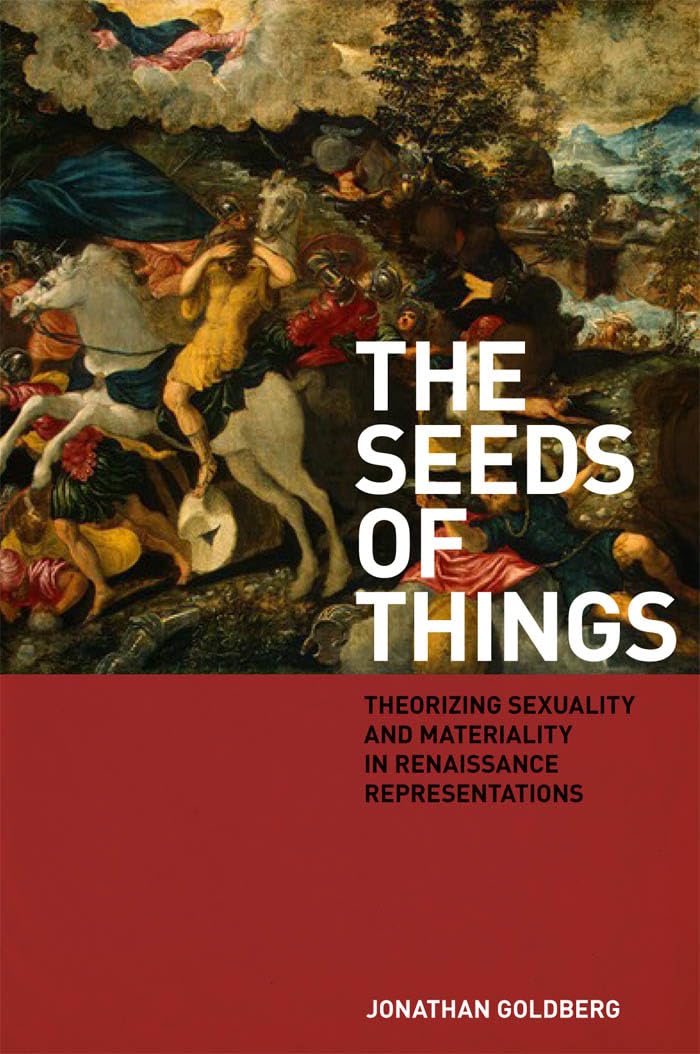
The Seeds of Things: Theorizing Sexuality and Materiality in Renaissance Representations by Jonathan Goldberg – A Fordha
Inclusive of all applicable taxes. FREE shipping on all orders.
Available Offers
- 🚚Free Delivery — Free shipping on all orders
- 💵Cash on Delivery — Pay when your order arrives
- ↩️15-Day Easy Returns — Hassle-free return policy
- 🔒Cash on Delivery — Pay safely when your order arrives
Check Delivery
Product Description
Introduction
The Seeds of Things: Theorizing Sexuality and Materiality in Renaissance Representations by Jonathan Goldberg is a groundbreaking scholarly work that reexamines the intersections of materialism, sexuality, and religious thought in early modern literature and philosophy. Published by Fordham University Press, this hardcover edition offers Indian students and researchers a deep dive into how Renaissance thinkers grappled with the nature of matter, desire, and difference. Goldberg draws on Lucretius’s epic poem De rerum natura to explore how the idea of a self-differentiating, ever-moving matter shaped representations of the body, gender, and same-sex relations in the works of Milton, Cavendish, and Hutchinson.
Book Overview
This study takes its title from one of Lucretius’s many terms for the primal substance of the universe—the seeds of things. Goldberg argues that matter, in the Lucretian tradition, is never static but constantly in flux, always both the same and different. Through careful readings of early modern texts, the book reveals how this materialist philosophy coexists with—and often challenges—Christian doctrines. A key focus is Milton’s monism, which insists on the corporeality even of angels, and the radical implications this has for understanding angelic sexuality. The book also examines Lucy Hutchinson’s nearly complete translation of Lucretius and Margaret Cavendish’s rejection of atomism, showing how these women writers engaged with the problem of sameness and difference in matter and identity.
Key Highlights
- Original approach: Links Lucretian materialism to early modern debates about sexuality, embodiment, and theology.
- Rigorous analysis: Offers close readings of Milton’s Paradise Lost, Hutchinson’s translation, and Cavendish’s philosophical writings.
- Interdisciplinary scope: Bridges literary studies, history of philosophy, queer theory, and gender studies.
- Critical insights: Challenges conventional interpretations of Renaissance texts by foregrounding materialist and queer perspectives.
Inside the Book
The book is divided into chapters that move from Lucretius’s atomic theory to its reception in seventeenth-century England. Goldberg devotes significant space to Milton’s angels, arguing that their sexual activity—often overlooked by critics—is central to Milton’s monist vision. Another chapter traces how Hutchinson’s translation of Lucretius negotiates between pagan materialism and her own Puritan faith. Cavendish’s work is read as a repudiation of atomism that nonetheless retains its core problematic: how can matter be both one and many, same and different? Throughout, the author demonstrates that the question of sameness in matter is not reducible to same-sex desire, but opens onto broader issues of identity, difference, and relationality.
Key Topics
- Lucretian materialism in early modern England
- Milton’s monism and angelic corporeality
- Sexuality and gender in Renaissance literature
- Lucy Hutchinson’s translation of De rerum natura
- Margaret Cavendish and the critique of atomism
- Queer theory and premodern materialisms
- Sameness and difference in philosophical and theological contexts
Reader Benefits
This book equips readers with a nuanced understanding of how Renaissance thinkers used materialist philosophy to think about the body, desire, and the divine. It provides tools for analyzing literary and philosophical texts through the lens of queer theory and new materialism. Indian students of English literature, philosophy, and gender studies will find the arguments both challenging and illuminating, offering fresh perspectives on canonical works. The hardcover edition is durable for repeated reference in academic libraries or personal collections.
Learning Outcomes
After reading this book, you will be able to:
- Explain the key concepts of Lucretian materialism and their relevance to Renaissance thought.
- Analyze how Milton’s monism reshapes traditional Christian ideas about the body and sexuality.
- Critically evaluate the translations and philosophical responses of Hutchinson and Cavendish.
- Apply queer theoretical frameworks to early modern texts.
- Understand the historical intersections of materialism, religion, and gender.
Who Should Read
This book is ideal for postgraduate students and scholars in English literature, Renaissance studies, philosophy, gender and sexuality studies, and the history of science. It will also appeal to advanced undergraduates seeking a rigorous introduction to materialist thought in early modernity. Indian readers interested in the global reception of classical philosophy or the roots of queer theory will find it especially valuable.
About the Author
Jonathan Goldberg is a distinguished scholar of English and comparative literature, known for his influential work on Renaissance literature, sexuality, and queer theory. He has taught at leading universities and authored numerous books that challenge conventional readings of early modern texts. His scholarship is marked by its theoretical sophistication and attention to marginalized perspectives.
About the Publisher
Fordham University Press is a renowned academic publisher based in New York, specializing in the humanities and social sciences. It is committed to publishing works that advance critical thought and interdisciplinary dialogue, making it a trusted name in scholarly publishing worldwide.
Conclusion
The Seeds of Things is an essential addition to the library of anyone serious about understanding the deep connections between matter, sexuality, and representation in the Renaissance. Jonathan Goldberg’s lucid yet complex analysis opens up new avenues for reading familiar texts and invites readers to reconsider the very stuff of which worlds—and bodies—are made. Order your copy from Bookshops.in today and engage with a work that continues to shape the field.
Quick Summary
The Seeds of Things: Theorizing Sexuality and Materiality in Renaissance Representations by Jonathan Goldberg is a groundbreaking scholarly work that reexamines early modern literature through the lens of Lucretian materialism. The book takes its title from a phrase in De rerum natura, where Lucretius names the fundamental, ever-moving matter that constitutes the world. Goldberg traces how this dynamic materiality—always differing from itself yet made of the same stuff—appears in the works of key Renaissance figures. He examines Lucy Hutchinson's nearly complete translation of Lucretius, Margaret Cavendish's complex engagement with atomism, and Milton's portrayal of angels as corporeal beings who engage in sex. The study shows how a thoroughgoing materialism can coexist with Christian thought, challenging conventional dualisms. This book is ideal for scholars and advanced students of Renaissance literature, queer theory, and early modern philosophy. Readers will gain a deeper understanding of how matter, sexuality, and spirituality intertwine in texts like Paradise Lost and Hutchinson's verse. By purchasing from Bookshops.in, Indian readers get a premium hardcover edition delivered with care, supporting a trusted local bookstore.
Book Highlights
Book Specifications
| ISBN-13 | 9780823230662 |
| ISBN-10 | 082323066X |
| Publisher | Fordham Univ Pr |
| Language | English |
| Dimensions | 15.88 x 1.91 x 23.5 cm |
| Weight | 522 g |
| Country | India |
| Category | Literature › English Literature |
| Genre | Literary Criticism |
| Original Language | English |
Frequently Asked Questions
What is the main theme of The Seeds of Things?
Who is the author of The Seeds of Things?
Which authors are discussed in the book?
Is this book suitable for undergraduate students?
Does the book cover Lucretius directly?
What is the ISBN for this book?
Is the book available in hardcover?
Which publisher released this book?
What is the price of The Seeds of Things?
Does the book discuss sexuality in Renaissance literature?
What is the reading level of this book?
Can I use this book for my research paper?
Where can I buy The Seeds of Things in India?
Readers Also Search For
Customers Also Bought

British Archaeological Reports Oxford Ltd
Copies of the Fel Temp Reparatio Coinage in Britain | by R. J. Brickstock | British Archaeological Reports Oxford Ltd | by R. J. Brickstock | British Archaeological Reports Oxford Ltd | by R. J. Brickstock | British Archaeological Reports Oxford Ltd | by R. J. Brickstock | British Archaeological Reports Oxford Ltd | by R. J. Brickstock | British Archaeological Reports Oxford Ltd | by R. J. Brickstock | British Archaeological Reports Oxford Ltd | by R. J. Brickstock | British Archaeological Repor

de Gruyter
Baby - Cutter (English, Gerhard Strau | Heidrun Kamper-Jensen | Isolde Nortmeyer)
de Gruyter Mouton
Stratégies Et Choix Dans La Recherche (English, G. Lemaine | M. Clémençon | A. Gomis)
Fordham University Press
Charms That Soothe: Classical Music and the Narrative Film (Communications and Media Studies, 9)

State University of New York Press
The Hard Sell of Paradise: Hawai'i, Hollywood, Tourism (SUNY series, Horizons of Cinema)

de Gruyter Mouton
Regional Development (English, John H. Cumberland)
Related Products
View All
Fordham University Press
Between Page and Screen: Remaking Literature Through Cinema and Cyberspace (Verbal Arts : Studies in Poetics)
Fordham University Press
G.K. Chesterton: Philosopher Without Portfolio

Fordham University Press
Imperfect Equality: African Americans and the Confines of White Racial Attitudes in Post-Emancipation Maryland (Reconstructing America, 2)

Fordham University Press
Communicating When Your Company Is Under Siege: Surviving Public Crisis

Fordham University Press
Vertigo: The Temptation of Identity by Andrea Cavalletti – Philosophy
Fordham University Press