
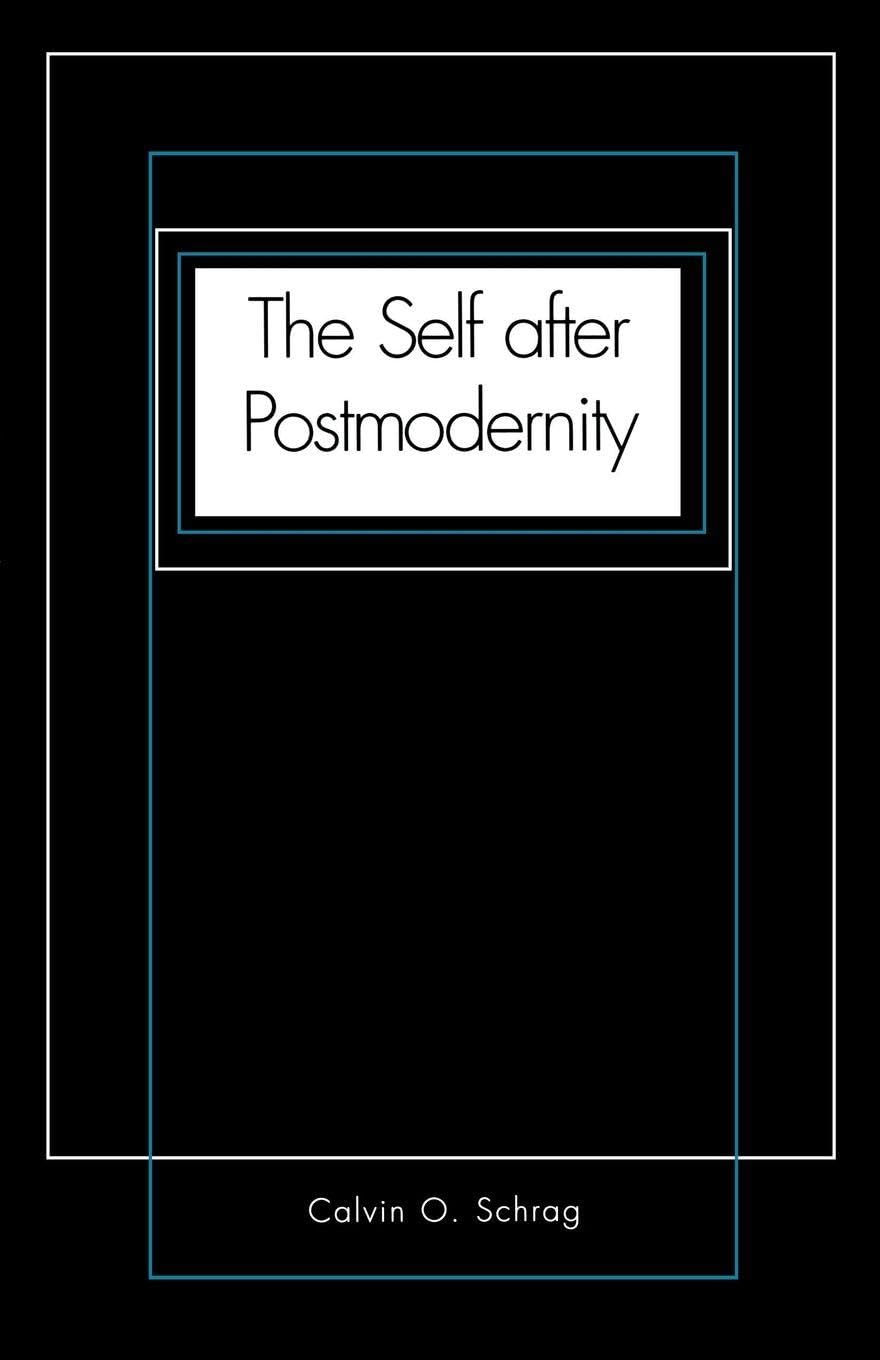
The Self After Postmodernity: A Philosophical Reimagining of Selfhood and Identity by Calvin O. Schrag
Inclusive of all applicable taxes. FREE shipping on all orders.
Available Offers
- 🚚Free Delivery — Free shipping on all orders
- 💵Cash on Delivery — Pay when your order arrives
- ↩️15-Day Easy Returns — Hassle-free return policy
- 🔒Cash on Delivery — Pay safely when your order arrives
Check Delivery
Product Description
Introduction
In an age where identity seems fractured and the very notion of the self is under relentless scrutiny, Calvin O. Schrag’s The Self After Postmodernity emerges as a vital philosophical intervention. This hardcover volume from Yale University Press offers a rigorous yet accessible rethinking of human subjectivity, steering a careful course between the extremes of modernist certainty and postmodernist dissolution. For Indian readers engaged with contemporary philosophy, theology, or cultural studies, this book provides a nuanced framework to understand who we are in a world of shifting meanings.
Book Overview
Schrag, a leading American philosopher, refuses to abandon the concept of the self entirely, even as he acknowledges the force of postmodern critiques. Instead, he proposes a dynamic, action-oriented self that is defined not by fixed essence but by its modes of communication, ethical engagement, and transcendence. The book moves beyond the sterile debates of essentialism versus deconstruction, offering a third path: a self that is constituted through discourse, action, relationships with others, and an openness to what lies beyond. This is not a retreat into premodern metaphysics, but a bold reimagining for our times.
Key Highlights
- Original Philosophical Synthesis: Bridges the gap between modernist claims of a unified, rational self and postmodern celebrations of fragmentation.
- Communicative Model of Selfhood: Develops a vocabulary centered on the self as a site of ongoing dialogue and ethical response.
- Critical Engagement: Responds thoughtfully to both deconstructionist thinkers (like Derrida and Foucault) and modernist traditions (from Descartes to Husserl).
- Accessible Yet Profound: Written with clarity, making complex ideas available to advanced students and scholars alike.
- Transcendence Without Dogma: Explores the dimension of transcendence—religious or secular—as integral to human identity.
Inside the Book
The chapters unfold as a careful argument. Schrag first diagnoses the crisis of the self in postmodern thought, then reconstructs a self that is neither a metaphysical substance nor a transparent mind. He draws on hermeneutics, phenomenology, and pragmatism to show how the self emerges in the act of communicating, in the texture of everyday life, and in the encounter with the other. The final sections address the ethical and spiritual dimensions, suggesting that the self after postmodernity is not lost but liberated for authentic responsibility.
Key Topics
- Postmodern critiques of identity and subjectivity
- The self as communicatively constituted
- Ethics of alterity and responsibility
- Hermeneutics of selfhood
- Transcendence and the sacred in a secular age
- Phenomenology of action and discourse
- Rejection of both metaphysical substance and transparent mind
Reader Benefits
- Clarity in Complexity: Helps readers navigate the dense terrain of continental philosophy without losing direction.
- Relevance to Indian Context: Offers tools to think about identity in a pluralistic society marked by diverse traditions and modern pressures.
- Intellectual Empowerment: Equips readers with a constructive vocabulary to discuss the self beyond clichés of ‘fragmentation’ or ‘unity’.
- Scholarly Depth: Provides a reliable guide for research papers, seminars, and personal philosophical growth.
Learning Outcomes
- Understand the core arguments of postmodernism regarding the self and their limitations.
- Articulate Schrag’s alternative model of the self as processual and relational.
- Apply the concept of communicative selfhood to contemporary debates in ethics, politics, and religion.
- Critically evaluate the strengths and weaknesses of both modernist and postmodernist positions.
- Develop an appreciation for how philosophy can respond to cultural crisis without abandoning hope.
Who Should Read
This book is ideal for undergraduate and postgraduate students of philosophy, especially those studying continental thought, hermeneutics, or postmodernism. It is equally valuable for scholars in religious studies, sociology, literary theory, and cultural criticism. Indian readers interested in the dialogue between Western philosophy and Eastern notions of self—such as the relational self in Advaita or Buddhist non-self—will find Schrag’s framework a stimulating interlocutor. The book also suits thoughtful general readers who seek a deeper understanding of identity in the 21st century.
About the Author
Calvin O. Schrag (1928–2020) was a distinguished American philosopher and professor emeritus at Purdue University. Known for his work in existentialism, phenomenology, and hermeneutics, he authored several influential books, including Existence and Freedom and The Resources of Rationality. Schrag was a master of dialogue between traditions, and his writing reflects a lifelong commitment to making philosophy relevant to human experience. His voice remains a steady guide for those navigating the turbulent waters of contemporary thought.
About the Publisher
Yale University Press is one of the oldest and most respected academic publishers in the world. Based in New Haven, Connecticut, its philosophy list is renowned for publishing works that combine scholarly rigor with broad accessibility. This hardcover edition reflects the press’s commitment to quality production and lasting value—a fitting vessel for Schrag’s enduring ideas.
Conclusion
The Self After Postmodernity is not merely a critique but a construction—a philosophical blueprint for understanding human identity after the dust of deconstruction has settled. Calvin O. Schrag offers a path that honours the insights of postmodernism while reclaiming a sense of purpose, agency, and transcendence. For anyone who has ever wondered, ‘Who am I in a world without fixed meanings?’, this book provides a thoughtful, hopeful, and rigorous answer. Add this essential volume from Yale University Press to your library and join the conversation about what it means to be human today.
Quick Summary
The Self After Postmodernity by Calvin O. Schrag is a landmark philosophical work that navigates the turbulent waters between modernist and postmodernist conceptions of the self. Schrag argues that the self is not a static essence nor a mere fiction of language, but a dynamic reality constituted through discourse, action, relationships with others, and the experience of transcendence. The book engages critically with major figures such as Derrida, Foucault, Lyotard, Levinas, and Ricoeur, offering a balanced alternative that avoids the pitfalls of both rigid identity and radical fragmentation. Written in clear, accessible prose, it is ideal for advanced philosophy students, scholars of continental thought, and anyone interested in the ethics of selfhood. Readers will learn how communication shapes identity, how ethical responsibility arises from encounters with the other, and how transcendence opens the self to new possibilities. By purchasing from Bookshops.in, Indian readers receive a genuine hardcover edition from Yale University Press with fast, reliable service.
Book Highlights
Book Specifications
| ISBN-13 | 9780300078763 |
| ISBN-10 | 0300078765 |
| Publisher | Yale Univ Pr |
| Language | English |
| Dimensions | 14.07 x 1.09 x 20.93 cm |
| Weight | 204 g |
| Category | Philosophy › History & Surveys |
| Genre | Philosophy |
| Original Language | English |
Frequently Asked Questions
What is The Self After Postmodernity about?
Who is the author of this book?
Is this book suitable for beginners in philosophy?
How does this book differ from typical postmodernist works?
Does the book engage with Indian philosophical traditions?
What is the binding of this edition?
What is the price of this book?
Is this book available in Indian bookstores?
Does the book have a rating?
What is the ISBN of The Self After Postmodernity?
What language is the book written in?
Can I use this book for my university course?
Why should I buy from Bookshops.in?
Readers Also Search For
Customers Also Bought
Islam
Spiritual Economies (English, Daromir Rudnyckyj)

Islam
Who Is Allah? (English, Bruce B. Lawrence)
Islam
Islam and Liberal Citizenship: The Search for an Overlapping Consensus by Andrew F. March
Islam
Fiqh Us-Sunnah: Funerals and Diggers by Al-Sayyid Sabiq – Islamic Funeral Guide

Christianity
Genetics (English, Thomas a. Shannon | Mark P. Aulisio | Françoise Baylis)

Hinduism
Karma and Creativity by Christopher Key Chapple – Indian Philosophy
Related Products
View All
Philosophy
Latin American Philosophy: Currents, Issues, Debates by Eduardo Mendieta

Philosophy
Al-Farabi's Short Commentary on Aristotle's Prior Analytics by Nicholas Rescher – Philosophy
Philosophy
Poetics of Imagining: Modern to Post-modern by Richard Kearney
Philosophy
The Metaphysics of Extrinsic Properties: 11 (Metaphysical Research, 11)
Philosophy
Dialogues on Metaphysics and on Religion by Nicolas Malebranche – Philosophy
Philosophy