
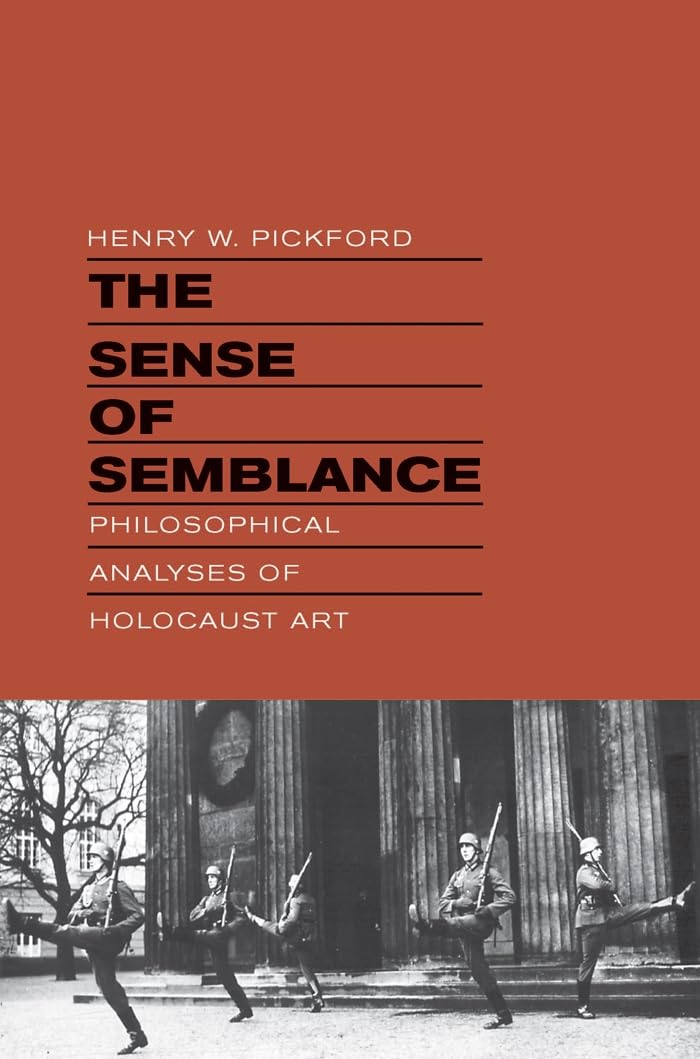
The Sense of Semblance: Philosophical Analyses of Holocaust Art by Henry W. Pickford – A Study of Aesthetic Autonomy and
Inclusive of all applicable taxes. FREE shipping on all orders.
Available Offers
- 🚚Free Delivery — Free shipping on all orders
- 💵Cash on Delivery — Pay when your order arrives
- ↩️15-Day Easy Returns — Hassle-free return policy
- 🔒Cash on Delivery — Pay safely when your order arrives
Check Delivery
Product Description
Introduction
Art born from the ashes of history carries an immense burden. How can a painting, a poem, or a film about the Holocaust be both artistically profound and historically truthful? Henry W. Pickford’s The Sense of Semblance: Philosophical Analyses of Holocaust Art tackles this profound question with intellectual rigour and deep sensitivity. This is not merely a book about art; it is a philosophical investigation into the very nature of representation, memory, and ethics when confronting the most extreme human tragedy. For Indian readers, students, and scholars of philosophy, aesthetics, and Holocaust studies, this hardcover volume from the Modern Language Initiative offers a unique bridge between continental and analytic philosophy, showing how diverse theoretical tools can illuminate the moral demands placed on art that dares to speak of the unspeakable.
Book Overview
The Sense of Semblance centres on a central tension: Holocaust artworks must satisfy two criteria. They must be artistically compelling, or they risk becoming mere historical documents. Yet they must also be historically accurate and ethically responsible, or they risk distorting the Holocaust and becoming mere aesthetic objects. Pickford locates this conflict within the long-standing philosophical debate between aesthetic autonomy (art for art’s sake) and heteronomy (art serving external purposes). Drawing heavily on Theodor Adorno’s dialectic of aesthetic semblance, the book argues that great Holocaust art maintains a dynamic, unresolved tension between these poles. Pickford moves beyond tired postmodernist debates by employing contemporary theories of meaning and understanding from both the analytic and continental traditions. He shows how the causal theory of names, the philosophy of tacit knowledge, the analytic philosophy of quotation, Jean-Paul Sartre’s theory of the imaginary, the epistemology of testimony, and Walter Benjamin’s concept of the dialectical image can all illuminate how individual artworks fulfil their dual artistic and historical obligations.
Key Highlights
- Interdisciplinary Rigour: A rare synthesis of analytic philosophy, continental thought, and literary and visual art analysis.
- Adorno’s Aesthetics Revisited: A fresh, nuanced reading of Adorno’s concept of aesthetic semblance as a normative demand on Holocaust art.
- Original Theoretical Framework: Applies tools like causal theories of reference and theories of testimony to art criticism.
- Case Studies: Detailed analyses of specific artworks, poems, and films that exemplify the tension between art and history.
- Ethical Depth: Explores how art can honour victims without aestheticizing suffering.
Inside the Book
The book unfolds through carefully structured chapters that each take up a distinct philosophical problem. Pickford begins by setting the stage with Adorno’s famous dictum that “to write poetry after Auschwitz is barbaric,” and unpacks its meaning. He then moves through chapters on the logic of quotation in Holocaust testimony, the role of imagination in Sartre, and the epistemology of how we come to know historical truths through art. A standout chapter uses Walter Benjamin’s dialectical image to show how certain artworks can “flash up” moments of historical truth. The volume is dense with references to poets like Paul Celan, visual artists like Anselm Kiefer, and filmmakers, making it a rich resource for anyone interested in the intersection of philosophy and the arts.
Key Topics
- Aesthetic autonomy versus heteronomy in art
- Theodor Adorno’s dialectic of semblance
- Holocaust representation and ethical limits
- Philosophy of language: causal theory of names and quotation
- Epistemology of testimony and historical knowledge
- Sartre’s theory of the imaginary and aesthetic experience
- Walter Benjamin’s dialectical image and historical materialism
- Memory, trauma, and the role of art in bearing witness
Reader Benefits
This book offers a deeply rewarding intellectual journey. Readers will gain a sophisticated understanding of the philosophical challenges facing any art that engages with historical trauma. They will learn to navigate complex debates between analytic and continental philosophy, and develop tools for critically evaluating artworks that claim to represent the Holocaust. For students and scholars in India, where discussions of historical violence and representation are increasingly relevant, Pickford’s work provides a rigorous model for thinking about how art can engage with catastrophe without exploitation. The hardcover edition is a durable addition to any serious library.
Learning Outcomes
- Understand the central philosophical tension between aesthetic autonomy and historical responsibility in Holocaust art.
- Analyse key concepts from Adorno, Benjamin, Sartre, and analytic philosophy of language.
- Critically evaluate how artworks negotiate the demands of artistic form and historical truth.
- Apply theoretical frameworks from the philosophy of testimony and quotation to specific works of art.
- Develop a nuanced perspective on the ethics of representing extreme suffering.
Who Should Read
This book is ideal for advanced undergraduate and graduate students in philosophy, comparative literature, art history, and Jewish studies. It is also essential reading for scholars working on Holocaust literature and visual culture, as well as anyone deeply interested in aesthetic theory and the philosophy of art. Indian readers with a background in Western philosophy or critical theory will find it especially rewarding, as it bridges traditions often taught separately in Indian universities.
About the Author
Henry W. Pickford is a distinguished philosopher and literary scholar known for his work in aesthetics, critical theory, and German literature. He has taught at leading universities and published extensively on Adorno, Benjamin, and the philosophy of art. His scholarship is marked by a rare ability to bring analytic precision to continental philosophical questions, making complex ideas accessible without oversimplifying them.
About the Publisher
The Modern Language Initiative is a respected academic publishing programme that produces high-quality scholarly works in the humanities. Known for its rigorous editorial standards, the Initiative focuses on books that advance critical thought in literature, philosophy, and cultural studies. This hardcover edition reflects their commitment to durable, beautifully produced volumes that will stand the test of time in any library.
Conclusion
The Sense of Semblance is a landmark work in the philosophy of art. It does not offer easy answers but instead provides readers with the intellectual tools to grapple with one of the most difficult questions of our time: how can art be both beautiful and true in the face of horror? For anyone serious about understanding the limits and possibilities of representation, this book is indispensable. Order your hardcover copy today from Bookshops.in and add a profound philosophical voice to your collection.
Quick Summary
The Sense of Semblance: Philosophical Analyses of Holocaust Art by Henry W. Pickford is a groundbreaking work that tackles the profound challenge of representing the Holocaust through art. The book argues that Holocaust artworks must satisfy two simultaneous criteria: they must be artistically compelling, lest they become mere historical documents, and historically faithful, lest they distort the atrocity or become trivial aesthetic objects. Pickford locates this dilemma within philosophical aesthetics, framing it as a version of the conflict between aesthetic autonomy and heteronomy. Drawing heavily on Theodor Adorno's dialectic of aesthetic semblance, he proposes that successful Holocaust art maintains a dynamic tension between these poles. What sets this book apart is its innovative integration of analytic philosophy—including the causal theory of names and the philosophy of tacit knowledge—to move beyond tired postmodernist debates. Readers will gain a rigorous normative framework for evaluating Holocaust art, a deeper understanding of Adorno's aesthetics, and a model for bridging Continental and analytic traditions. This book is essential for philosophers, art historians, Holocaust scholars, and advanced students. By purchasing from Bookshops.in, you support India's premier online bookstore and receive a premium hardcover edition delivered to your doorstep.
Book Highlights
Book Specifications
| ISBN-13 | 9780823245406 |
| ISBN-10 | 0823245403 |
| Publisher | Fordham Univ Pr |
| Language | English |
| Dimensions | 15.88 x 1.91 x 23.5 cm |
| Weight | 544 g |
| Country | India |
| Category | Philosophy › Aesthetics |
| Genre | Philosophy |
| Original Language | English |
Frequently Asked Questions
What is the main argument of The Sense of Semblance?
Who is Henry W. Pickford?
Does this book only discuss Adorno?
Is this book suitable for undergraduates?
What specific artworks are analyzed?
How does the book address postmodernism?
Is this book only about visual art?
What is 'aesthetic semblance'?
Does the book offer a definitive answer on Holocaust art?
Can this book help artists creating Holocaust art?
Is the book available in paperback?
What is the ISBN?
Why should I buy from Bookshops.in?
Readers Also Search For
Customers Also Bought

Islam
Spiritual Economies (English, Daromir Rudnyckyj)

Islam
Who Is Allah? (English, Bruce B. Lawrence)

Islam
Islam and Liberal Citizenship: The Search for an Overlapping Consensus by Andrew F. March

Islam
Fiqh Us-Sunnah: Funerals and Diggers by Al-Sayyid Sabiq – Islamic Funeral Guide

Christianity
Genetics (English, Thomas a. Shannon | Mark P. Aulisio | Françoise Baylis)

Hinduism
Karma and Creativity by Christopher Key Chapple – Indian Philosophy
Related Products
View All
Philosophy
Latin American Philosophy: Currents, Issues, Debates by Eduardo Mendieta

Philosophy
Al-Farabi's Short Commentary on Aristotle's Prior Analytics by Nicholas Rescher – Philosophy
Philosophy
Poetics of Imagining: Modern to Post-modern by Richard Kearney

Philosophy
The Metaphysics of Extrinsic Properties: 11 (Metaphysical Research, 11)
Philosophy
Dialogues on Metaphysics and on Religion by Nicolas Malebranche – Philosophy
Philosophy