
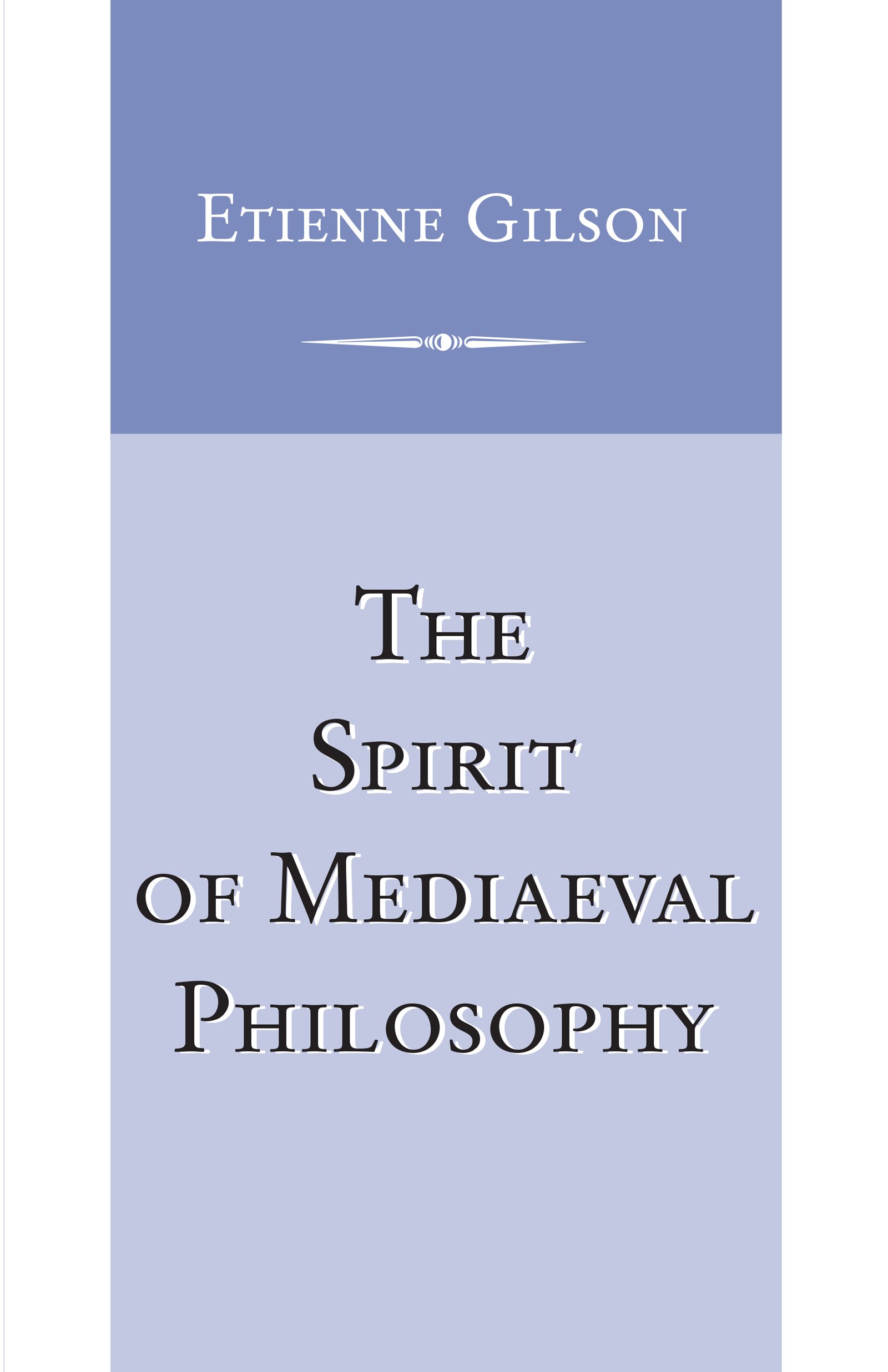
The Spirit of Mediaeval Philosophy: 1931-1932 by Etienne Gilson – A Definitive Study of Christian Philosophy and Medieva
Inclusive of all applicable taxes. FREE shipping on all orders.
Available Offers
- 🚚Free Delivery — Free shipping on all orders
- 💵Cash on Delivery — Pay when your order arrives
- ↩️15-Day Easy Returns — Hassle-free return policy
- 🔒Cash on Delivery — Pay safely when your order arrives
Check Delivery
Product Description
Introduction
In the vast landscape of Western philosophical thought, the medieval period often stands as a bridge between the classical world of Greece and Rome and the modern era. Yet, for many students and scholars in India, this rich tradition remains either overlooked or misunderstood. Étienne Gilson’s The Spirit of Mediaeval Philosophy: 1931–1932 offers a masterful entry point into this world. Originally delivered as the prestigious Gifford Lectures at the University of Aberdeen, this work is not merely a historical survey but a profound inquiry into whether a distinctly Christian philosophy can exist. For Indian readers engaged in comparative philosophy, theology, or intellectual history, this book provides a rigorous and illuminating exploration of how a major religious tradition shaped the very foundations of Western thought.
Book Overview
This hardcover edition, published by the University of Notre Dame Press, presents Gilson’s classic text in its full, authoritative form. The book asks a central question: Is there such a thing as Christian philosophy, and if so, is medieval philosophy its most complete historical expression? Gilson argues that the spirit of medieval philosophy is not a mere continuation of Greek thought but rather the result of Christianity penetrating, transforming, and ultimately drawing out a new worldview from the Hellenic tradition. He examines this process at its very inception—the precise moment when Judeo-Christian concepts were grafted onto the intellectual stock of Greece. The work is both historical and theoretical, showing how doctrines that satisfied medieval thinkers for centuries may still hold relevance for us today.
Key Highlights
- Gifford Lectures: The book is based on the renowned Gifford Lectures, known for their depth and intellectual rigor.
- Foundational Thesis: Gilson systematically defends the idea of a Christian philosophy, challenging both secular and theological critics.
- Historical Precision: The author traces the emergence of medieval thought from its Greek roots through the early Church Fathers and Scholastics.
- Enduring Relevance: The book suggests that medieval metaphysical and ethical insights remain conceivable and valuable for contemporary philosophy.
- Scholarly Standard: A definitive text for anyone studying medieval philosophy, Christian theology, or the history of ideas.
Inside the Book
The volume is structured as a series of lectures, each building upon the last. Gilson begins by defining the concept of a Christian philosophy and addressing objections to its very possibility. He then moves through key themes such as the nature of God, creation, the problem of evil, the human soul, and the moral order. Each chapter examines how medieval thinkers—from Augustine to Aquinas—reinterpreted Greek concepts like being, substance, and causality in light of revelation. Gilson’s prose is clear and engaging, making complex ideas accessible without sacrificing depth. The book includes extensive footnotes and references, making it a valuable resource for further study.
Key Topics
- The possibility and meaning of Christian philosophy
- The encounter between Greek reason and Judeo-Christian revelation
- The nature of God: being, goodness, and omnipotence
- Creation ex nihilo and its philosophical implications
- The problem of evil and divine providence
- The human soul: immortality, intellect, and will
- Natural law and moral philosophy
- The relationship between faith and reason
Reader Benefits
Indian students and scholars will find this book especially valuable for several reasons. First, it provides a clear and systematic introduction to a major intellectual tradition that has shaped Western civilization. Second, it offers tools for comparative study—many of the philosophical problems discussed (the nature of the divine, the soul, ethics, and the relationship between faith and reason) have parallel discussions in Indian philosophy, from Vedanta to Nyaya. Third, Gilson’s rigorous yet accessible style makes the book suitable for both undergraduate and postgraduate courses in philosophy, theology, and religious studies. Finally, the hardcover edition is a durable addition to any personal or institutional library.
Learning Outcomes
By reading this book, you will be able to: articulate the core arguments for and against the concept of Christian philosophy; trace the historical development of key medieval doctrines from their Greek origins; critically evaluate the relationship between faith and reason in the medieval context; apply these insights to contemporary debates in philosophy and theology; and engage in informed comparative analysis with non-Western philosophical traditions. The book also sharpens skills in textual interpretation, logical argumentation, and historical contextualization.
Who Should Read
This book is ideal for advanced undergraduate and postgraduate students of philosophy, especially those studying Western philosophy, medieval thought, or the history of ideas. It is also highly recommended for students of theology, religious studies, and comparative religion. Scholars working on the intersection of faith and reason, or on the influence of religion on intellectual history, will find it indispensable. Indian readers with an interest in how religious traditions shape philosophical systems—whether in the West or in India—will gain fresh perspectives. The book is also suitable for serious general readers who want to understand the foundations of Western thought.
About the Author
Étienne Gilson (1884–1978) was one of the most eminent philosophers and historians of philosophy of the twentieth century. A French Catholic philosopher, he was a leading figure in the revival of Thomistic thought and a co-founder of the Pontifical Institute of Mediaeval Studies in Toronto. Gilson taught at the Sorbonne, the Collège de France, and Harvard University. His works, including Being and Some Philosophers and The Unity of Philosophical Experience, are considered classics. He was awarded the Legion of Honour and was elected to the Académie Française. His scholarship combined immense erudition with a clear and engaging style.
About the Publisher
The University of Notre Dame Press is one of the leading academic publishers in the United States, with a distinguished list in philosophy, theology, and medieval studies. Known for its commitment to scholarly excellence, the press has published many foundational works in the humanities. This hardcover edition maintains the high production standards expected of a premium academic title, with a sturdy binding and clear, readable type. For Indian readers, this edition offers a reliable and authoritative text for serious study.
Conclusion
The Spirit of Mediaeval Philosophy: 1931–1932 is more than a historical study—it is an invitation to think deeply about the relationship between faith, reason, and culture. For Indian students and scholars, it opens a window into a tradition that has shaped global thought, while also providing conceptual tools that resonate with our own philosophical heritage. Whether you are a philosopher, theologian, or a curious reader, this book will challenge and enrich your understanding of what philosophy can be when it engages with the deepest questions of existence. Add this classic to your library and discover the enduring spirit of medieval thought.
Quick Summary
The Spirit of Mediaeval Philosophy: 1931-1932 by Etienne Gilson is a landmark work that defines the essence of medieval philosophy as the fusion of Christian revelation with Greek philosophical heritage. Gilson, a leading historian of philosophy, systematically examines how Judeo-Christian thought was grafted onto the Hellenic tradition, resulting in a distinctly Christian worldview. The book is both historical and theoretical, tracing the development of ideas from early medieval thinkers through the scholastic period. It addresses fundamental questions about faith, reason, and the nature of philosophical inquiry. This translation makes Gilson's influential ideas accessible to English readers, including Indian students and scholars. Readers will gain a deep understanding of the intellectual foundations of Western civilization and the enduring dialogue between religion and philosophy. The book is ideal for university courses, research, or personal study. Buying from Bookshops.in ensures you receive a genuine hardcover edition with reliable delivery across India, supporting a trusted local bookstore.
Book Highlights
Book Specifications
| ISBN-13 | 9780268017408 |
| ISBN-10 | 0268017409 |
| Publisher | Univ of Notre Dame Pr |
| Language | English |
| Dimensions | 21.69 x 13.82 x 3.23 cm |
| Weight | 567 g |
| Category | Philosophy › History & Surveys |
| Genre | Philosophy |
| Original Language | French |
Frequently Asked Questions
What is The Spirit of Mediaeval Philosophy about?
Who is the author of this book?
Is this book suitable for beginners in philosophy?
What is the original language of this work?
What is the ISBN-13?
Is this book available in hardcover?
What is the price in India?
What is the rating of this book?
Does the book include a bibliography?
Can I use this book for my university course?
What is the main argument of the book?
Is this book part of a series?
Readers Also Search For
Customers Also Bought
Islam
Spiritual Economies (English, Daromir Rudnyckyj)

Islam
Who Is Allah? (English, Bruce B. Lawrence)
Islam
Islam and Liberal Citizenship: The Search for an Overlapping Consensus by Andrew F. March
Islam
Fiqh Us-Sunnah: Funerals and Diggers by Al-Sayyid Sabiq – Islamic Funeral Guide

Christianity
Genetics (English, Thomas a. Shannon | Mark P. Aulisio | Françoise Baylis)

Hinduism
Karma and Creativity by Christopher Key Chapple – Indian Philosophy
Related Products
View All
Philosophy
Latin American Philosophy: Currents, Issues, Debates by Eduardo Mendieta

Philosophy
Al-Farabi's Short Commentary on Aristotle's Prior Analytics by Nicholas Rescher – Philosophy
Philosophy
Poetics of Imagining: Modern to Post-modern by Richard Kearney
Philosophy
The Metaphysics of Extrinsic Properties: 11 (Metaphysical Research, 11)
Philosophy
Dialogues on Metaphysics and on Religion by Nicolas Malebranche – Philosophy
Philosophy