
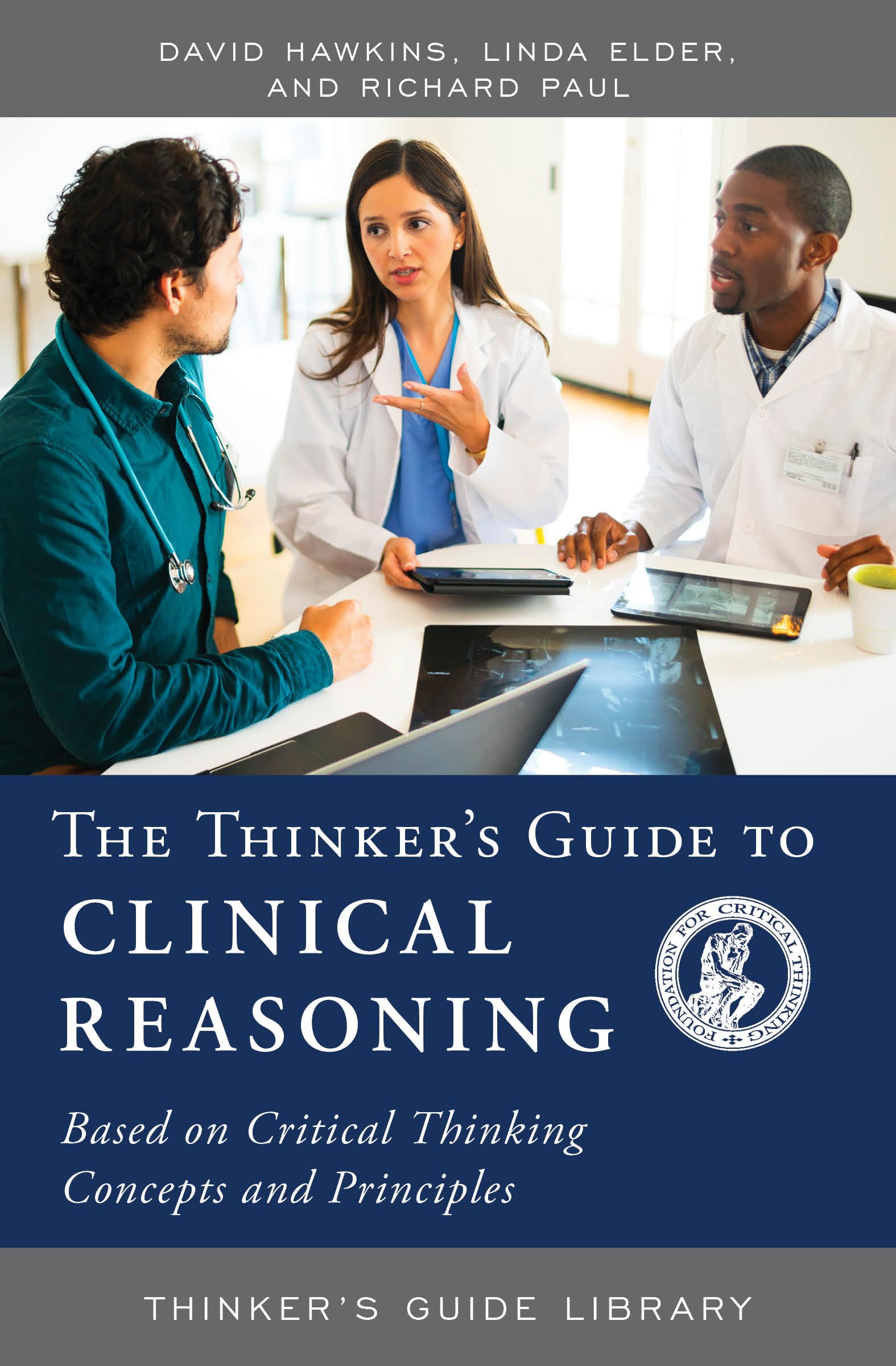
The Thinker's Guide to Clinical Reasoning: Based on Critical Thinking Concepts and Tools by David Hawkins – A Must-Read
Inclusive of all applicable taxes. FREE shipping on all orders.
Available Offers
- 🚚Free Delivery — Free shipping on all orders
- 💵Cash on Delivery — Pay when your order arrives
- ↩️15-Day Easy Returns — Hassle-free return policy
- 🔒Cash on Delivery — Pay safely when your order arrives
Check Delivery
Product Description
Introduction
In the fast-paced world of healthcare, clinical decisions can mean the difference between life and death. Yet, many medical professionals and students rely solely on memorised protocols and surface-level data without truly analysing the reasoning behind their choices. The Thinker's Guide to Clinical Reasoning: Based on Critical Thinking Concepts and Tools by David Hawkins bridges this gap, offering a structured approach to thinking critically in clinical settings. Published by the Foundation for Critical Thinking, this hardcover edition is an essential resource for Indian medical students, nurses, doctors, and allied health practitioners who wish to elevate their diagnostic and therapeutic decision-making skills.
Book Overview
This compact yet comprehensive guide is part of the renowned Thinker’s Guide Library, designed to foster fairminded critical thinking across disciplines. Unlike traditional medical textbooks that focus on rote learning, this book delves into the intellectual tools required to analyse patient data, question assumptions, and arrive at sound clinical judgments. It presents a clear framework for integrating critical thinking into everyday practice, helping readers move beyond mere information recall to genuine understanding. The book is written in accessible language, making it suitable for both undergraduate students and experienced practitioners seeking to refine their reasoning abilities.
Key Highlights
- Practical Framework: Offers step-by-step guidance on applying critical thinking elements to clinical scenarios, from diagnosis to treatment planning.
- Real-World Relevance: Includes examples and case studies drawn from diverse medical fields, including internal medicine, surgery, paediatrics, and nursing.
- Evidence-Based Approach: Emphasises the importance of evaluating research, patient history, and clinical evidence with intellectual rigour.
- Compact Format: A concise hardcover that fits easily into a medical bag or desk, perfect for quick reference during rounds or study sessions.
- Authoritative Source: Backed by the Foundation for Critical Thinking, a global leader in promoting intellectual virtues across education and professional practice.
Inside the Book
The book is structured into logical chapters that build upon each other. It begins by defining critical thinking and its components—clarity, accuracy, precision, relevance, depth, breadth, logic, and fairness. Subsequent chapters explore how these elements apply to clinical reasoning, including problem identification, hypothesis generation, differential diagnosis, and shared decision-making with patients. Each chapter includes reflective exercises, self-assessment questions, and practical tips to help readers internalise the concepts. The final sections address common cognitive biases and pitfalls in clinical reasoning, offering strategies to overcome them.
Key Topics
- Elements of thought in clinical contexts
- Intellectual standards for evaluating medical information
- Clinical reasoning models and frameworks
- Identifying and avoiding cognitive biases
- Patient-centred decision-making and ethical considerations
- Integrating evidence-based medicine with critical thinking
- Communication strategies for interdisciplinary teams
Reader Benefits
By reading this guide, healthcare professionals and students will develop a sharper ability to assess complex clinical situations. They will learn to ask better questions, challenge unverified assumptions, and communicate their reasoning clearly to colleagues and patients. The book also helps reduce diagnostic errors by promoting systematic thinking. For Indian readers, where medical education often emphasises memorisation over analysis, this resource provides a much-needed corrective, enabling practitioners to adapt to the dynamic healthcare landscape of the country.
Learning Outcomes
- Understand the core elements of critical thinking and how they apply to clinical practice.
- Apply intellectual standards to evaluate patient data, research studies, and treatment options.
- Develop structured approaches to differential diagnosis and treatment planning.
- Recognise and mitigate common cognitive biases that impair clinical judgment.
- Enhance communication with patients, families, and healthcare teams through reasoned dialogue.
- Foster a habit of continuous self-reflection and intellectual humility in medical practice.
Who Should Read
This book is ideal for medical students, nursing students, pharmacy students, and allied health trainees in India who want to strengthen their clinical reasoning foundation. It is equally valuable for practising doctors, surgeons, nurses, physiotherapists, and healthcare administrators seeking to improve decision-making quality. Faculty members involved in medical education will find it a useful tool for curriculum design and teaching. Additionally, anyone preparing for competitive exams like NEET PG, USMLE, or PLAB will benefit from the logical thinking strategies outlined in these pages.
About the Author
David Hawkins is a respected educator and author affiliated with the Foundation for Critical Thinking. With years of experience in healthcare education, Hawkins has dedicated his work to integrating critical thinking into clinical training. His writing is known for its clarity, practicality, and deep respect for intellectual rigour. He has contributed significantly to the Thinker’s Guide Library, helping professionals across fields develop the thinking skills necessary for ethical and effective practice.
About the Publisher
The Foundation for Critical Thinking is a non-profit organisation based in the United States, founded by Dr. Richard Paul and Dr. Linda Elder. It is globally recognised for its pioneering work in critical thinking education. The foundation publishes the Thinker’s Guide Library, a series of concise, focused books that apply critical thinking concepts to specific disciplines. Their mission is to cultivate fairminded, rational societies by equipping individuals with essential intellectual tools. This book reflects their commitment to promoting analytical thinking in healthcare, a field where sound reasoning directly impacts human well-being.
Conclusion
The Thinker's Guide to Clinical Reasoning is more than a textbook—it is a mental toolkit for every healthcare professional. In an era of information overload and complex patient needs, the ability to think clearly and critically is indispensable. Whether you are a student beginning your medical journey or a seasoned practitioner aiming to refine your skills, this guide offers timeless principles that will enhance your clinical competence and confidence. Add this hardcover edition to your library and take a decisive step toward becoming a more thoughtful, effective clinician.
Quick Summary
The Thinker's Guide to Clinical Reasoning by David Hawkins is an essential resource for healthcare students and professionals who want to strengthen their critical thinking abilities in clinical settings. Published by the Foundation for Critical Thinking, this book goes beyond rote memorization of medical facts and teaches readers how to analyze, interpret, and apply information to make sound decisions for patient care. It introduces intellectual virtues such as fair-mindedness and intellectual humility, and provides practical tools to avoid common cognitive biases that can lead to diagnostic errors. The book is part of the acclaimed Thinker's Guide Library and is ideal for medical students, nursing students, doctors, and allied health practitioners. By purchasing from Bookshops.in, Indian readers receive a genuine hardcover edition with fast shipping and trusted service, making it a valuable addition to any healthcare professional's library.
Book Highlights
Book Specifications
| ISBN-13 | 9780944583425 |
| ISBN-10 | 0944583423 |
| Publisher | Foundation for Critical Thinking |
| Language | English |
| Dimensions | 13.34 x 0.31 x 20.32 cm |
| Weight | 84 g |
| Country | USA |
| Category | Philosophy › Logic |
| Series | Thinker's Guide Library |
| Genre | Non-fiction |
| Reading Age | Adult |
| Original Language | English |
Frequently Asked Questions
What is the main focus of this book?
Who is the author David Hawkins?
Is this book suitable for Indian medical students?
Does this book include case studies?
What is the Thinker's Guide Library?
Can nurses benefit from this book?
How does this book differ from standard medical textbooks?
What are intellectual virtues?
Is this book used in medical schools?
Does the book address cognitive biases?
What language is the book in?
Can I use this book for self-study?
Does it include exercises or questions?
Why should I buy from Bookshops.in?
Readers Also Search For
Customers Also Bought

Islam
Spiritual Economies (English, Daromir Rudnyckyj)

Islam
Who Is Allah? (English, Bruce B. Lawrence)

Islam
Islam and Liberal Citizenship: The Search for an Overlapping Consensus by Andrew F. March

Islam
Fiqh Us-Sunnah: Funerals and Diggers by Al-Sayyid Sabiq – Islamic Funeral Guide

Christianity
Genetics (English, Thomas a. Shannon | Mark P. Aulisio | Françoise Baylis)

Hinduism
Karma and Creativity by Christopher Key Chapple – Indian Philosophy
Related Products
View All
Philosophy
The Metaphysics of Extrinsic Properties: 11 (Metaphysical Research, 11)

Philosophy
Dialogues on Metaphysics and on Religion by Nicolas Malebranche – Philosophy

Philosophy
Metaphysics and Oppression: Heidegger's Challenge to Western Philosophy by John McCumber

Philosophy
Merleau-Ponty's Philosophy by Lawrence Hass – Phenomenology & Continental Philosophy

Philosophy
Feminism, Capitalism, and Ecology

Philosophy