
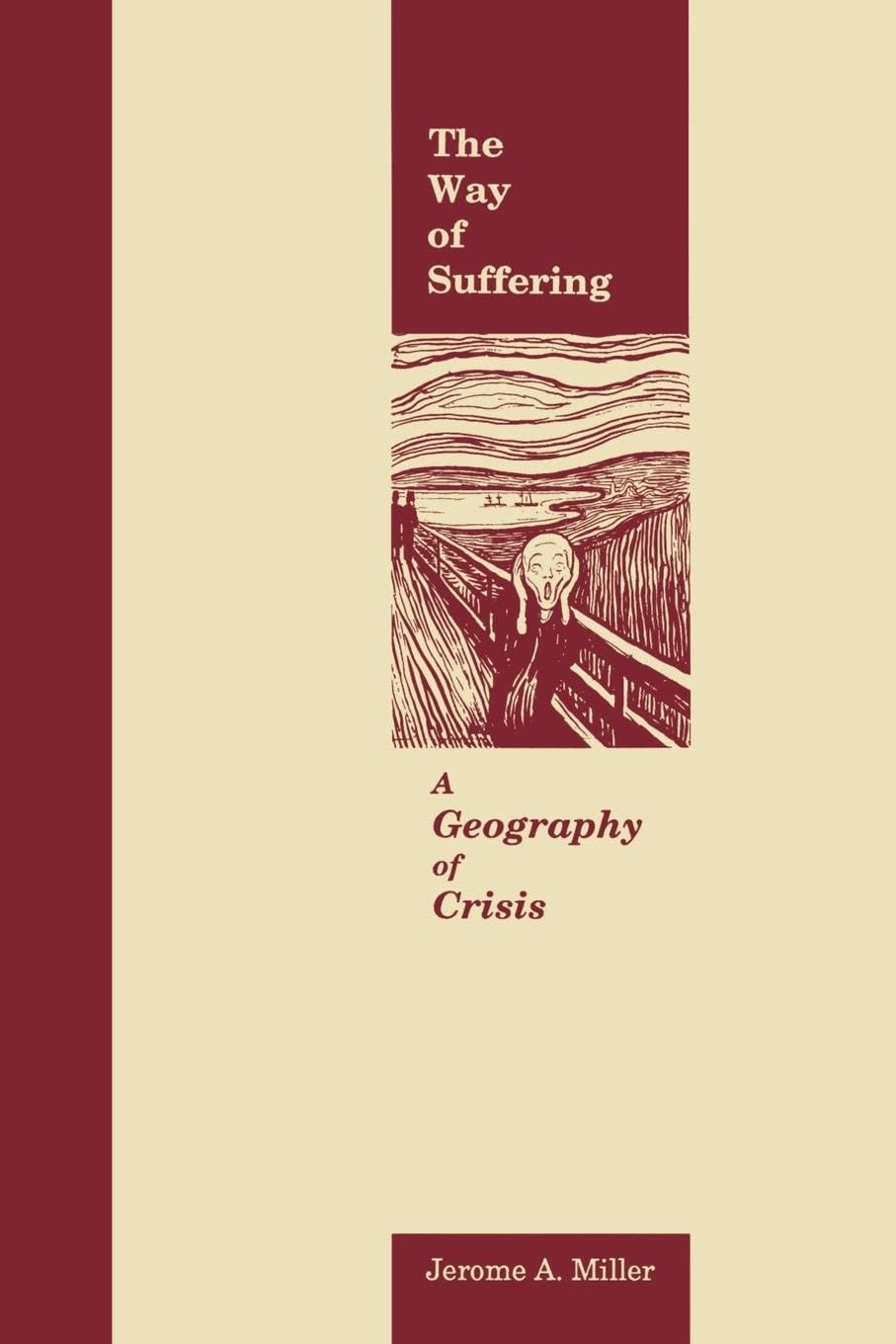
The Way of Suffering: A Geography of Crisis by Jerome Miller – A Phenomenological Study of Spiritual Growth Through Cris
Inclusive of all applicable taxes. FREE shipping on all orders.
Available Offers
- 🚚Free Delivery — Free shipping on all orders
- 💵Cash on Delivery — Pay when your order arrives
- ↩️15-Day Easy Returns — Hassle-free return policy
- 🔒Cash on Delivery — Pay safely when your order arrives
Check Delivery
Product Description
Introduction
In a world that often equates success with the relentless pursuit of control, Jerome Miller’s The Way of Suffering: A Geography of Crisis offers a profound and unsettling invitation: to pause, to examine, and to learn from the very experiences we most wish to avoid. This is not a self-help manual or a quick-fix guide; it is a deep, philosophical meditation on suffering as a potential teacher. For Indian readers and students navigating the pressures of academic, professional, and personal life, this book provides a rare lens through which to understand crisis not as a failure, but as a transformative passage. Published by Georgetown University Press, this hardcover edition is a thoughtful addition to any serious reader’s library.
Book Overview
The Way of Suffering is an extended essay that employs a phenomenological method and a dialectical point of view. Rather than a conventional scholarly inquiry, it takes the form of moral self-examination. Miller’s central aim is to evaluate a fundamental claim of Western culture—from Aeschylus to Solzhenitsyn—that suffering is the greatest spiritual teacher. By focusing on the experience of crisis as the moment when our attempts to maintain control break down, the book explores how vulnerability, fear, and dread can open doors to deeper understanding. The work is a philosophical journey, not a historical monograph, and it leads readers into the heart of crisis where genuine transformation begins.
Key Highlights
- Phenomenological Depth: The book uses lived experience as its starting point, making abstract ideas tangible and relatable.
- Dialectical Approach: Miller contrasts ordinary fear with metaphysical dread, and avoidance with heroic embrace, offering a nuanced view of human responses to suffering.
- Cultural and Literary Roots: Drawing from Aeschylus, Nietzsche, Solzhenitsyn, and Heidegger, the book connects ancient wisdom with modern existential thought.
- Moral Self-Examination: Readers are encouraged to reflect on their own lives, making the book a personal as well as intellectual exercise.
- Rigorous Yet Accessible: Written with clarity and passion, it is suitable for both philosophy students and general readers seeking deeper meaning.
Inside the Book
The book unfolds as a series of meditative explorations. Miller begins by examining the nature of vulnerability—the raw, exposed state that crisis forces upon us. He then contrasts ordinary fear, which is directed at specific threats, with metaphysical dread, a profound anxiety that undermines our entire sense of self. The discussion moves to the common strategies we use to avoid suffering, from distraction to denial, and then to the heroic willingness to embrace suffering, as exemplified by Nietzsche’s Zarathustra. Throughout, Miller’s prose is both poetic and precise, inviting the reader to dwell in the discomfort of uncertainty rather than flee from it.
Key Topics
- The nature of crisis and its role in spiritual growth
- Vulnerability as a gateway to authenticity
- Heidegger’s distinction between fear and dread
- Cultural narratives of suffering from Aeschylus to Solzhenitsyn
- Nietzsche’s concept of the heroic embrace of suffering
- The dialectic between avoidance and acceptance
- Moral self-examination as a philosophical method
Reader Benefits
Reading The Way of Suffering equips you with a new vocabulary for understanding personal and collective crises. It helps you reframe moments of breakdown as opportunities for breakthrough. The book cultivates emotional resilience by teaching you to sit with discomfort rather than escape it. It also deepens your appreciation for philosophical traditions that have long wrestled with the meaning of pain. For students of philosophy, psychology, or literature, this book enriches your understanding of existential themes with rigorous yet compassionate insight.
Learning Outcomes
- Understand the philosophical foundations of suffering as a teacher
- Distinguish between ordinary fear and existential dread
- Analyze the role of vulnerability in human development
- Evaluate the cultural claim that suffering can be transformative
- Apply phenomenological methods to personal experiences of crisis
- Develop a dialectical perspective on avoidance and acceptance
Who Should Read
This book is ideal for philosophy students and scholars interested in existentialism, phenomenology, and ethics. It is also highly relevant for psychology students exploring trauma, resilience, and meaning-making. General readers who have faced personal crises—whether through loss, failure, or uncertainty—will find a compassionate companion in Miller’s words. Those engaged in spiritual or contemplative practices, as well as writers and artists seeking to understand the human condition, will discover rich material for reflection. In the Indian context, where concepts of suffering and transcendence are deeply embedded in cultural and religious traditions, this book offers a Western philosophical counterpart that invites dialogue.
About the Author
Jerome Miller is a philosopher known for his work in existential and phenomenological thought. His writing is characterized by a rare blend of scholarly rigor and personal honesty. Miller’s focus on the moral dimensions of human experience sets him apart from more abstract philosophers. He teaches and writes from a place of deep engagement with the great traditions of Western philosophy, yet his work speaks to universal human concerns. The Way of Suffering is perhaps his most intimate and challenging book, one that reflects a lifetime of thinking about the hardest questions of existence.
About the Publisher
Georgetown University Press is a respected academic publisher based in Washington, D.C., known for its contributions to philosophy, theology, and the humanities. With a commitment to scholarly excellence and intellectual dialogue, the press publishes works that bridge the gap between academic research and broader public discourse. This hardcover edition reflects the publisher’s dedication to quality production and enduring content, making it a valuable addition to any library.
Conclusion
The Way of Suffering: A Geography of Crisis is not a book to be read lightly; it is a book to be lived with. Jerome Miller challenges us to see crisis not as an enemy but as a guide, and suffering not as a curse but as a potential path to wisdom. For Indian readers and students seeking meaning in the midst of life’s inevitable storms, this book offers a map—not of easy answers, but of honest questions. If you are ready to walk the difficult terrain of self-examination, this book will be a trusted companion. Order your copy today from Bookshops.in and begin the journey.
Quick Summary
The Way of Suffering: A Geography of Crisis by Jerome Miller is a profound philosophical meditation that reimagines suffering not as an enemy but as a spiritual teacher. Using phenomenological and dialectical methods, Miller explores how crisis—the shattering of our control—opens us to vulnerability and deeper self-knowledge. Drawing on Aeschylus, Solzhenitsyn, and Heidegger, the book distinguishes ordinary fear from metaphysical dread and critiques modern avoidance of pain. It calls for a heroic willingness to embrace suffering as a path to transformation. This hardcover edition from Georgetown University Press is ideal for philosophy students, spiritual seekers, and anyone facing personal crisis. At Bookshops.in, you get a premium physical copy delivered across India, perfect for serious readers who value depth and authenticity.
Book Highlights
Book Specifications
| ISBN-13 | 9780878404667 |
| ISBN-10 | 087840466X |
| Publisher | Georgetown Univ Pr |
| Language | English |
| Dimensions | 15.24 x 1.24 x 22.86 cm |
| Weight | 340 g |
| Category | Humanities › Philosophy |
| Genre | Philosophy |
| Original Language | English |
Frequently Asked Questions
What is The Way of Suffering about?
Who is Jerome Miller?
What philosophical methods does the book use?
Does the book reference specific thinkers?
Is this book suitable for beginners in philosophy?
What is the main argument of the book?
How does the book define crisis?
What is the difference between fear and dread according to the book?
Why is the book called 'A Geography of Crisis'?
Is this a religious book?
What is the ISBN?
Can I buy this book in India?
What is the price?
Readers Also Search For
Customers Also Bought
Islam
Spiritual Economies (English, Daromir Rudnyckyj)

Islam
Who Is Allah? (English, Bruce B. Lawrence)
Islam
Islam and Liberal Citizenship: The Search for an Overlapping Consensus by Andrew F. March
Islam
Fiqh Us-Sunnah: Funerals and Diggers by Al-Sayyid Sabiq – Islamic Funeral Guide

Christianity
Genetics (English, Thomas a. Shannon | Mark P. Aulisio | Françoise Baylis)

Hinduism
Karma and Creativity by Christopher Key Chapple – Indian Philosophy
Related Products
View All
Philosophy
Latin American Philosophy: Currents, Issues, Debates by Eduardo Mendieta

Philosophy
Al-Farabi's Short Commentary on Aristotle's Prior Analytics by Nicholas Rescher – Philosophy
Philosophy
Poetics of Imagining: Modern to Post-modern by Richard Kearney

Philosophy
The Metaphysics of Extrinsic Properties: 11 (Metaphysical Research, 11)
Philosophy
Dialogues on Metaphysics and on Religion by Nicolas Malebranche – Philosophy

Philosophy