All Books
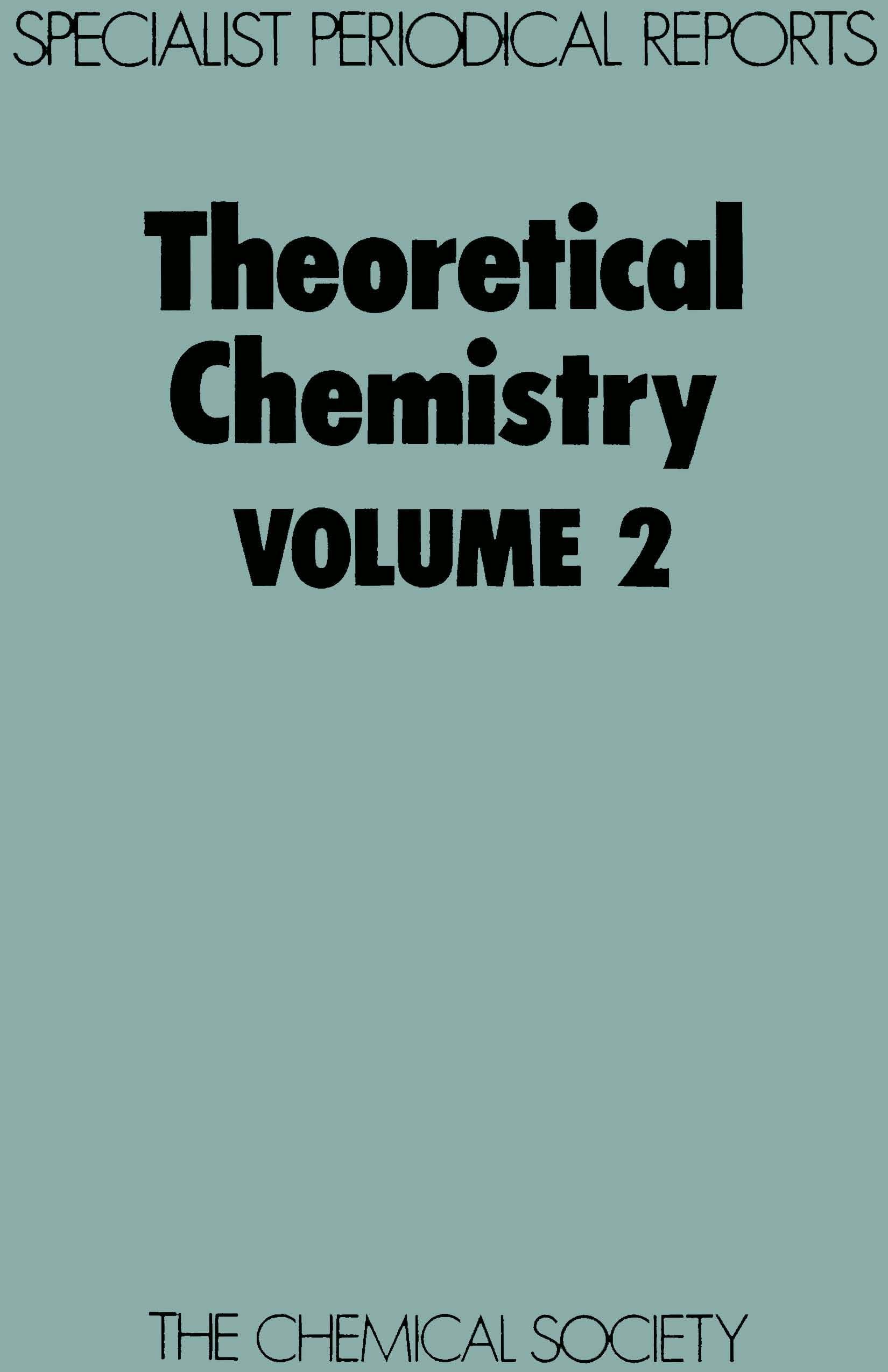
Theoretical Chemistry,vol 2: Volume 2 (Specialist Periodical Reports - Theoretical Chemistry)
Chemistry

Theoretical Chemistry,vol 2: Volume 2 (Specialist Periodical Reports - Theoretical Chemistry)

5,040

Inclusive of all applicable taxes. FREE shipping on all orders.

Quantity:
1
Share:
Free DeliveryOn every order
15-Day ReturnEasy returns
Genuine BookPhysical copy only

Available Offers

  • 🚚Free DeliveryFree shipping on all orders
  • 💵Cash on DeliveryPay when your order arrives
  • ↩️15-Day Easy ReturnsHassle-free return policy
  • 🔒Cash on DeliveryPay safely when your order arrives

Check Delivery

Product Description

About This Book

Specialist Periodical Reports provide systematic and detailed review coverage of progress in the major areas of chemical research. Written by experts in their specialist fields the series creates a unique service for the active research chemist, supplying regular critical in-depth accounts of progress in particular areas of chemistry. For over 90 years The Royal Society of Chemistry and its predecessor, the Chemical Society, have been publishing reports charting developments in chemistry, which originally took the form of Annual Reports. However, by 1967 the whole spectrum of chemistry could no longer be contained within one volume and the series Specialist Periodical Reports was born. The Annual Reports themselves still existed but were divided into two, and subsequently three, volumes covering Inorganic, Organic and Physical Chemistry. For more general coverage of the highlights in chemistry they remain a 'must'. Since that time the SPR series has altered according to the fluctuating degree of activity in various fields of chemistry. Some titles have remained unchanged, while others have altered their emphasis along with their titles; some have been combined under a new name whereas others have had to be discontinued. The current list of Specialist Periodical Reports can be seen on the inside flap of this volume.

About the Author

Theoretical Chemistry,vol 2: Volume 2 is authored by R. N. Dixon | C. Thomson.

Product description Excerpt. © Reprinted by permission. All rights reserved. Theoretical Chemistry Volume 2A Review of the Recent LiteratureBy R. N. Dixon, C. ThomsonThe Royal Society of ChemistryCopyright © 1975 The Chemical SocietyAll rights reserved.ISBN: 978-0-85186-764-9ContentsChapter 1 Ab Initio Calculation of Potential Energy Surfaces By R. F. W. Bader and R. A. Gangi, 1, Chapter 2 Intermolecular Forces By J. G. Stamper, 66, Chapter 3 Quantum Mechanical Calculations on Small Molecules By C. Thomson, 83, Chapter 4 Electronic Calculations on Large Molecules By B. J. Duke, 159, Author Index, CHAPTER 1Ab initio Calculation of Potential Energy SurfacesBY R. F. W. BADER AND R. A. GANGI1 The Concept of a Potential Energy SurfaceThis chapter is concerned with the calculation of potential energy surfaces by non-empirical methods, i.e. by obtaining solutions to Schrödinger's equation within the Born-Oppenheimer approximation. The concept of a potential energy surface is a consequence of the separation of the nuclear and electronic motions as proposed by Born and Oppenheimer. The nuclei may be considered to move under the influence of a potential determined by their mutual electrostatic repulsion and by the total energy of the electrons, an energy which is determined for every possible static configuration of the nuclei. The gain in conceptual simplicity afforded by the Born-Oppenheimer procedure is enormous and its use underlies many of our chemical concepts. For example, energies of activation or energy barriers in general, potential constants, the frequencies of vibrational and rotational motions, and bond lengths and bond angles as determined by an energy minimum, are all concepts defined in terms of the properties of a potential surface.To obtain information concerning a system of n electrons and N nuclei in the absence of external fields, one must solve the time-independent Schrödinger equation[FORMULA NOT REPRODUCIBLE IN ASCII] (1)where the properties of the ith stationary state of the system of energy Ei are obtainable from the eigenfunctions Ψi(x,R) which in turn depend upon the space and spin co-ordinates of all the electrons and nuclei (whose collective co-ordinates are denoted by x and R, respectively) in the system. The total Hamiltonian operator is[FORMULA NOT REPRODUCIBLE IN ASCII] (2)where [??]e and [??N are the kinetic energy operators of the electrons and nuclei, respectively, and where the potential energy operator in atomic units is,[FORMULA NOT REPRODUCIBLE IN ASCII] (3)One can distinguish three levels of approximation in obtaining solutions to equation (1):2 (i) the Born-Oppenheimer approximation, often referred to as the clamped-nucleus approximation; (ii) the adiabatic approximation; and (iii) the non-adiabatic approximation. The solutions to equation (1) provided by the first of these are entirely adequate for most problems of chemical interest. For example, use of this approximation in the calculation of the low-lying vibrational and rotational levels of H+2 yields results which are correct within experimental accuracy.In the Born-Oppenheimer approximation, one first transforms to a centre-of-mass, molecule-fixed co-ordinate system, thereby yielding a kinetic energy operator for the electrons referred to nuclei that are fixed with respect to their centre of mass and a nuclear kinetic energy operator which refers only to their internal motions, i.e. their vibrations and rotations and the various couplings between them.* Because of the large disparity in the masses of the electrons and the nuclei, the average kinetic energy of the former will be many times that of the latter, the ratio being proportional to mk/me ~ 2000 in the least favourable case when mk refers to the mass of a proton. Thus, in the limiting classical case, one obtains a picture of the electrons undergoing very rapid motion relative to the nuclei and adjusting almost instantaneously to changes in the nuclear positions. This suggests that the electronic motions are determined to a good approximation by just the static field of the nuclei, i.e. the electronic motion is determined by where the nuclei are but not by how fast they are moving. The motions of the nuclei in this separation of co-ordinates are governed by a potential whose negative gradient is simply the electrostatic force of repulsion between the nuclei and the attractive force exerted on the nuclei by the electronic charge distribution, a distribution whose form is determined by the electronic wavefunction evaluated for each configuration of the nuclei.Mathematically, this separation of the kinetic motions of the electrons and nuclei amounts to approximating the total wavefunction Ψi (x, R) by a simple product of electronic and nuclear wavefunctions[FORMULA NOT REPRODUCIBLE IN ASCII] (4)The electronic function y>i(x; R) is obtained by solving the electronic Schrödinger equation for a fixed nuclear configuration,[FORMULA NOT REPRODUCIBLE IN ASCII] (5)where[FO

Book Highlights

Published by ‎ CRC Press
Language: ‎ English
Publication date: ‎ 1 July 1988
Edition: ‎ 1st
Category: Science & Mathematics > Chemistry
Dimensions: ‎ 13.8 x 1.59 x 21.59 cm
Weight: ‎ 431 g
FREE shipping on all BookShops.in orders
15-day hassle-free return policy
Cash on Delivery (COD) available across India

Book Specifications

ISBN-139780851867649
ISBN-100851867642
Publisher‎ CRC Press
Language‎ English
Dimensions‎ 13.8 x 1.59 x 21.59 cm
Weight‎ 431 g
CategoryScience & Mathematics › Chemistry

Frequently Asked Questions

What is the price of Theoretical Chemistry,vol 2: Volume 2?
Theoretical Chemistry,vol 2: Volume 2 is available at ₹5,040 on BookShops.in.
Does BookShops.in offer free delivery for Theoretical Chemistry,vol 2: Volume 2?
FREE delivery on all orders for Theoretical Chemistry,vol 2: Volume 2.
Is Cash on Delivery available for Theoretical Chemistry,vol 2: Volume 2?
Yes, Cash on Delivery (COD) is available for Theoretical Chemistry,vol 2: Volume 2 on BookShops.in. Pay when your order arrives.
What is the return policy for Theoretical Chemistry,vol 2: Volume 2?
BookShops.in offers a 15-day hassle-free return policy for Theoretical Chemistry,vol 2: Volume 2. Contact us at support@bookshops.in or call +91 90874 10993.
Is Theoretical Chemistry,vol 2: Volume 2 authentic?
Theoretical Chemistry,vol 2: Volume 2 is listed on BookShops.in after verification of product details including ISBN, title, and availability information.

Your Cart

Your cart is empty

Add books to get started