
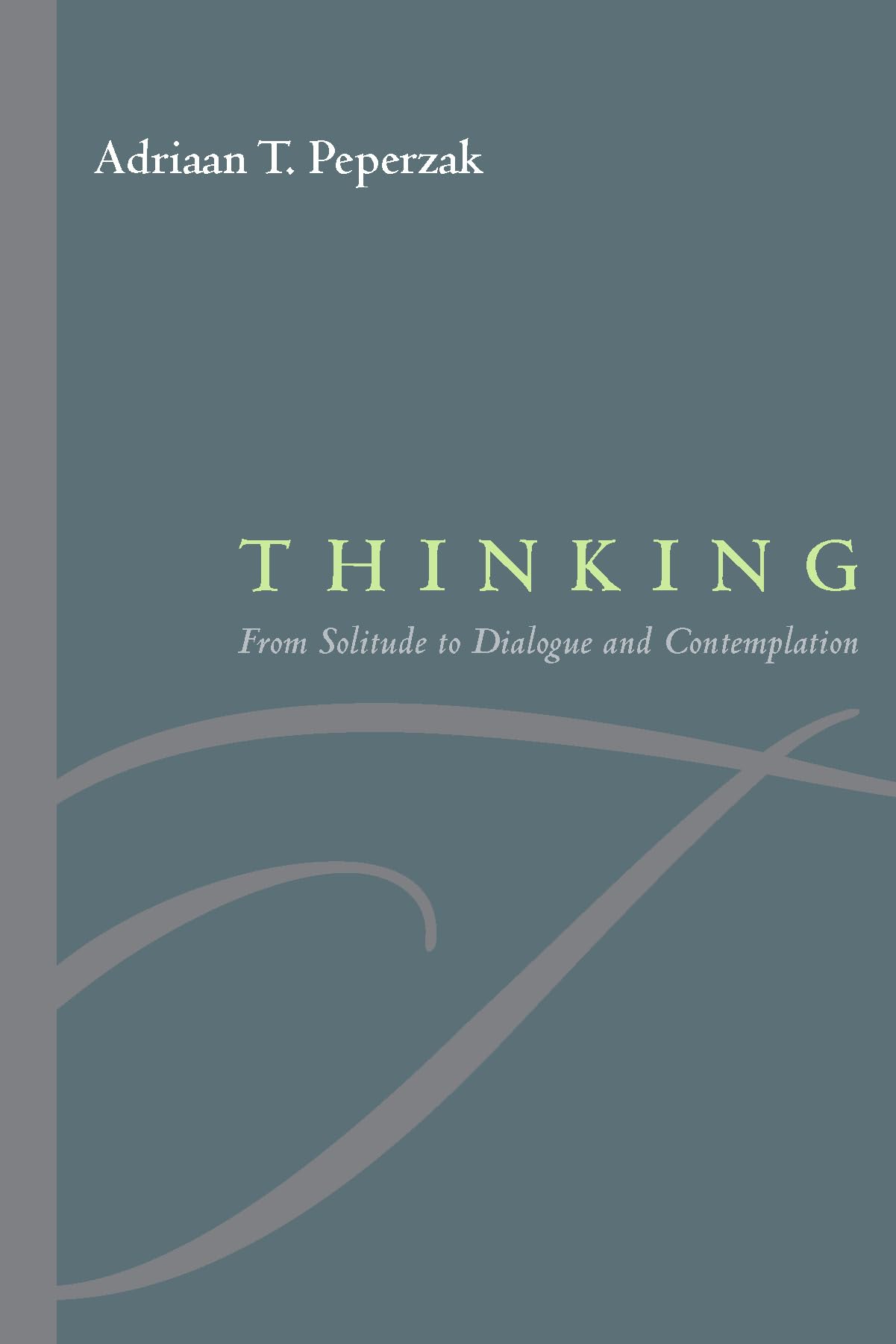
Thinking: From Solitude to Dialogue And Contemplation by Adriaan T. Peperzak – A Philosophical Study of Address, Traditi
Inclusive of all applicable taxes. FREE shipping on all orders.
Available Offers
- 🚚Free Delivery — Free shipping on all orders
- 💵Cash on Delivery — Pay when your order arrives
- ↩️15-Day Easy Returns — Hassle-free return policy
- 🔒Cash on Delivery — Pay safely when your order arrives
Check Delivery
Product Description
Introduction
In the vast and often solitary world of philosophical inquiry, the act of speaking and being spoken to holds a profound and transformative power. Adriaan T. Peperzak’s Thinking: From Solitude to Dialogue And Contemplation is a masterful exploration that moves beyond the image of the lone thinker in a quiet room. Instead, it invites readers to understand philosophy as a living, breathing conversation—a dynamic exchange between voices across time and tradition. For Indian students and readers who cherish the rich heritage of debate, dialogue, and introspection found in our own philosophical traditions, this book offers a bridge between Western thought and the universal human quest for meaning through communication.
Book Overview
This hardcover volume, published by the esteemed Fordham University Press, challenges the modern conception of philosophy as a purely individualistic endeavor. Peperzak argues that true philosophical thought is inherently relational; it is born not in isolation but in the act of addressing another. The book meticulously dissects the difference between merely talking about something and speaking to someone. It delves into how history itself becomes a dialogue, and how listening—whether to another person or to the echoes of the divine—shapes our understanding of truth. This is not a dry academic treatise but a passionate invitation to see thinking as a form of hospitality and responsiveness.
Key Highlights
- Radical Distinction: A clear and compelling analysis of the difference between speaking about and speaking to another person.
- Dialogical Philosophy: A robust defense of philosophy as a communal, tradition-bound practice rather than a solitary monologue.
- Historical Critique: A sharp critique of modern philosophy’s tendency to prioritize the autonomous subject over the relational self.
- Spiritual Dimension: A thoughtful inquiry into whether philosophy can and should include listening and responding to a divine word.
- Ethical Urgency: An exploration of how addressing others is an ethical act that honors the full truth of persons.
Inside the Book
The book is structured as a reflective journey. Peperzak begins by sketching the historical arc of modern philosophy, showing how it often reduced thinking to a private, interior process. He then pivots to a succinct yet profound analysis of the act of speaking itself. Each chapter builds on the last, weaving together phenomenology, hermeneutics, and existential thought. The reader will encounter rich discussions on the nature of tradition, the role of the interlocutor, and the possibility of a philosophical theology that does not abandon reason but deepens it through listening. The prose is dense but rewarding, demanding careful reading and offering deep insights in return.
Key Topics
- The phenomenology of speaking and addressing
- Critique of modern individualism in philosophy
- Dialogue as a method of truth-seeking
- Tradition and intergenerational communication
- Philosophy and the question of God
- Ethics of listening and response
- Solitude versus relational thinking
Reader Benefits
Readers will gain a renewed appreciation for the social and relational dimensions of thinking. This book helps you see that your own thoughts are never truly alone—they are shaped by the voices of those who came before you and those you engage with today. It offers tools for more meaningful conversations, whether in academic settings, personal relationships, or spiritual reflection. For those who feel that philosophy can sometimes be cold or abstract, Peperzak brings warmth and humanity back into the discipline, reminding us that every great idea is a gift offered to another.
Learning Outcomes
- Understand the fundamental difference between monologue and genuine dialogue.
- Critically evaluate the assumptions of modern Western philosophy.
- Develop a deeper awareness of how tradition shapes your own thinking.
- Learn to listen more attentively, both to others and to the world.
- Explore the intersection of philosophical reason and spiritual contemplation.
- Gain clarity on how ethical responsibility is embedded in the act of speech.
Who Should Read
This book is ideal for advanced undergraduate and postgraduate students of philosophy, theology, and literary theory. It will also appeal to educators, writers, and anyone who loves deep intellectual conversation. Indian readers with an interest in comparative philosophy—especially those familiar with traditions of shastrartha (debate) and satsang (dialogical gathering)—will find Peperzak’s ideas resonate with their own cultural heritage. It is a must-read for those who believe that thinking is not a solitary act but a shared responsibility.
About the Author
Adriaan T. Peperzak is one of the most distinguished contemporary philosophers working in the continental tradition. A professor emeritus at Loyola University Chicago, he has written extensively on phenomenology, ethics, and the philosophy of religion. His work is marked by a deep sensitivity to the ethical dimensions of thought, drawing from figures like Emmanuel Levinas, Martin Heidegger, and G.W.F. Hegel. Peperzak’s writing is both rigorous and humane, always pushing the reader to think beyond the self and into the realm of the other.
About the Publisher
Fordham University Press is a prestigious academic publisher based in New York, known for its exceptional contributions to philosophy, theology, and the humanities. With a commitment to scholarly excellence, Fordham Press has been a home for groundbreaking works that challenge conventional boundaries. This book is part of their distinguished catalog, ensuring high editorial standards and a lasting impact on the field.
Conclusion
Thinking: From Solitude to Dialogue And Contemplation is not just a book to be read; it is an invitation to participate in a conversation that spans centuries. In a world that often values noise over listening, Peperzak reminds us that the highest form of thinking is an act of love—a reaching out to the other. For anyone seeking to deepen their intellectual and spiritual life, this hardcover edition is an essential addition to your library. Order your copy today from Bookshops.in and begin a dialogue that will transform the way you think.
Quick Summary
'Thinking: From Solitude to Dialogue And Contemplation' by Adriaan T. Peperzak is a profound philosophical work that reexamines the very act of thinking as a communicative practice. Rather than viewing philosophy as a solitary endeavor, Peperzak argues that genuine philosophical thought is inherently dialogical—it involves addressing someone, responding to others, and participating in a tradition of discourse. The book opens with a critical sketch of modern philosophy, then offers a detailed analysis of speaking, emphasizing the radical difference between speaking about something and speaking to someone. It expands this analysis to explore how history and tradition shape our philosophical engagements. Readers will learn to appreciate the dynamic interplay between inner contemplation and outward dialogue, gaining tools to critique and participate in philosophical conversations. This book is perfect for Indian students and scholars of continental philosophy, phenomenology, and communication theory. By purchasing from Bookshops.in, you support a trusted Indian bookstore that offers authentic imported editions with reliable delivery and excellent customer service.
Book Highlights
Book Specifications
| ISBN-13 | 9780823226184 |
| ISBN-10 | 0823226182 |
| Publisher | Fordham Univ Pr |
| Language | English |
| Dimensions | 16.05 x 1.91 x 23.52 cm |
| Weight | 386 g |
| Country | India |
| Category | Religious Studies › Theology & Philosophy of Religion |
| Genre | Philosophy |
| Reading Age | Adult |
| Original Language | English |
Frequently Asked Questions
What is the main theme of 'Thinking: From Solitude to Dialogue And Contemplation'?
Who is Adriaan T. Peperzak?
Who should read this book?
Is this book suitable for undergraduate students?
What makes this book different from other philosophy books?
Does the book cover modern philosophy?
Is this a hardcover edition?
Can I use this book for my research on dialogue?
What is the ISBN of this book?
Does the book discuss solitude?
Is this book available in Indian bookstores?
What language is the book written in?
Does the book include references to other philosophers?
Readers Also Search For
Customers Also Bought
Islam
Spiritual Economies (English, Daromir Rudnyckyj)

Islam
Who Is Allah? (English, Bruce B. Lawrence)
Islam
Islam and Liberal Citizenship: The Search for an Overlapping Consensus by Andrew F. March
Islam
Fiqh Us-Sunnah: Funerals and Diggers by Al-Sayyid Sabiq – Islamic Funeral Guide

Christianity
Genetics (English, Thomas a. Shannon | Mark P. Aulisio | Françoise Baylis)

Hinduism
Karma and Creativity by Christopher Key Chapple – Indian Philosophy
Related Products
View All
Religion & Spirituality
Spiritual Competency in Psychotherapy | by Philip Brownell | Springer Publishing Company | by Philip Brownell | Springer Publishing Company | by Philip Brownell | Springer Publishing Company | by Philip Brownell | Springer Publishing Company | by Philip Brownell | Springer Publishing Company | by Philip Brownell | Springer Publishing Company | by Philip Brownell | Springer Publishing Company | by Philip Brownell | Springer Publishing Company | by Philip Brownell | Springer Publishing Company | b
Religion & Spirituality
Religion as a Conversation Starter | by Ina Merdjanova | Continuum | by Ina Merdjanova | Continuum | by Ina Merdjanova | Continuum | by Ina Merdjanova | Continuum | by Ina Merdjanova | Continuum | by Ina Merdjanova | Continuum | by Ina Merdjanova | Continuum | by Ina Merdjanova | Continuum | by Ina Merdjanova | Continuum | by Ina Merdjanova | Continuum | by Ina Merdjanova | Continuum | by Ina Merdjanova | Continuum | by Ina Merdjanova | Continuum | by Ina Merdjanova | Continuum | by Ina Merdjano
Religion & Spirituality
The Other Jewish Question: Identifying the Jew and Making Sense of Modernity

Religion & Spirituality
The Oxford Guide to People & Places of the Bible | by Bruce M. Metzger | Michael D. Coogan | Oxford University Press | by Bruce M. Metzger | Michael D. Coogan | Oxford University Press | by Bruce M. Metzger | Michael D. Coogan | Oxford University Press | by Bruce M. Metzger | Michael D. Coogan | Oxford University Press | by Bruce M. Metzger | Michael D. Coogan | Oxford University Press | by Bruce M. Metzger | Michael D. Coogan | Oxford University Press | by Bruce M. Metzger | Michael D. Coogan |

Religion & Spirituality
Anti-Judaism in Early Christianity | by Stephen G. Wilson | Wilfrid Laurier University Press | by Stephen G. Wilson | Wilfrid Laurier University Press | by Stephen G. Wilson | Wilfrid Laurier University Press | by Stephen G. Wilson | Wilfrid Laurier University Press | by Stephen G. Wilson | Wilfrid Laurier University Press | by Stephen G. Wilson | Wilfrid Laurier University Press | by Stephen G. Wilson | Wilfrid Laurier University Press | by Stephen G. Wilson | Wilfrid Laurier University Press |
Religion & Spirituality