
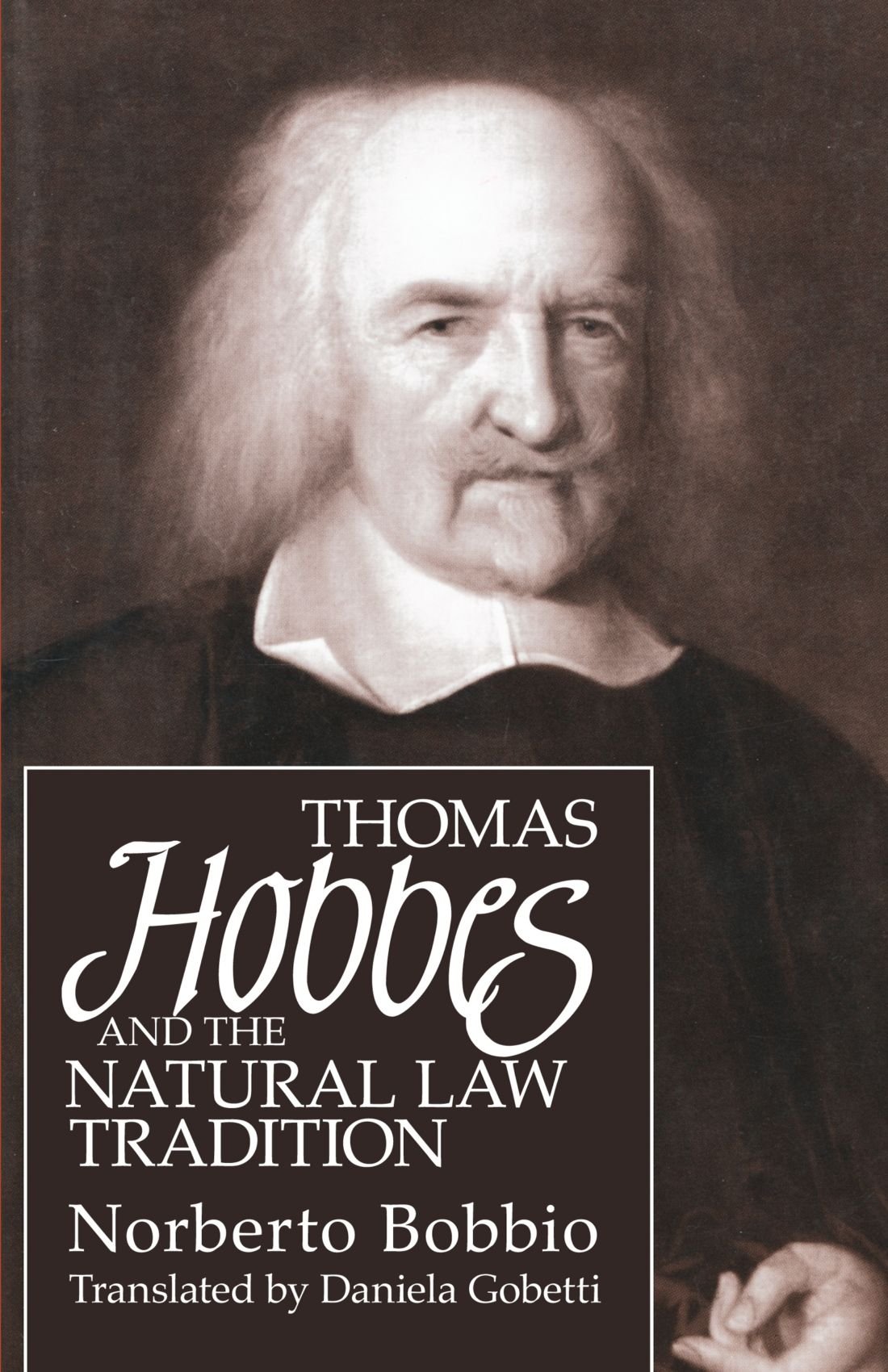
Thomas Hobbes and the Natural Law Tradition by Norberto Bobbio – A Scholarly Analysis of Hobbes's Political Philosophy
Inclusive of all applicable taxes. FREE shipping on all orders.
Available Offers
- 🚚Free Delivery — Free shipping on all orders
- 💵Cash on Delivery — Pay when your order arrives
- ↩️15-Day Easy Returns — Hassle-free return policy
- 🔒Cash on Delivery — Pay safely when your order arrives
Check Delivery
Product Description
Introduction
Norberto Bobbio, one of the foremost political philosophers of the twentieth century, turns his incisive analytical lens on Thomas Hobbes in this essential collection of essays. Thomas Hobbes and the Natural Law Tradition offers Indian students, legal scholars, and political theorists a profound exploration of Hobbes’s place in the evolution of modern political thought. Bobbio masterfully situates Hobbes within the natural law tradition while also revealing his paradoxical relationship with legal positivism, providing a nuanced understanding that transcends simple labels. This hardcover edition from the University of Chicago Press is a must-have for any serious library of jurisprudence or political philosophy.
Book Overview
This volume brings together Bobbio’s most significant writings on Hobbes, spanning his career-long engagement with the philosopher’s work. Rather than offering a mere summary, Bobbio reconstructs the inner logic of Hobbes’s arguments from De Cive through Leviathan. He demonstrates that Hobbes cannot be easily classified as liberal or totalitarian; instead, Bobbio presents a compelling case for Hobbes as a true conservative. The book challenges readers to rethink the foundations of sovereignty, law, and political obligation, making it an indispensable resource for understanding the roots of modern state theory.
Key Highlights
- First English collection of Bobbio’s seminal essays on Hobbes, curated for scholarly depth
- Original analysis of Hobbes’s place in both natural law and positivist traditions
- Critical reassessment of Hobbes’s political leanings, moving beyond liberal or totalitarian labels
- Rigorous textual focus on De Cive and Leviathan as core texts
- Timeless relevance for debates on authority, consent, and the rule of law in contemporary India
Inside the Book
The essays are structured to guide readers through Hobbes’s philosophical system. Bobbio begins by examining the concept of natural law in Hobbes’s thought, showing how it differs from classical and medieval formulations. He then explores the transition from the state of nature to civil society, the nature of sovereignty, and the limits of political obligation. Each chapter unpacks Hobbes’s arguments with clarity and precision, using a comparative approach that contrasts Hobbes with other thinkers such as Grotius, Pufendorf, and Locke. The book also includes Bobbio’s reflections on the enduring significance of Hobbes’s ideas for modern jurisprudence.
Key Topics
- Natural law versus positive law in Hobbes’s philosophy
- The state of nature and the social contract
- Abolute sovereignty and its justifications
- Hobbes’s concept of liberty and necessity
- The role of religion in political authority
- Conservatism, liberalism, and the origins of modern statehood
- Comparative analysis with early modern natural law theorists
Reader Benefits
This book empowers readers with a deeper, more critical understanding of one of the most influential political thinkers in history. By engaging with Bobbio’s essays, students and scholars will gain the tools to deconstruct complex political arguments, evaluate competing theories of law, and apply Hobbesian concepts to contemporary issues such as constitutionalism, judicial review, and the legitimacy of state power. The hardcover binding ensures durability for repeated reference, making it a valuable addition to personal or institutional collections.
Learning Outcomes
- Understand the core tenets of Hobbes’s political philosophy as interpreted by a leading scholar
- Analyze the tension between natural law and legal positivism in early modern thought
- Critically assess the conservative dimensions of Hobbes’s justification of the state
- Trace the evolution of sovereignty from Hobbes to modern democratic theory
- Apply Hobbesian concepts to debates on authority and obligation in Indian legal contexts
Who Should Read
This book is ideal for undergraduate and postgraduate students of political science, law, and philosophy. It is equally valuable for researchers specializing in jurisprudence, the history of political thought, or early modern intellectual history. Legal practitioners and judges seeking a deeper philosophical grounding for their understanding of state power will also find Bobbio’s analysis illuminating. Anyone with a serious interest in the foundations of Western political theory—and its relevance to Indian constitutional democracy—will benefit from this volume.
About the Author
Norberto Bobbio (1909–2004) was an Italian philosopher, jurist, and political theorist, widely regarded as one of the most important intellectuals of the twentieth century. He taught at the University of Turin and later at the University of Rome, where he influenced generations of scholars. Bobbio’s work spans legal theory, political science, and the history of ideas, with a particular focus on democracy, human rights, and the rule of law. His writings on Hobbes are considered among the most insightful and original contributions to Hobbes scholarship.
About the Publisher
The University of Chicago Press is a prestigious academic publisher known for its rigorous editorial standards and commitment to scholarly excellence. Since its founding in 1890, the press has published seminal works in philosophy, law, political science, and the humanities. This hardcover edition reflects the press’s tradition of producing durable, beautifully designed books that serve as lasting resources for students and researchers worldwide.
Conclusion
Thomas Hobbes and the Natural Law Tradition is not merely a book about a historical philosopher—it is a vital guide to understanding the enduring questions of political order, legal authority, and human nature. Norberto Bobbio’s essays offer a fresh, rigorous, and thought-provoking perspective that will enrich any reader’s engagement with Hobbes. Whether you are preparing for examinations, writing a thesis, or simply seeking intellectual depth, this volume belongs on your shelf. Order your copy from Bookshops.in today and explore the foundations of modern political thought through the eyes of a master interpreter.
Quick Summary
Thomas Hobbes and the Natural Law Tradition by Norberto Bobbio is a seminal collection of essays that delves into the political philosophy of Thomas Hobbes, one of the most influential thinkers of the early modern period. Bobbio, a pre-eminent European political philosopher, examines Hobbes's works—particularly De Cive and Leviathan—to reveal his complex relationship with the natural law tradition and legal positivism. The book argues that Hobbes cannot be easily categorized as either liberal or totalitarian, but instead occupies a unique space that bridges these seemingly contradictory schools of thought. Readers will gain a nuanced understanding of Hobbes's theories on sovereignty, the state of nature, social contract, and moral obligation. This volume is ideal for advanced students, scholars, and anyone interested in the foundations of modern political thought. By purchasing from Bookshops.in, Indian readers receive a high-quality hardcover edition with prompt service and authentic stock.
Book Highlights
Book Specifications
| ISBN-13 | 9780226062488 |
| ISBN-10 | 0226062481 |
| Publisher | Univ of Chicago Pr |
| Language | English |
| Dimensions | 13.97 x 1.57 x 21.59 cm |
| Weight | 272 g |
| Country | India |
| Category | Philosophy › History & Surveys |
| Genre | Non-fiction |
| Original Language | Italian |
Frequently Asked Questions
What is Thomas Hobbes and the Natural Law Tradition about?
Who is Norberto Bobbio?
Is this book suitable for beginners in political philosophy?
Which works of Hobbes does Bobbio analyze?
Does the book cover Hobbes's ethics?
What is the main argument of the book?
How many essays are included?
Can I use this book for my law or philosophy course?
Does the book discuss Hobbes's view of sovereignty?
Is there any coverage of Hobbes's concept of the state of nature?
What makes this book unique?
Does the book compare Hobbes to other philosophers?
Why should I buy from Bookshops.in?
Readers Also Search For
Customers Also Bought
Islam
Spiritual Economies (English, Daromir Rudnyckyj)

Islam
Who Is Allah? (English, Bruce B. Lawrence)
Islam
Islam and Liberal Citizenship: The Search for an Overlapping Consensus by Andrew F. March
Islam
Fiqh Us-Sunnah: Funerals and Diggers by Al-Sayyid Sabiq – Islamic Funeral Guide

Christianity
Genetics (English, Thomas a. Shannon | Mark P. Aulisio | Françoise Baylis)

Hinduism
Karma and Creativity by Christopher Key Chapple – Indian Philosophy
Related Products
View All
Philosophy
Latin American Philosophy: Currents, Issues, Debates by Eduardo Mendieta

Philosophy
Al-Farabi's Short Commentary on Aristotle's Prior Analytics by Nicholas Rescher – Philosophy
Philosophy
Poetics of Imagining: Modern to Post-modern by Richard Kearney
Philosophy
The Metaphysics of Extrinsic Properties: 11 (Metaphysical Research, 11)
Philosophy
Dialogues on Metaphysics and on Religion by Nicolas Malebranche – Philosophy
Philosophy