
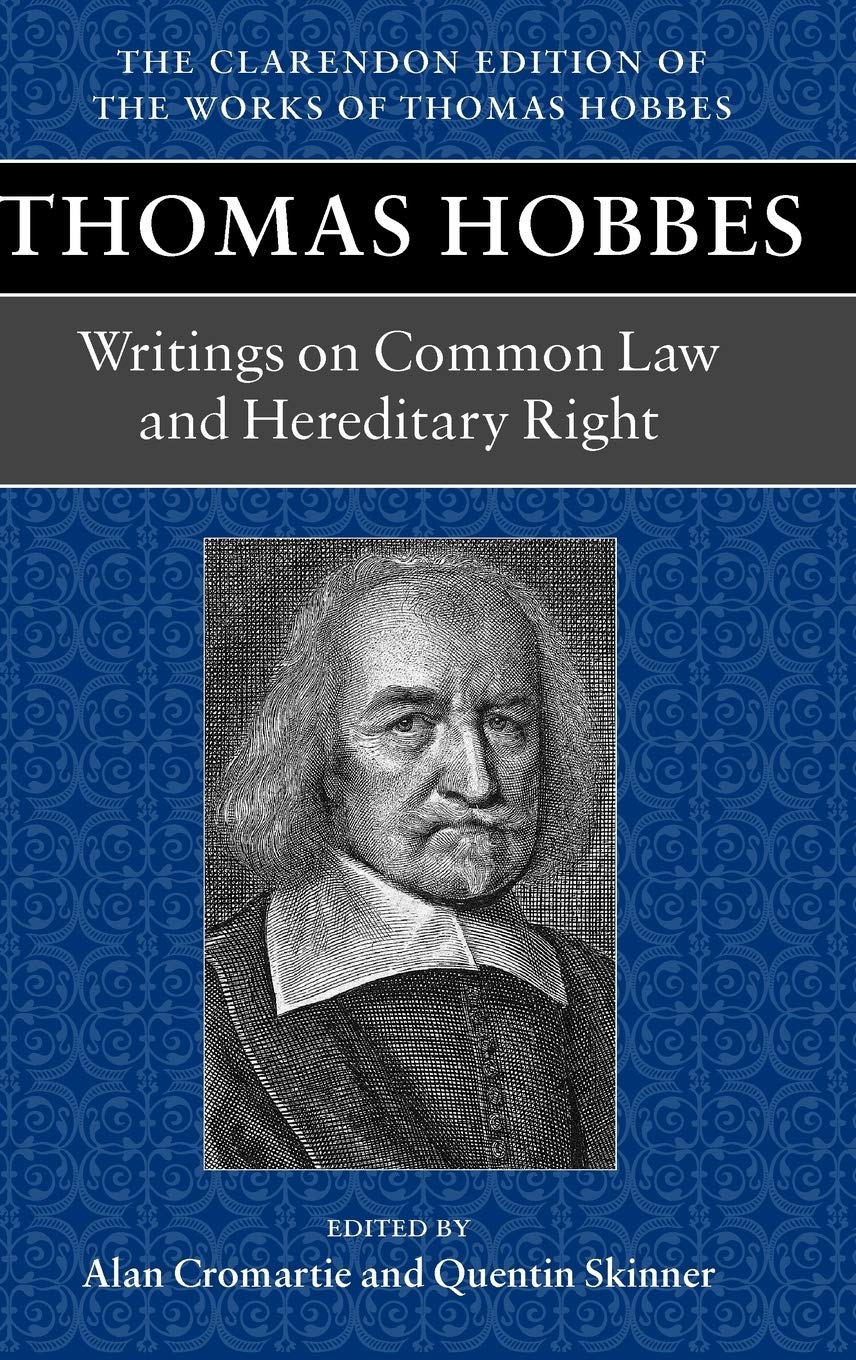
Thomas Hobbes: A Dialogue Between A Philosopher And A Student, Of The Common Laws Of England – A Critical Legal Theory C
Inclusive of all applicable taxes. FREE shipping on all orders.
Available Offers
- 🚚Free Delivery — Free shipping on all orders
- 💵Cash on Delivery — Pay when your order arrives
- ↩️15-Day Easy Returns — Hassle-free return policy
- 🔒Cash on Delivery — Pay safely when your order arrives
Check Delivery
Product Description
Introduction
Thomas Hobbes, one of the most formidable thinkers in the history of political philosophy, turns his penetrating gaze upon the English legal system in this remarkable volume. Thomas Hobbes: A Dialogue Between A Philosopher And A Student, Of The Common Laws Of England is not merely a historical artifact; it is a vibrant and challenging critique of common law by a philosopher who dared to question the very foundations of legal authority. For Indian students of law, political science, and philosophy, this work offers a rare window into the intellectual battles that shaped modern jurisprudence. Published by OUP Oxford, this hardcover edition is part of the prestigious Clarendon Edition of the Works of Thomas Hobbes, ensuring scholarly rigor and accessibility. Whether you are preparing for competitive examinations, writing a dissertation, or simply seeking to understand the roots of legal positivism, this book is an indispensable addition to your library.
Book Overview
This volume presents Hobbes’s A Dialogue between a Philosopher and a Student, of the Common Laws of England, meticulously edited by Alan Cromartie. The work is a fictional yet fiercely intellectual exchange between a philosopher (clearly Hobbes himself) and a student of law. Through this dialogue, Hobbes systematically dismantles the common law tradition championed by Sir Edward Coke, arguing that law derives its authority not from ancient custom or judicial wisdom, but from the sovereign's command. The edition is supplemented by a crucial fragment, Questions relative to Hereditary Right, discovered and edited by the renowned historian Quentin Skinner. This fragment, which represents Hobbes’s final political writings, offers a robust defense of hereditary monarchy and contains important insights into the concept of a right. Cromartie’s extensive introduction and annotations make the work accessible even to readers who are new to Hobbes, providing historical context and clarifying complex legal arguments.
Key Highlights
- Authoritative Edition: Part of the acclaimed Clarendon Edition of the Works of Thomas Hobbes, ensuring textual accuracy and scholarly depth.
- Expert Editing: Edited by Alan Cromartie, with a substantial introduction and detailed annotations that illuminate Hobbes’s arguments.
- Exclusive Supplement: Includes Questions relative to Hereditary Right, edited by Quentin Skinner, providing Hobbes’s last word on politics and the nature of rights.
- Critical Engagement: Offers a direct and provocative critique of the common law tradition, challenging the idea that law is discovered rather than made.
- Historical Significance: Essential for understanding the development of legal positivism and the intellectual context of the English Civil War.
Inside the Book
The Dialogue unfolds as a rigorous debate. The philosopher argues that law is the command of the sovereign, while the student defends the common law as the embodiment of reason and custom. Hobbes attacks the notion that judges, through their experience, can access a higher form of reason. Instead, he insists that only the sovereign’s will can create binding law. The second part of the volume, Questions relative to Hereditary Right, is a shorter but equally powerful text. In it, Hobbes defends the principle of hereditary succession against challenges from those who would base political authority on conquest or popular consent. Skinner’s editing reveals how Hobbes refined his thinking on rights, making this fragment a vital resource for scholars. The book also includes a comprehensive index and a bibliography, making it a complete research tool.
Key Topics
- Hobbes’s critique of Sir Edward Coke and the common law tradition
- The relationship between sovereign power and legal authority
- The concept of law as command versus law as custom or reason
- Hereditary right, succession, and the foundations of political obligation
- The nature of rights and their relationship to sovereign power
- The role of equity and natural law in Hobbes’s legal theory
Reader Benefits
Reading this book will sharpen your understanding of the philosophical underpinnings of modern legal systems. For law students in India, where the common law tradition is deeply influential, Hobbes’s critique offers a powerful counterpoint that will enrich your legal education. You will learn to question the authority of precedent and custom, and to think critically about the source of legal validity. The inclusion of Questions relative to Hereditary Right provides a unique opportunity to see Hobbes’s final thoughts on sovereignty, making this volume a complete intellectual journey. The expert annotations ensure that even complex passages become clear, saving you hours of research.
Learning Outcomes
- Understand Hobbes’s central arguments against the common law and his defense of legal positivism.
- Analyze the concept of sovereignty as the foundation of legal authority.
- Evaluate the tension between judicial discretion and legislative supremacy.
- Grasp Hobbes’s theory of rights and its evolution in his later works.
- Apply Hobbes’s critiques to contemporary debates about judicial activism and legal interpretation.
Who Should Read
This book is essential for undergraduate and postgraduate students of political science, law, and philosophy. It will be particularly valuable for those studying jurisprudence, legal theory, or the history of political thought. Researchers and academics working on Hobbes, early modern legal history, or the common law tradition will find this edition indispensable. Additionally, anyone with a serious interest in the intellectual foundations of modern democracy and the rule of law will benefit from Hobbes’s incisive arguments. Indian readers, especially those engaged with the legacy of British legal institutions, will find the dialogue remarkably relevant.
About the Author
Thomas Hobbes (1588–1679) is one of the most influential philosophers in the Western tradition. Best known for his masterpiece Leviathan, Hobbes developed a comprehensive system of thought that encompassed politics, ethics, psychology, and physics. His materialist philosophy and his theory of the social contract have shaped centuries of political debate. Hobbes served as a secretary to Francis Bacon and later as a tutor to the future King Charles II, giving him firsthand experience of the turbulent politics of his age. His writings remain central to any serious study of power, law, and human nature.
About the Publisher
Oxford University Press (OUP) is a department of the University of Oxford and the world’s largest university press. With a history spanning over 500 years, OUP is renowned for its commitment to scholarly excellence. The Clarendon Edition of the Works of Thomas Hobbes, of which this volume is a part, represents the gold standard in Hobbes scholarship. OUP’s rigorous editorial processes and high-quality production ensure that readers receive a text that is both authoritative and durable.
Conclusion
Thomas Hobbes: A Dialogue Between A Philosopher And A Student, Of The Common Laws Of England is more than a book; it is an intellectual event. By bringing together Hobbes’s critique of common law with his final reflections on hereditary right, this volume offers a complete and nuanced picture of a philosopher at the height of his powers. For Indian students and scholars, it provides a unique opportunity to engage with the foundational texts of legal philosophy. Add this hardcover edition to your collection and join the conversation that has shaped the modern world.
Quick Summary
Thomas Hobbes' 'A Dialogue Between A Philosopher And A Student, Of The Common Laws Of England' is a critical work of legal philosophy that challenges the foundations of English common law. Presented as a conversation between a philosopher (representing Hobbes' own views) and a student of law, the dialogue argues that legal authority must derive from reason and sovereign command rather than mere judicial precedent. This Clarendon Edition, edited by Alan Cromartie, provides extensive annotations and a substantial introduction that contextualizes the work within Hobbes' broader political thought. Additionally, Quentin Skinner contributes a fragment titled 'Questions relative to Hereditary Right,' where Hobbes defends hereditary succession as a stable basis for monarchy. The book is ideal for Indian students and scholars of jurisprudence, political theory, and legal history, offering a rigorous yet accessible entry into Hobbes' critique of the common law tradition. Purchasing from Bookshops.in ensures you receive an authentic OUP hardcover, perfect for academic libraries and personal study. Readers will gain a deeper understanding of the tensions between custom, reason, and sovereignty that continue to shape legal debates today.
Book Highlights
Book Specifications
| ISBN-13 | 9780198237020 |
| ISBN-10 | 0198237022 |
| Publisher | Oxford Univ Pr on Demand |
| Language | English |
| Dimensions | 23.62 x 2.29 x 15.75 cm |
| Weight | 544 g |
| Category | Philosophy › History & Surveys |
| Series | Clarendon Edition of the Works of Thomas Hobbes |
| Genre | Non-fiction |
| Reading Age | Adult |
| Original Language | English |
Frequently Asked Questions
What is the main subject of this book?
Who edited this edition?
Is this book suitable for beginners in legal theory?
What is the Clarendon Edition?
Does the book include Hobbes' other works?
What is the significance of the hereditary right fragment?
How does this book relate to Hobbes' Leviathan?
Is this book used in Indian law courses?
What language is the book in?
Does the book have a bibliography?
Can I use this book for a PhD thesis?
Is the binding durable?
Where can I buy this book in India?
Readers Also Search For
Customers Also Bought
Islam
Spiritual Economies (English, Daromir Rudnyckyj)

Islam
Who Is Allah? (English, Bruce B. Lawrence)
Islam
Islam and Liberal Citizenship: The Search for an Overlapping Consensus by Andrew F. March

Islam
Fiqh Us-Sunnah: Funerals and Diggers by Al-Sayyid Sabiq – Islamic Funeral Guide

Christianity
Genetics (English, Thomas a. Shannon | Mark P. Aulisio | Françoise Baylis)

Hinduism
Karma and Creativity by Christopher Key Chapple – Indian Philosophy
Related Products
View All
Philosophy
Latin American Philosophy: Currents, Issues, Debates by Eduardo Mendieta

Philosophy
Al-Farabi's Short Commentary on Aristotle's Prior Analytics by Nicholas Rescher – Philosophy
Philosophy
Poetics of Imagining: Modern to Post-modern by Richard Kearney
Philosophy
The Metaphysics of Extrinsic Properties: 11 (Metaphysical Research, 11)
Philosophy
Dialogues on Metaphysics and on Religion by Nicolas Malebranche – Philosophy
Philosophy