
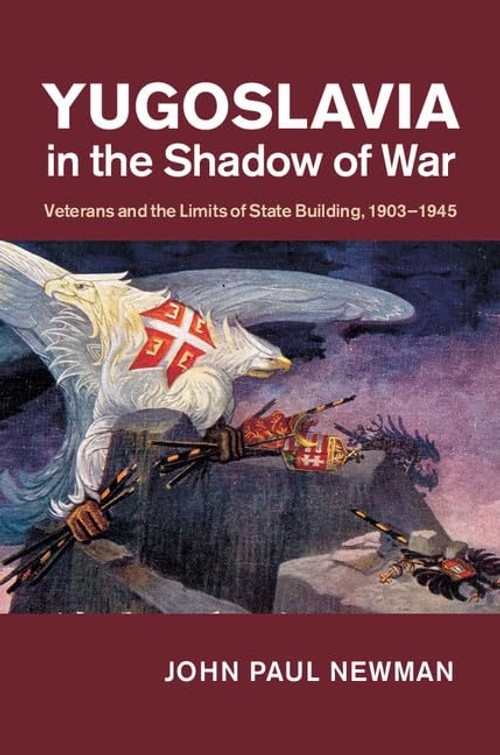
Yugoslavia in the Shadow of War: Veterans and the Limits of State Building, 1903–1945 by John Paul Newman – A Deep Dive
Inclusive of all applicable taxes. FREE shipping on all orders.
Available Offers
- 🚚Free Delivery — Free shipping on all orders
- 💵Cash on Delivery — Pay when your order arrives
- ↩️15-Day Easy Returns — Hassle-free return policy
- 🔒Cash on Delivery — Pay safely when your order arrives
Check Delivery
Product Description
Introduction
Yugoslavia in the Shadow of War: Veterans and the Limits of State Building, 1903–1945 by John Paul Newman offers a compelling exploration of how the legacy of the First World War shaped the fragile Yugoslav state. This meticulously researched work sheds light on the deep scars left by war and the challenges of forging unity in a land divided by conflicting loyalties. For Indian readers interested in European history, state-building, or the sociology of war, this book provides a nuanced perspective on the interplay between memory, politics, and national identity.
Book Overview
Set against the backdrop of the interwar period, this book examines how Yugoslavia emerged from the Great War as a multi-ethnic state housing veterans who had fought on opposing sides—the Central Powers and the Entente. Newman argues that these former adversaries, now fellow citizens, carried their wartime divisions into peacetime, undermining efforts to build a cohesive nation. The narrative traces the period from 1903 to 1945, revealing how unresolved conflicts from the past fueled political instability and social fragmentation, ultimately leading the region into a new world war. This is not just a history of Yugoslavia but a study of the limits of state building in ‘New Europe.’
Key Highlights
- Original perspective on the role of veterans in shaping interwar Yugoslav politics and society.
- Detailed analysis of how wartime allegiances influenced post-war state institutions and national identity.
- Rich archival research drawing on primary sources from across the former Yugoslavia and Europe.
- Comparative insights into the challenges faced by other ‘New Europe’ states after 1918.
- Engaging narrative that connects military history with social and political history.
Inside the Book
Readers will find a well-structured account divided into thematic chapters that cover the pre-war period, the Great War experience, the formation of the Yugoslav state, and the interwar years leading up to World War II. Newman examines the lives of ordinary veterans, their organizations, and their influence on state policies. The book also delves into the memory of war, exploring how different groups remembered and commemorated the conflict. Special attention is given to the tensions between Serbian, Croatian, and Slovenian veterans, as well as the role of the state in managing these divisions. The final chapters discuss how the unresolved legacies of the First World War contributed to the collapse of Yugoslavia in 1941.
Key Topics
- Veterans’ movements and their political impact in interwar Yugoslavia.
- The Great War’s enduring shadow on state building and national unity.
- Memory, commemoration, and the politics of war remembrance.
- Ethnic and regional divisions among South Slav veterans.
- The limits of state authority in a post-imperial, multi-ethnic society.
- Connections between the First and Second World Wars in the Balkans.
Reader Benefits
- Gain a deep understanding of how historical trauma affects nation-building.
- Learn about a lesser-known but pivotal region in 20th-century Europe.
- Develop critical insights into the challenges of integrating former enemies into a single state.
- Enhance your knowledge of the social and political consequences of war.
- Appreciate the complexity of Yugoslav history beyond simplistic narratives.
Learning Outcomes
After reading this book, you will be able to: analyze the role of veterans in shaping post-war states; identify the factors that contributed to Yugoslavia’s interwar instability; understand the relationship between war memory and national identity; and evaluate the broader implications of the Great War for ‘New Europe.’ The book also equips readers with a framework to compare similar processes in other post-conflict societies, including those in South Asia.
Who Should Read
This book is ideal for students and scholars of modern European history, Balkan studies, political science, and sociology. It will also appeal to general readers interested in military history, state building, or the legacy of the World Wars. Indian readers with an interest in comparative history or the challenges of multi-ethnic states will find valuable parallels and insights. The book is suitable for undergraduate and postgraduate courses, as well as for independent study.
About the Author
John Paul Newman is a Senior Lecturer in Modern European History at Maynooth University, Ireland. His research focuses on the political and social history of the Balkans, particularly the legacy of the First World War. He has published widely on veterans, war memory, and state building in interwar Europe. His work is known for its meticulous scholarship and accessible writing style, making complex historical processes understandable to a broad audience.
About the Publisher
Cambridge University Press is a world-leading academic publisher with a rich history dating back to 1534. Known for its rigorous peer-review process and high-quality publications, Cambridge University Press produces authoritative works across the humanities, social sciences, and sciences. This book is part of their prestigious list in modern European history, ensuring reliability and scholarly excellence.
Conclusion
Yugoslavia in the Shadow of War is a vital read for anyone seeking to understand how the past can haunt the present. By focusing on veterans and their unresolved divisions, John Paul Newman offers a fresh lens on the challenges of building a state in the aftermath of total war. This hardcover edition from Cambridge University Press is a valuable addition to any history lover’s library, providing insights that resonate far beyond the Balkans. Order your copy today from Bookshops.in and explore the limits of state building in a world shaped by conflict.
Quick Summary
Yugoslavia in the Shadow of War by John Paul Newman is a scholarly yet accessible exploration of how the First World War's legacy shaped the fragile interwar Yugoslav state. The book focuses on the millions of war veterans who had fought on opposite sides during the Great War—some for the Central Powers, others for the Entente—and were now forced to coexist within a single nation. Newman argues that these veterans carried the divisions of war into peacetime, undermining efforts at state building and national unity. Drawing on rich archival sources, the book reveals how the unresolved trauma and political ambitions of veterans exacerbated ethnic tensions, weakened democratic institutions, and contributed to the kingdom's eventual collapse during World War II. This volume is ideal for students of modern European history, Balkan studies, political science, and military history. Readers will gain a deep understanding of how post-war states grapple with the ghosts of conflict. By purchasing from Bookshops.in, you support a trusted Indian bookstore that delivers quality academic titles across the country.
Book Highlights
Book Specifications
| ISBN-13 | 9781107070769 |
| ISBN-10 | 1107070767 |
| Publisher | Cambridge University Press |
| Language | English |
| Dimensions | 16.51 x 1.91 x 24.77 cm |
| Weight | 560 g |
| Category | Psychology › Psychotherapy |
| Genre | History |
| Reading Age | Adult |
| Original Language | English |
Frequently Asked Questions
What is the main theme of 'Yugoslavia in the Shadow of War'?
Who is the author John Paul Newman?
Is this book suitable for undergraduate students?
Does the book cover the entire period from 1903 to 1945?
What makes this book different from other histories of Yugoslavia?
Is the book based on primary sources?
Does the book discuss the role of the monarchy?
What is the significance of the title 'In the Shadow of War'?
Can this book help understand modern Balkan conflicts?
Is there a focus on any particular region within Yugoslavia?
Is this book available in paperback?
Does the book include maps or illustrations?
Where can I buy this book in India?
Readers Also Search For
Customers Also Bought
Psychology
Koinonia: From Hate, Through Dialogue, to Culture in the Large Group by Patrick B. Demare
Psychology
Mindfulness-Based Interventions for Trauma and Its Consequences (Concise Guides on Trauma Care, 4)

Psychology
Handbook for Teaching Statistics and Research Methods by Mark E. Ware

Psychology
Psychoanalysis and the Nuclear Threat: Clinical and Theoretical Studies

Psychology
Humor and Psyche: Psychoanalytic Perspectives by James W. Barron

Relationships
The Experience and Expression of Uncertainty in Close Relationships by Jennifer A. Theiss
Related Products
View AllPsychology
Mindfulness-Based Interventions for Trauma and Its Consequences (Concise Guides on Trauma Care, 4)
Psychology
Handbook for Teaching Statistics and Research Methods by Mark E. Ware
Psychology
Psychoanalysis and the Nuclear Threat: Clinical and Theoretical Studies
Psychology
Humor and Psyche: Psychoanalytic Perspectives by James W. Barron

Psychology
Proceedings of the First International Conference on Genetic Algorithms and Their Applications
Psychology